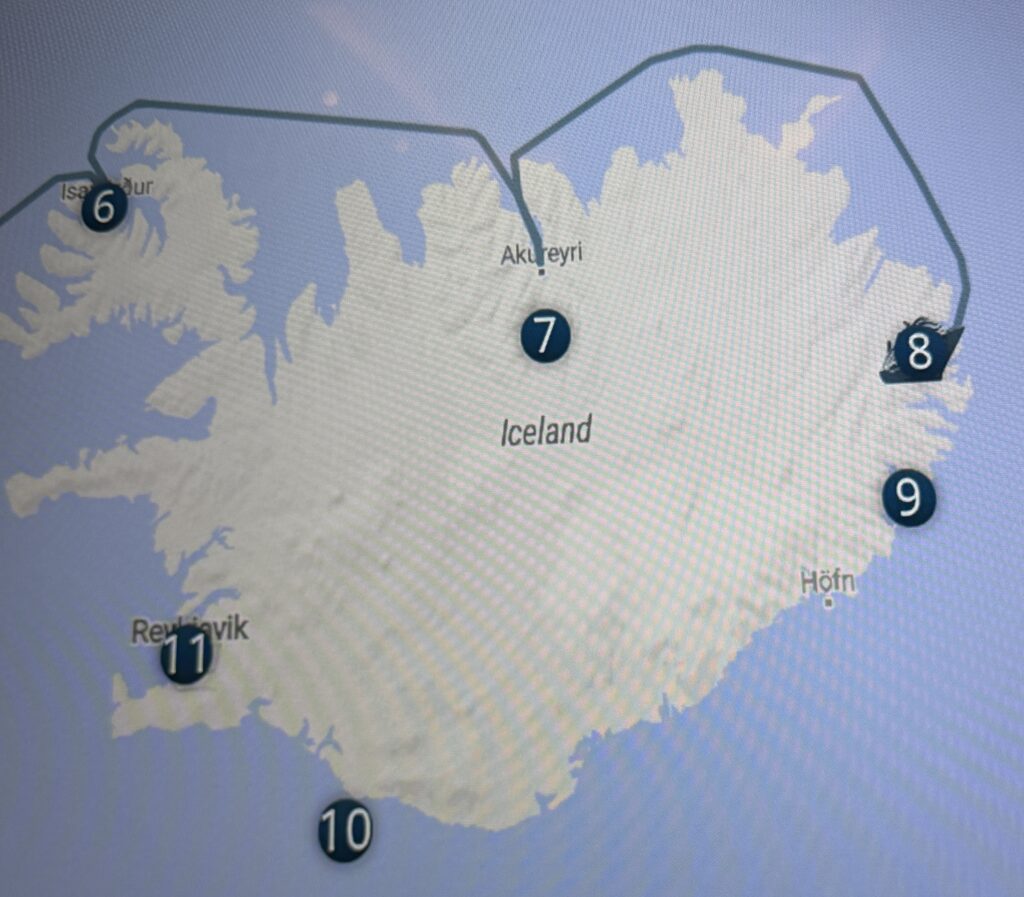
Seyðisfjörður, Iceland
Cloudy, Windy, Hi 57\3
Sunrise 4:37, Sunset 9:21
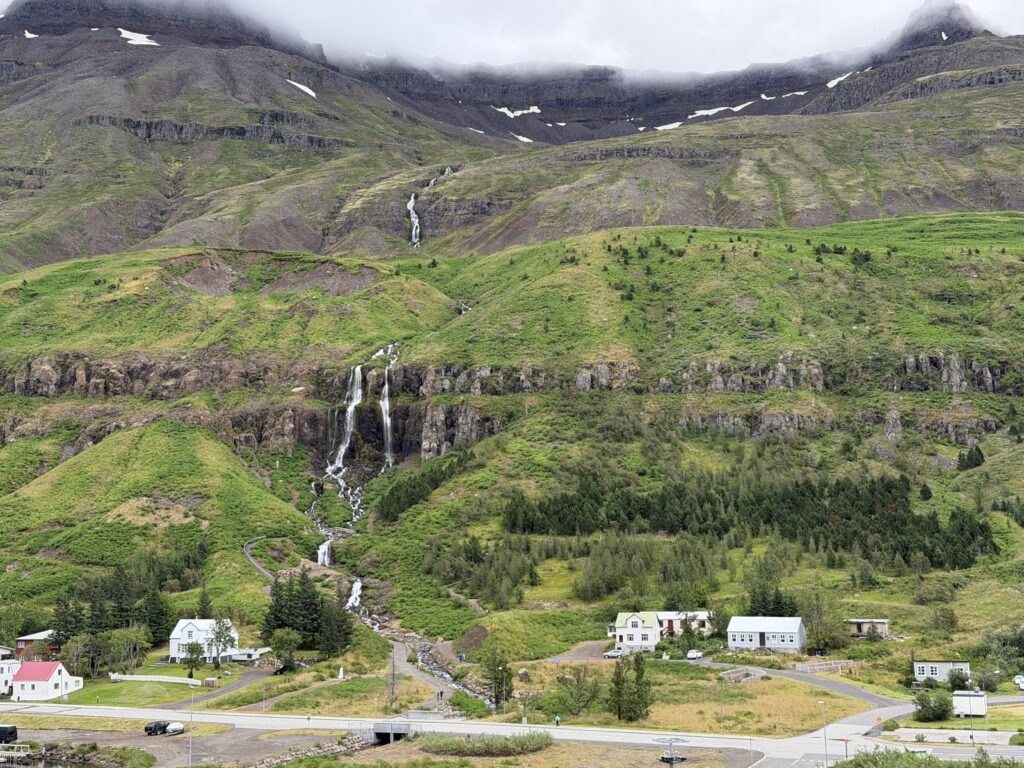
It sits at the head of a fjord and even though it only has a population of ~600 it’s significant that it is the Iceland stop for a ferry service that runs a circuit between Denmark, the Faroe Islands, and Iceland.
We docked at noonish so this morning was a ‘half sea day.’
Cheryl had a massage scheduled this morning so after exercising and breakfast she headed down to the spa while I traced the familiar route to the theatre.
My enrichment day started with:
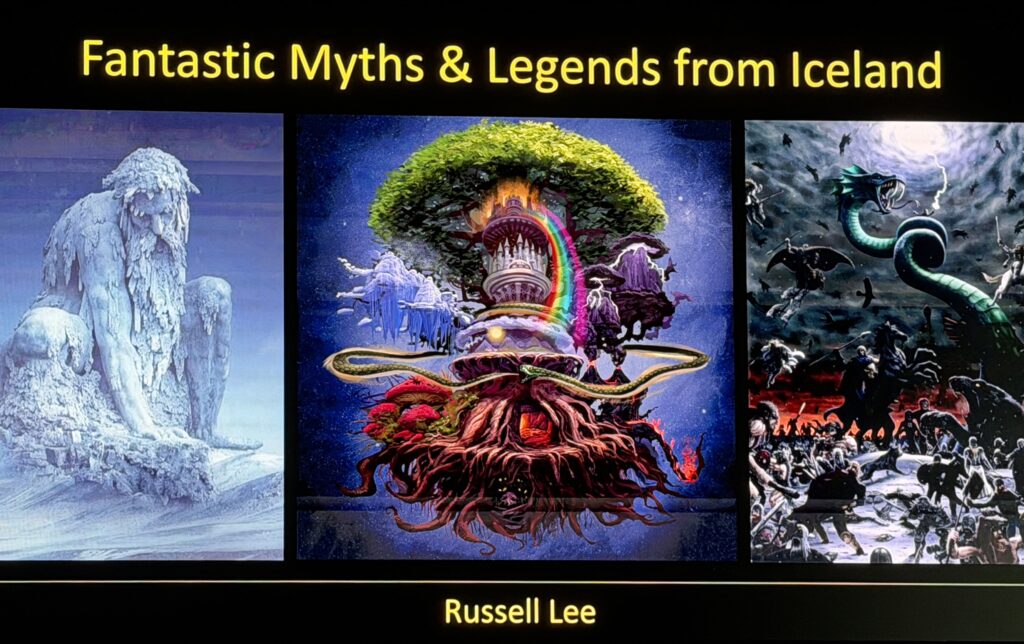
2. These are Norse legends. It’s not a mistake that they owe much to Iceland.
Which is probably a pretty good place to start.
They are indeed Norse legends (along with Odin, Loki, Thor, Frigg, Freya and others).
Actually these legends fit in the general category of Germanic Paganism which identifies similar themes and characters throughout Germany, Scandinavia, England, Iceland, and Greenland.
The problem is that the Norse never wrote them down. And with the Christianization of the continent they would have been lost to the depths of time if an Icelander, Snorri Sturluson, hadn’t eventually committed them to writing. There’s more to that tale but that’s the outline.
Lee devoted significant time to tying our current world to these myths and legends.
A study published by National Geographic in 1971 found that 54% of Icelanders believe that elves exist.
Closer to home, he reviewed the days of the week to point out that Norse gods show up in Tuesday (Named for Tyr), Wednesday (Woden/Oden), Thursday (Thor), and Friday (Frigg or Freya).
He also told the story of The Curse of Andvari’s Ring – the tale that made its way into western culture thru Wagner’s Ring Cycle – where Tolkien picked it up and used it as the basis for The Lord of the Rings.
There are many other examples of these myths showing up in our everyday life.
Cool
The next talk was by Gail Lee

More delving into her family and her quest to identify the branches, this time using the free internet application Family Search. The app and its underlying database are managed by a non-profit based in Salt Lake City (not the church itself, but…) and is built on a wiki format so it takes all the information provided by contributors to provide suggestions for possible branches.
Lee stated the warning multiple times that everything found on the site must be validated by source documents (which they provide links to whenever possible) but it might be worth a look.
Also, as you’d expect from a database housed in Utah, there is no place to add living people.
Back in the room I met Cheryl and we hung out a bit before heading to lunch.
At 1:00 we presented ourselves dockside for our excursion – a walking tour of the town.
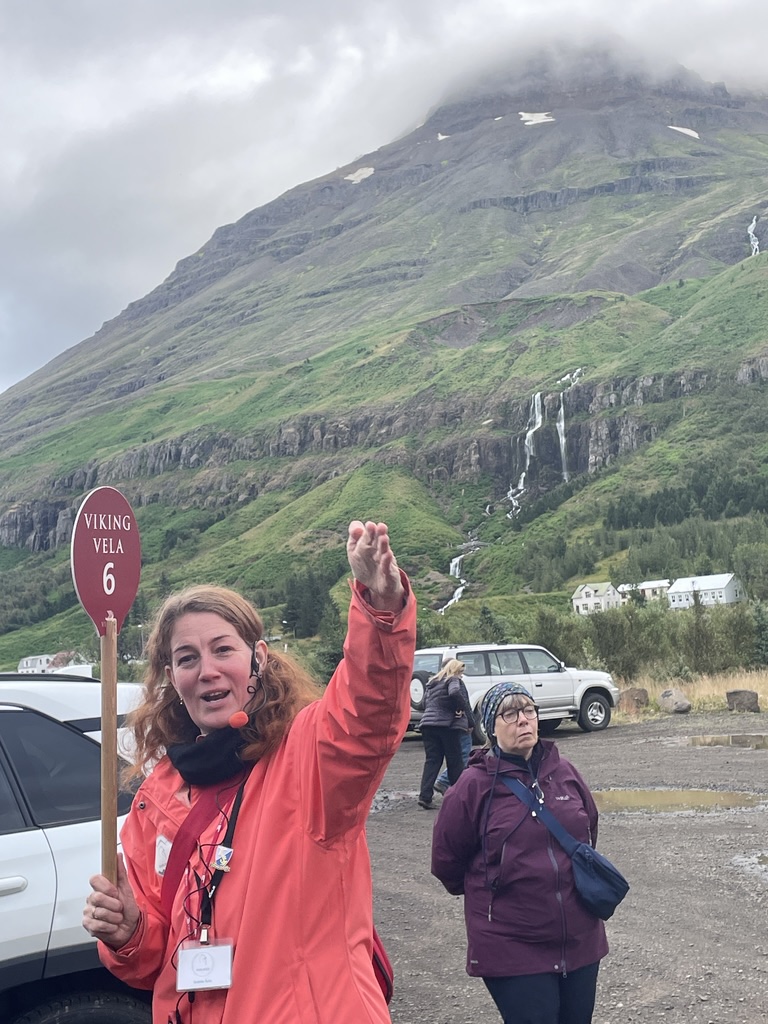
Living like they are in a fjord it wasn’t a surprise that we learned about the local history of things (dirt, rocks, snow) falling on them.
On the south side of the fjord a large rockslide 11 years ago wiped out a portion of the town. There were no fatalities but they are in the process of vacating that area, now deemed at risk for additional destruction.
On the north side avalanches are an issue so they are installing structures to channel and disrupt them.
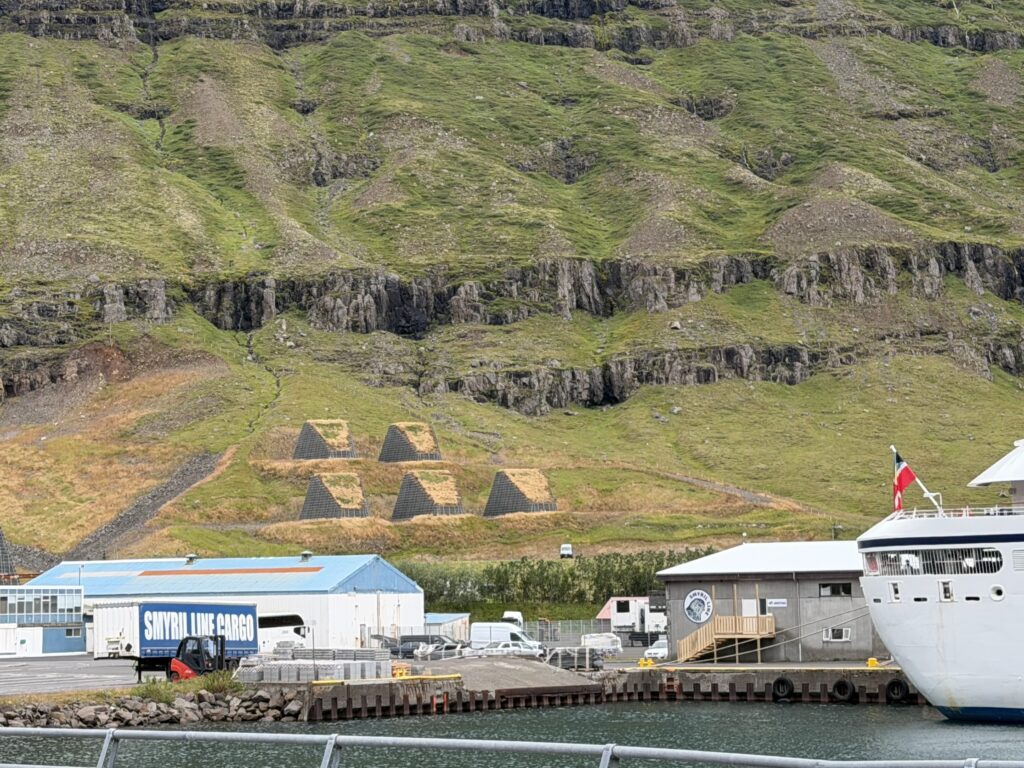
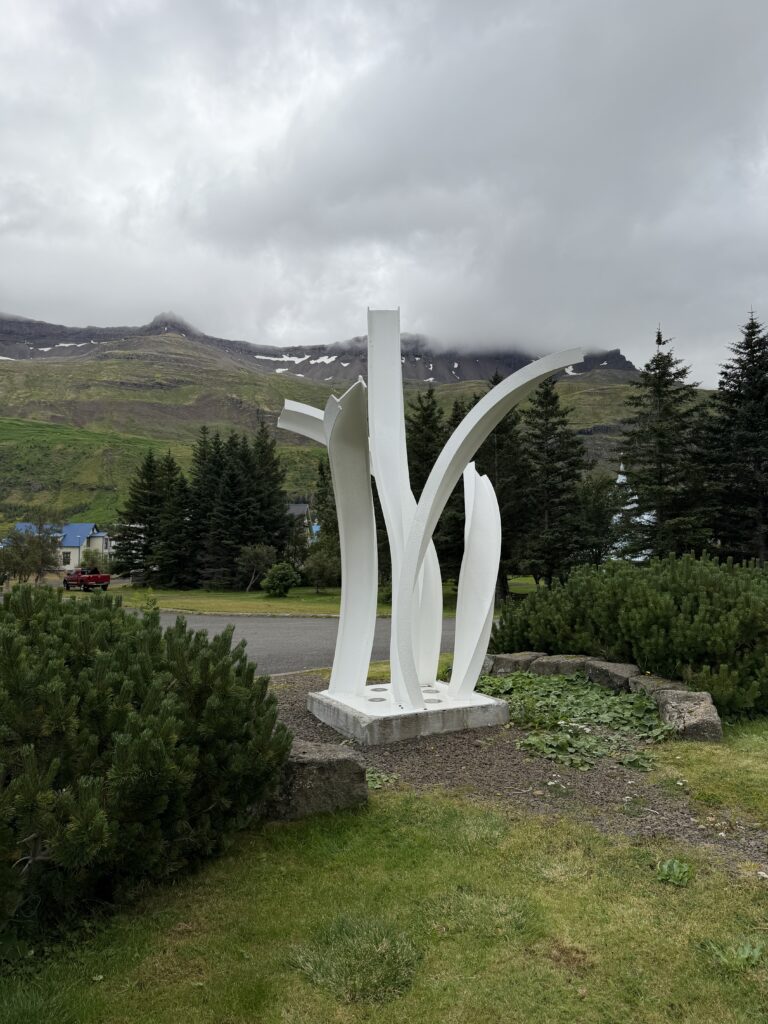
In the process of digging for construction of avalanche diversion works crews came upon evidence of ancient occupation.
In came the archaeologists.
What they found was a significant burial site along with a large long-house.
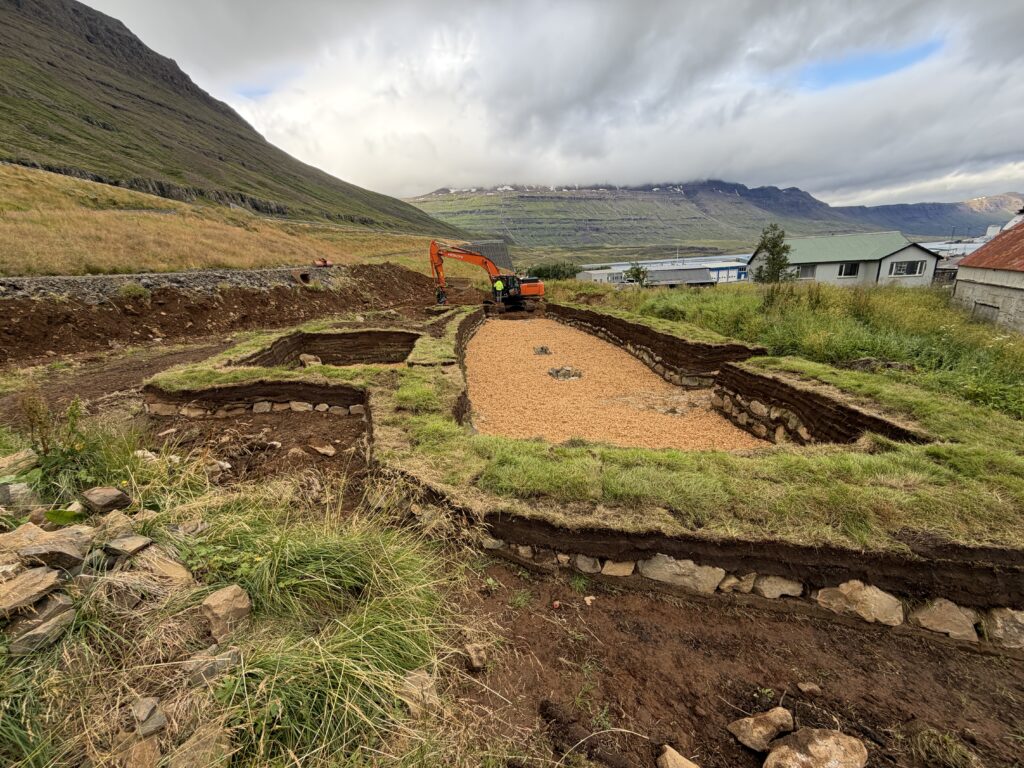
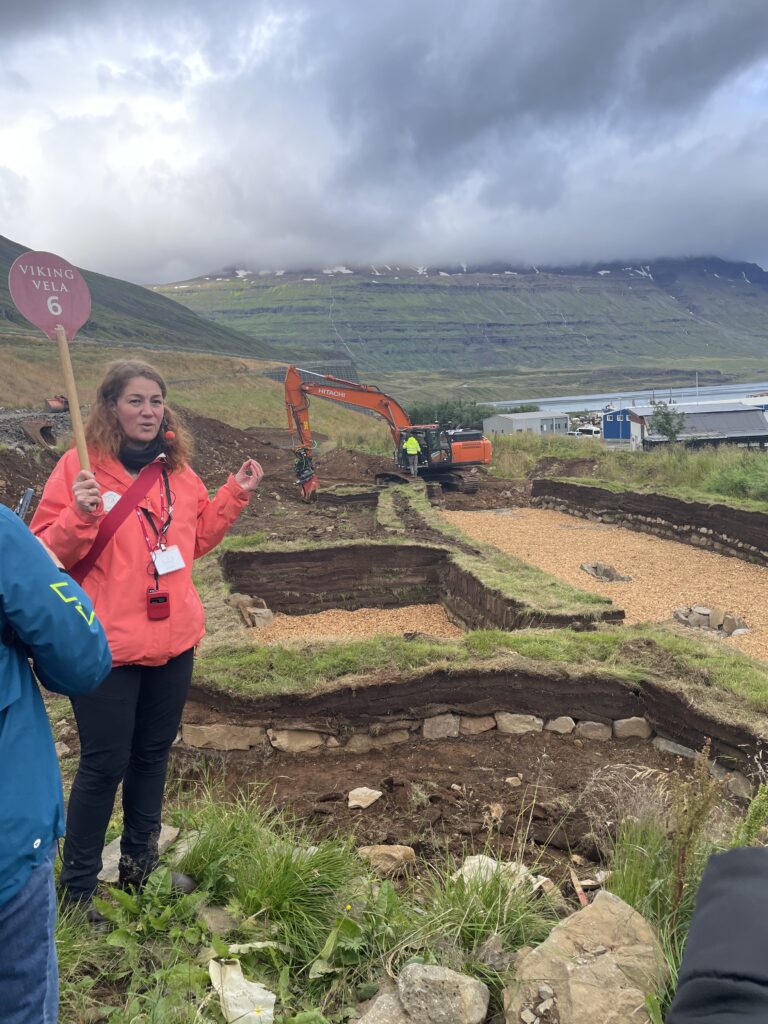
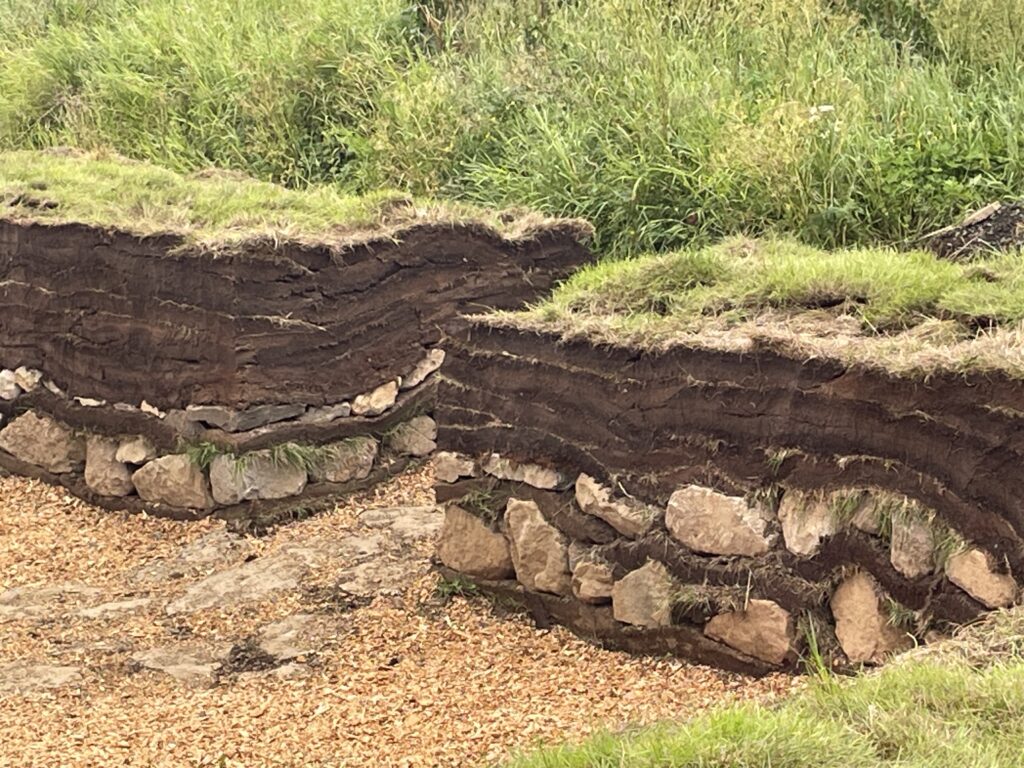
Based on location it is assumed that this is the home of the first occupant of the fjord – a farmer by trade.
An additional room at the back contained materials that suggested a business of sail work (new sails and repair of existing ones) added extra income.
We had lots of questions and she provided great insight, history, and technical knowledge about this project.
The next part of the tour was a walk thru the town.
It has been a common practice here to cover your house in corrugated metal siding.
Here are 3 examples.
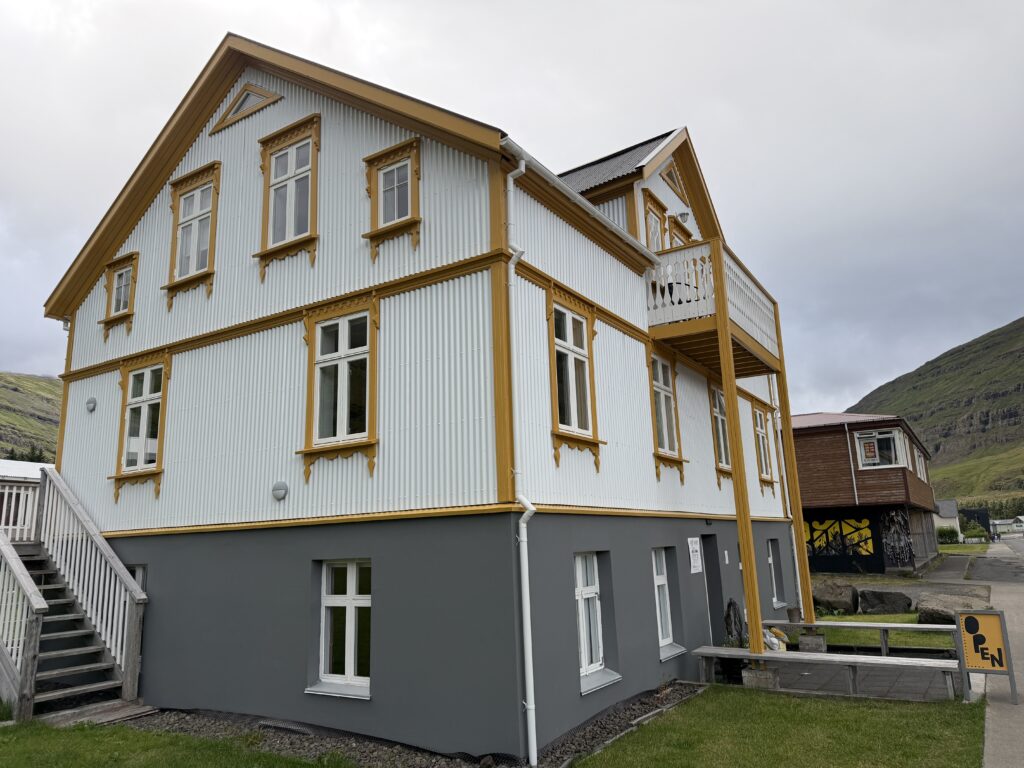
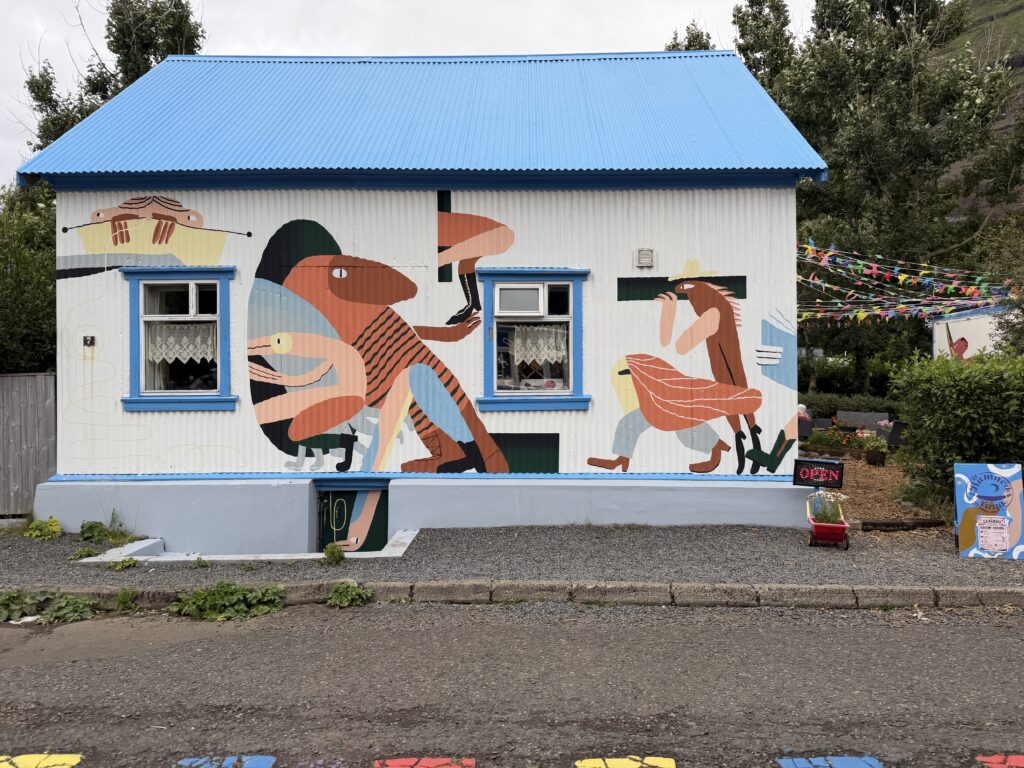
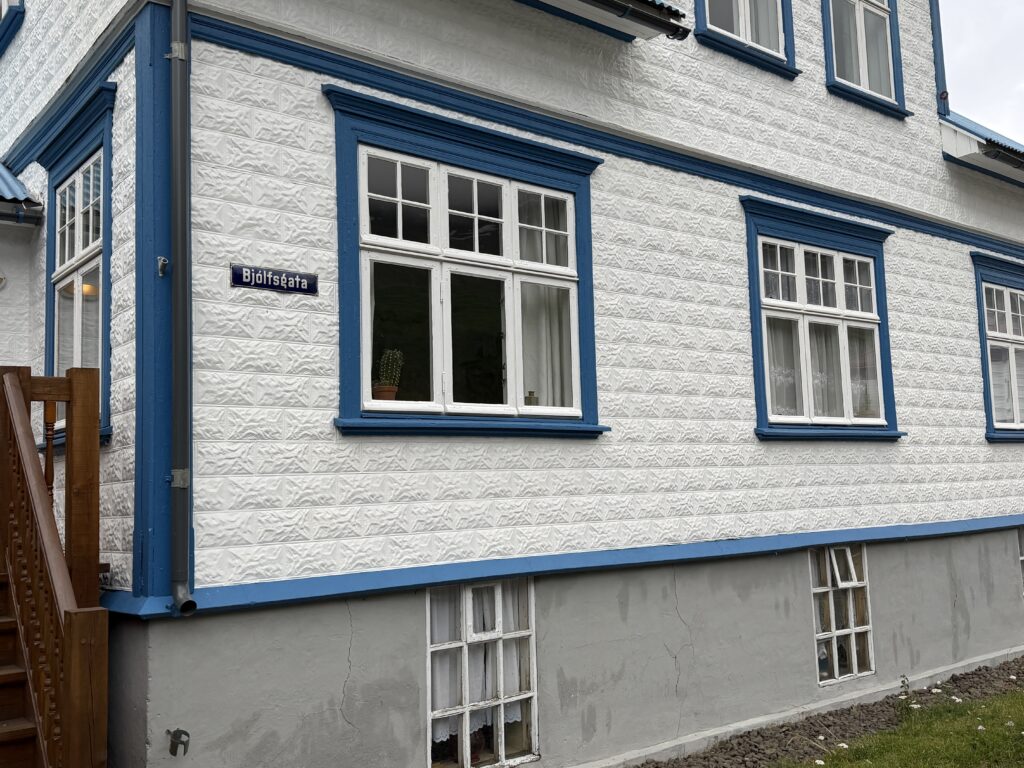
We noted some interesting sites along the way.
One of the town’s icons is the blue church at the end of the rainbow street.
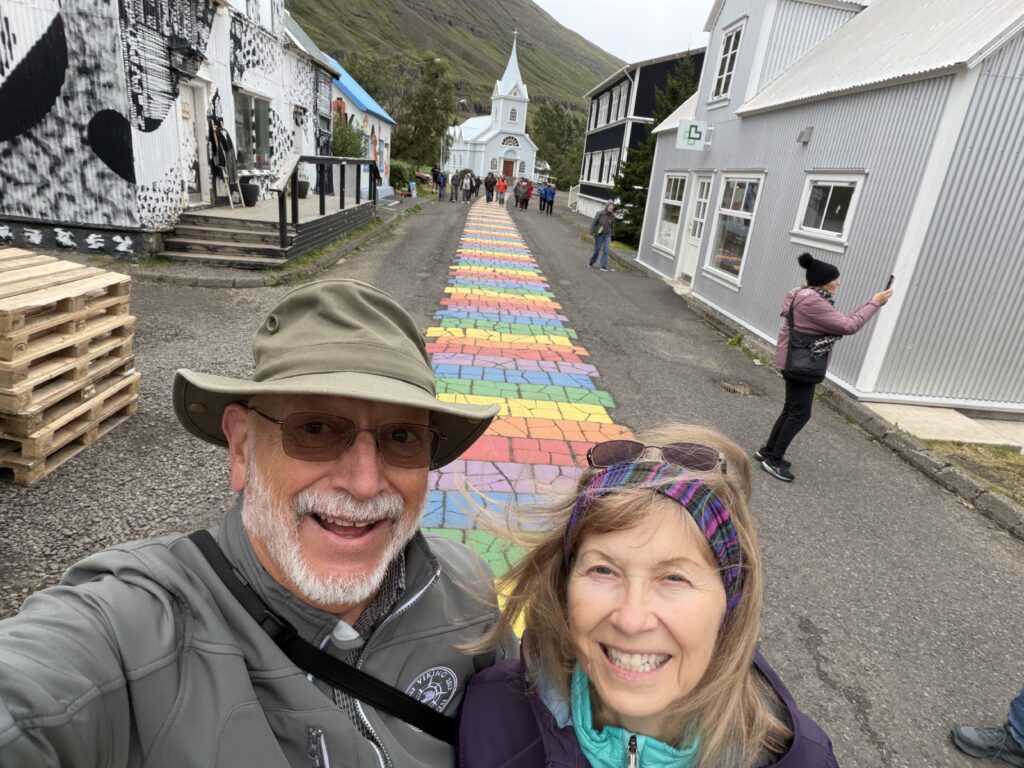
While the tie to LGTBQ+ support is obvious, the other link is back to Norse mythology – Bifröst, the rainbow bridge to Asgard.
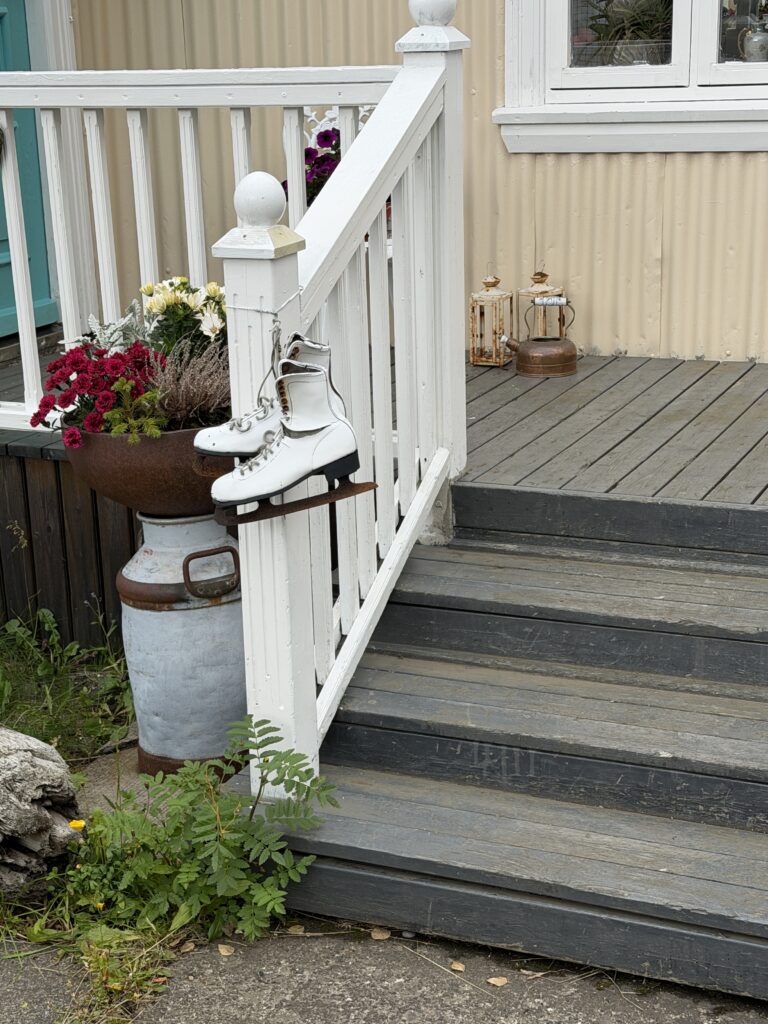
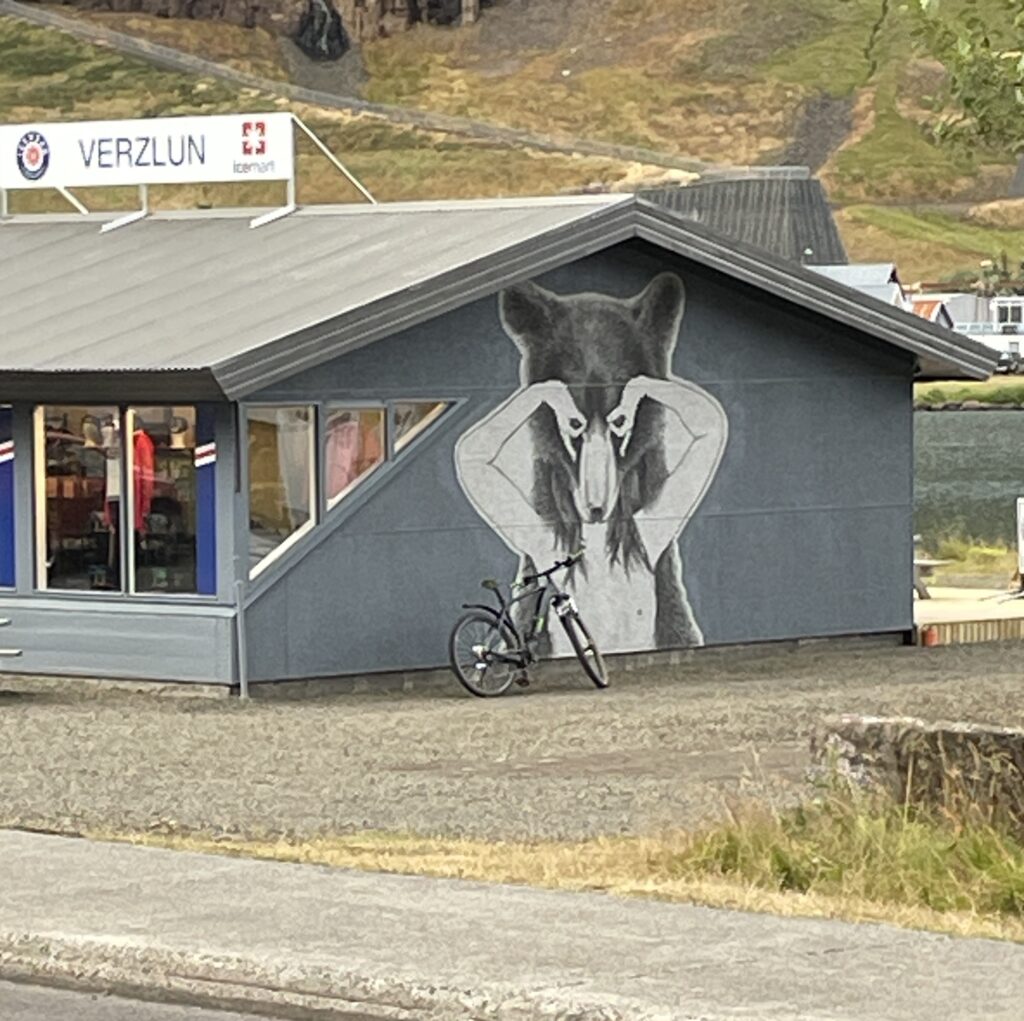
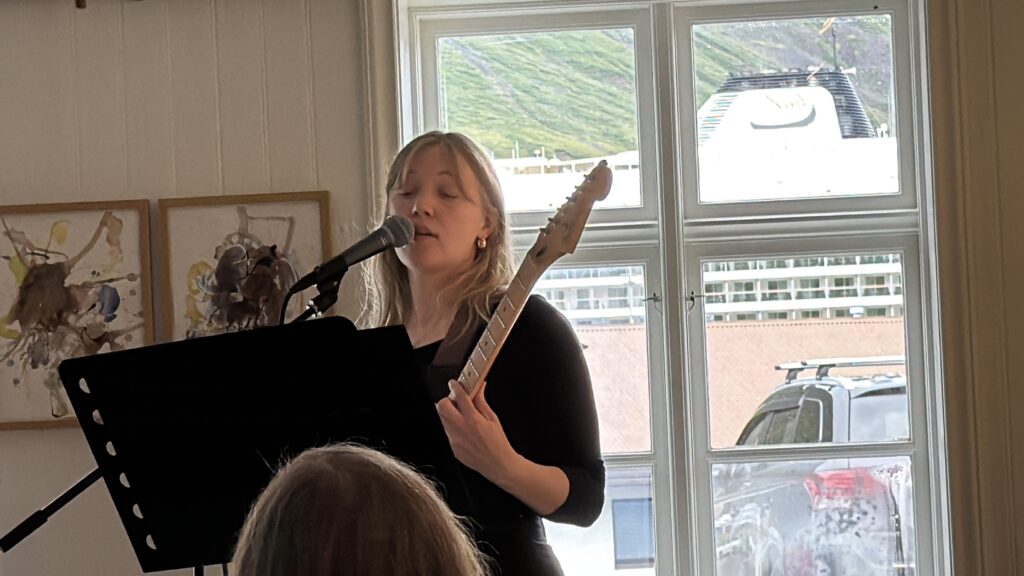
The next stop was a local bistro where we were served snacks, drinks, and a few songs by the local music teacher.
We took a few minutes to view the art gallery upstairs.
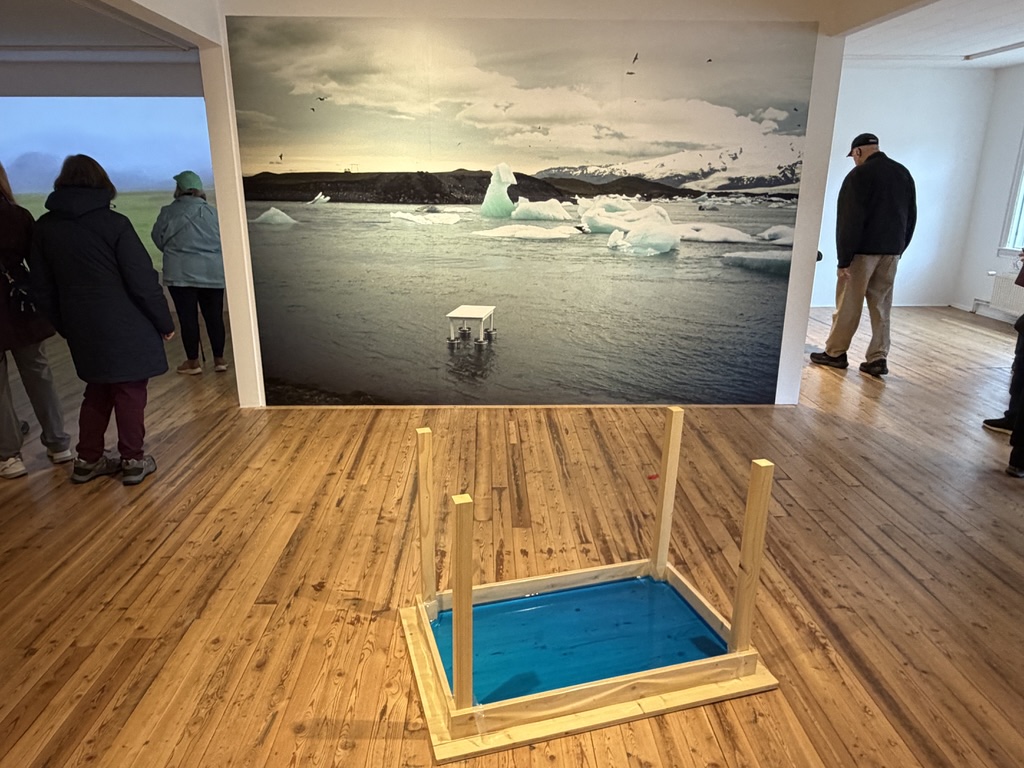
The last stop on our tour was the local technical museum.
This museum is half of what it once was – the other half having been swept away in the aforementioned slide. (They are building a new museum in another part of town.)
The building was once a machine shop and the exhibits gave a lot of information about the history of the town from the perspective of the tools and machinery used to build and support it.
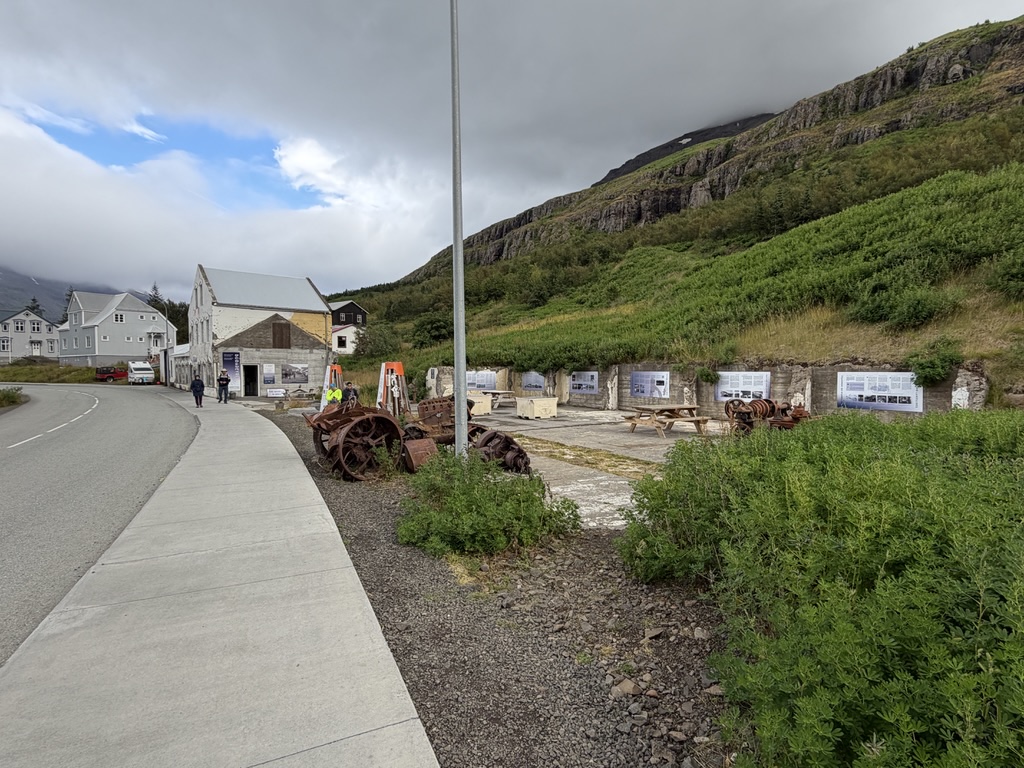
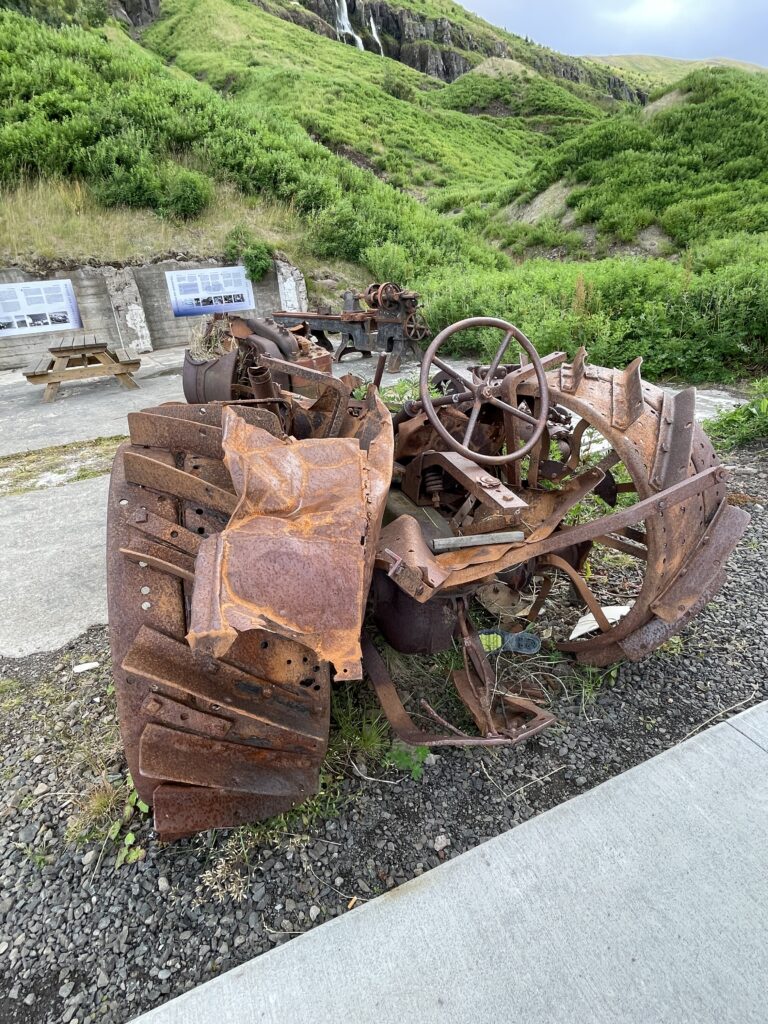
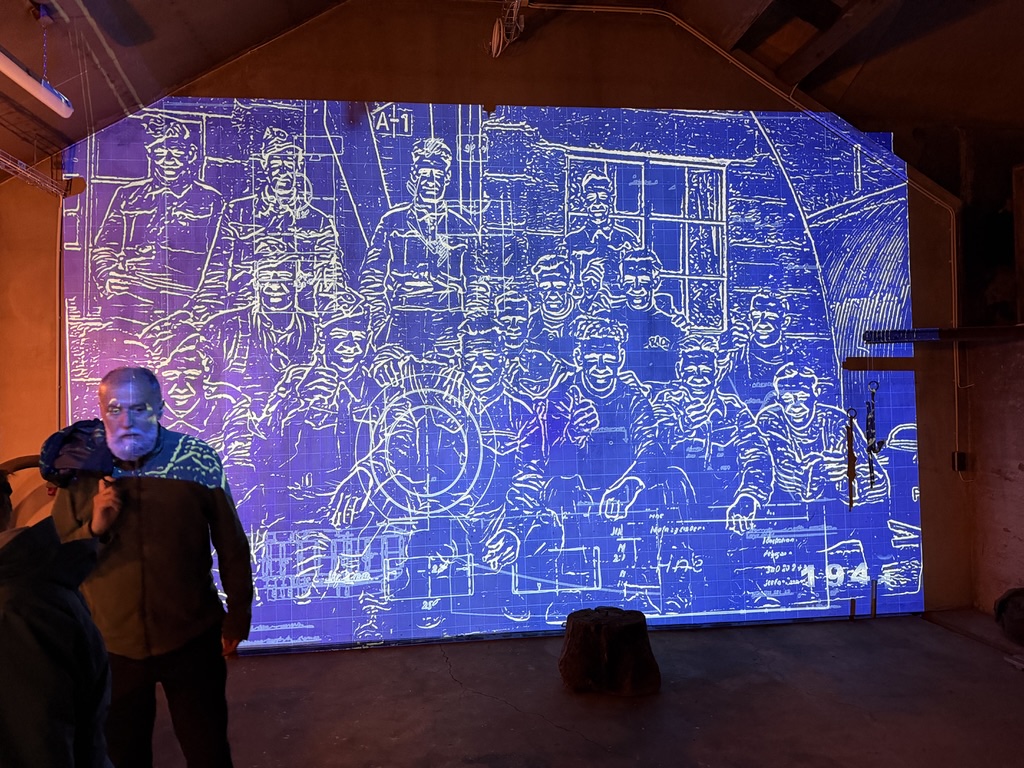
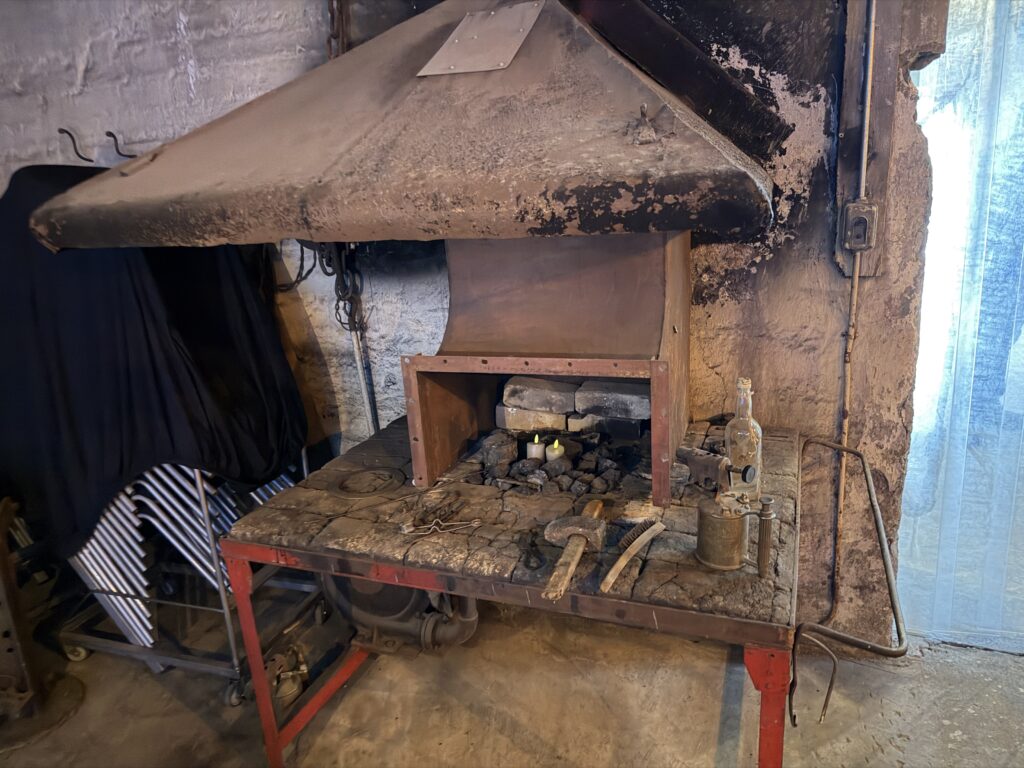
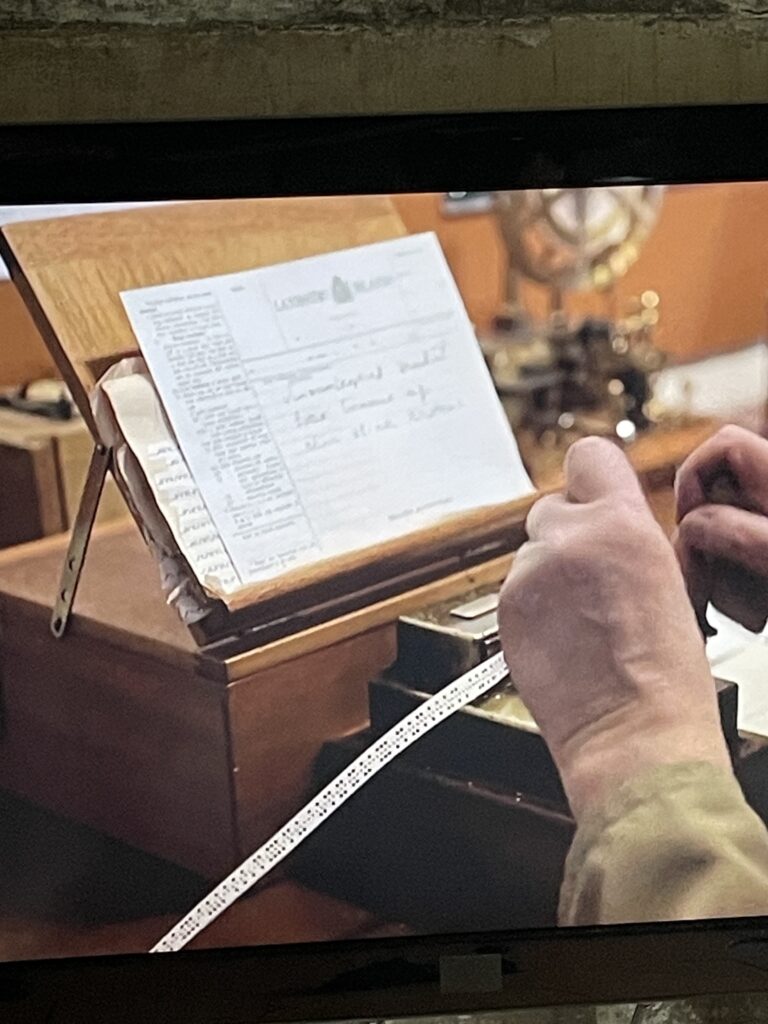
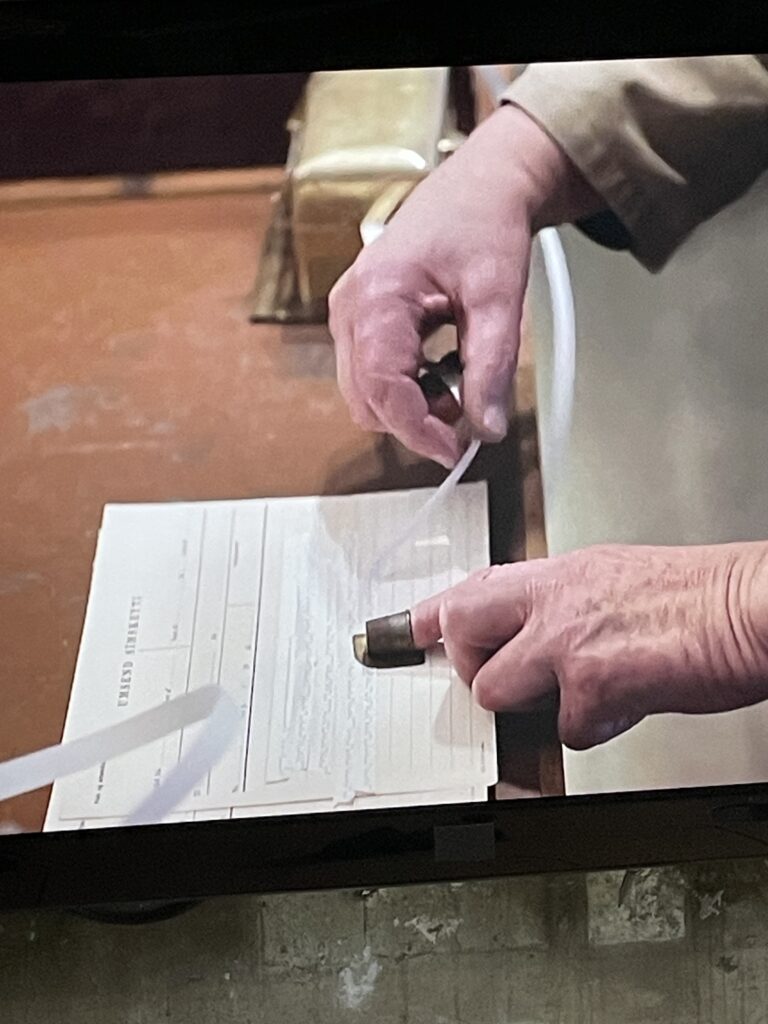
After some time viewing the history there we wandered thru town – heading for the local grocery store.
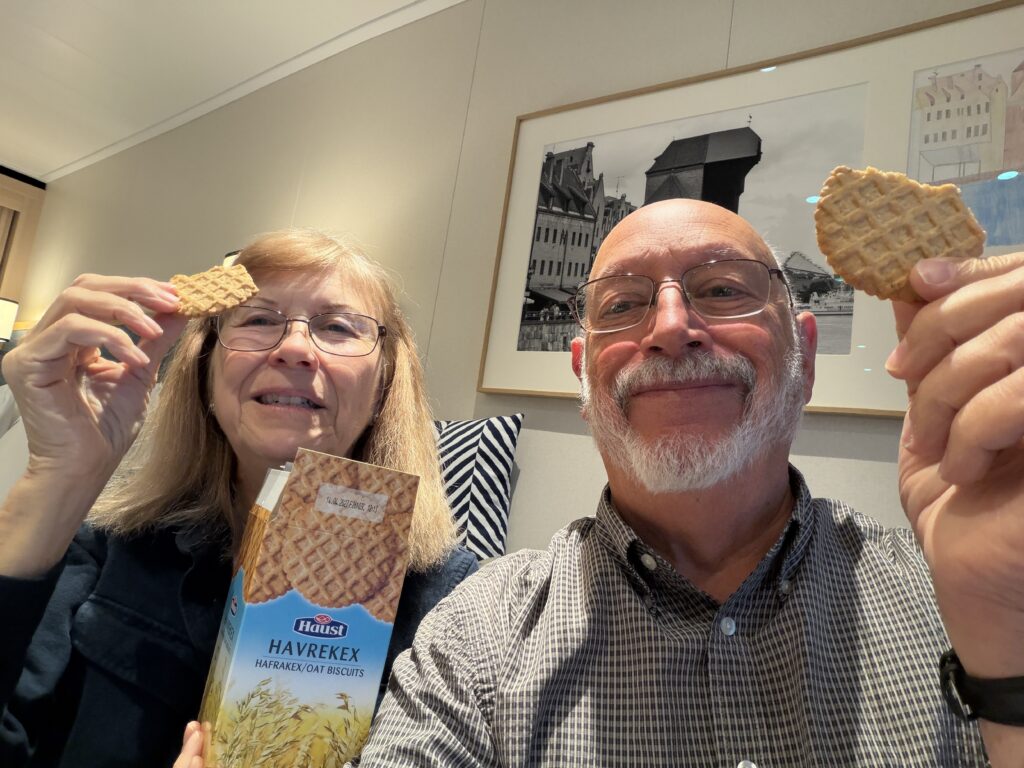
There we found the Havrekex Oat Biscuits that Jen and Brian found in their recent trip to Iceland and highly recommended.
Back at the ship we had no commitments, so we went for tea.
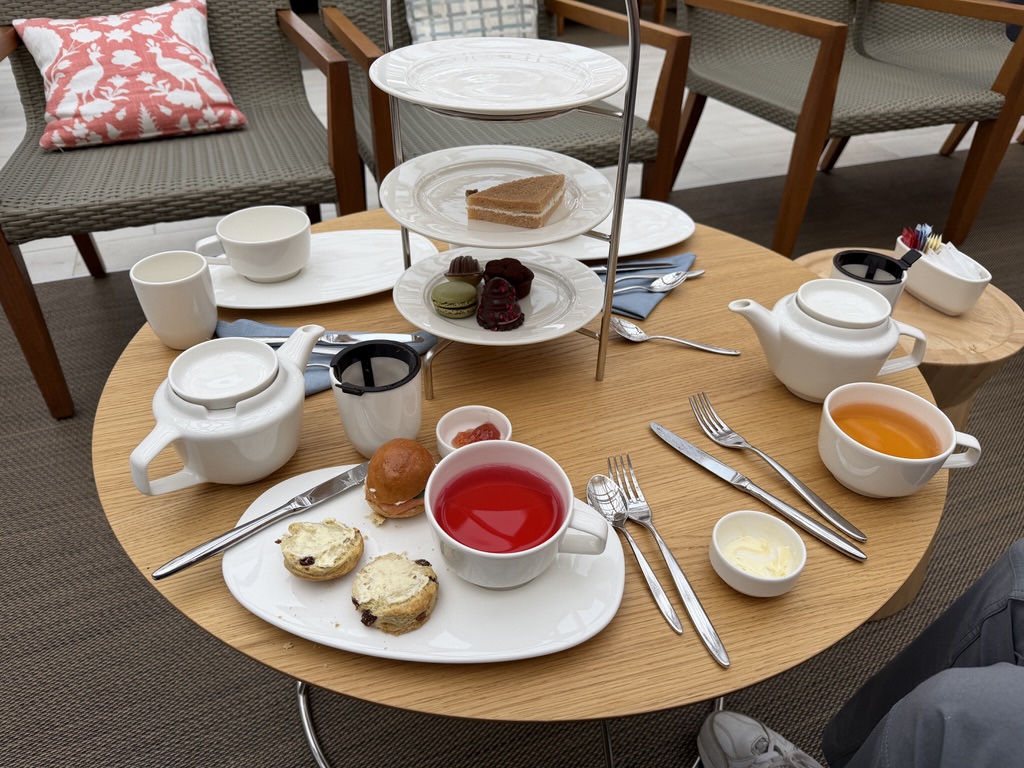
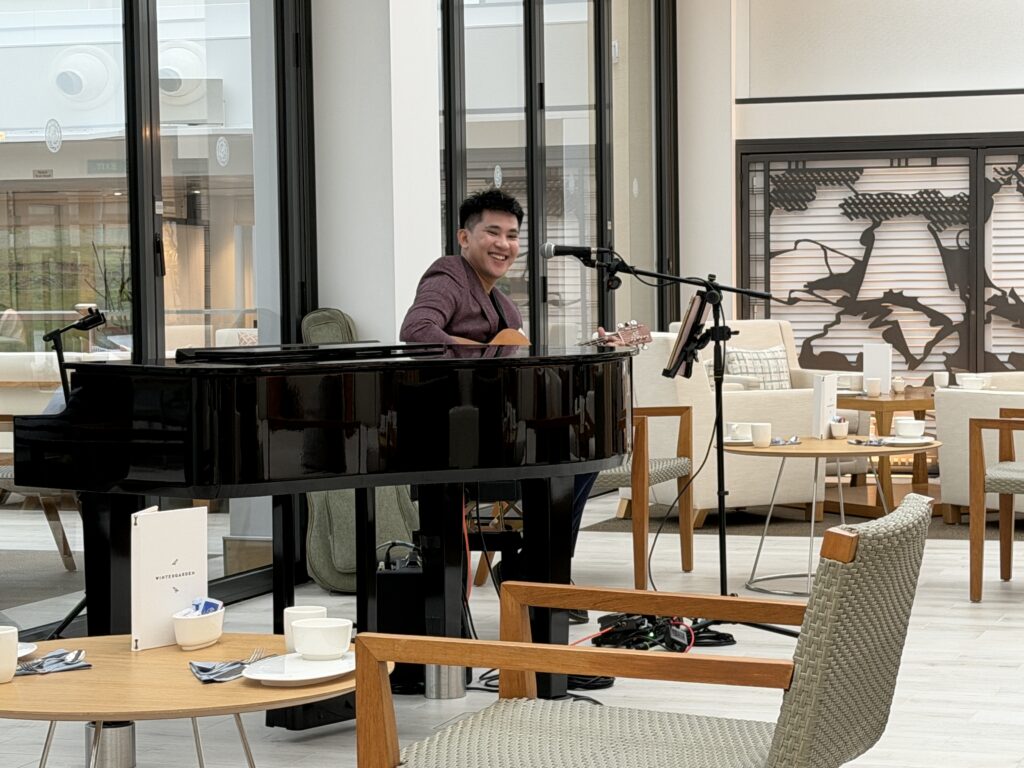
The last event before dinner was a presentation on the OSIRIS REX – the NASA project to land on an asteroid and bring back samples for analysis.
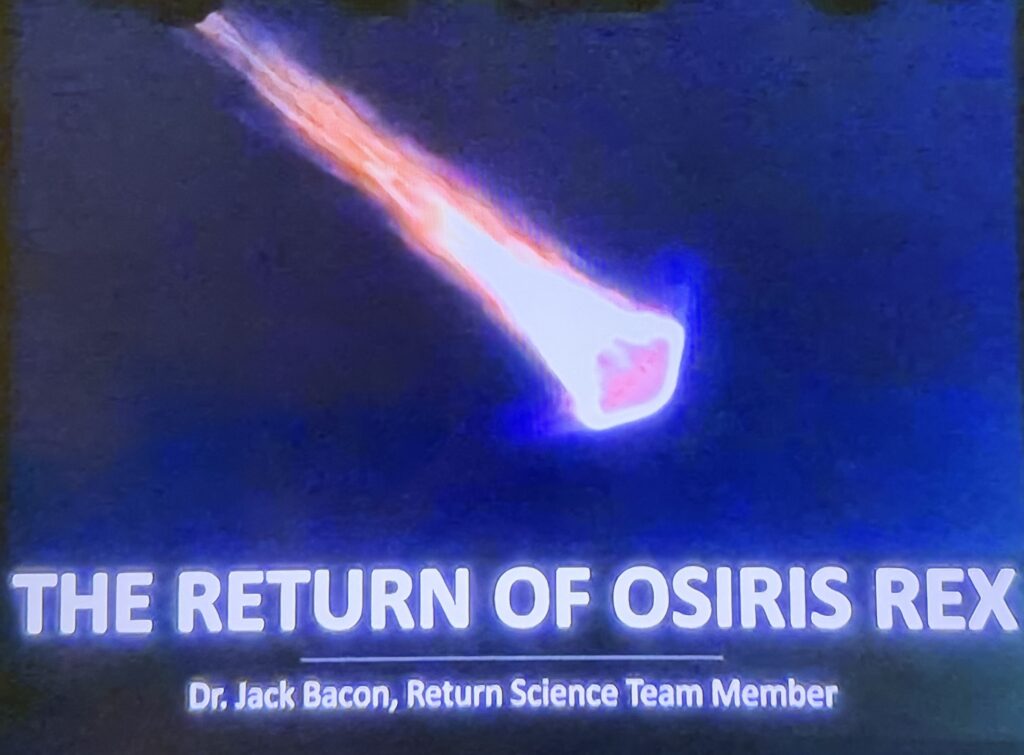
Our resident rocket scientist was a member of the team monitoring the return of the craft as it entered the atmosphere at speeds much faster than anything else we have seen.
He talked about what they learned about design and trajectory and heat shielding.
He talked about what was learned about asteroids that will be helpful in the event we find one on its way to crash into us.
He also talked about what has been discovered in the material retrieved from the asteroid.
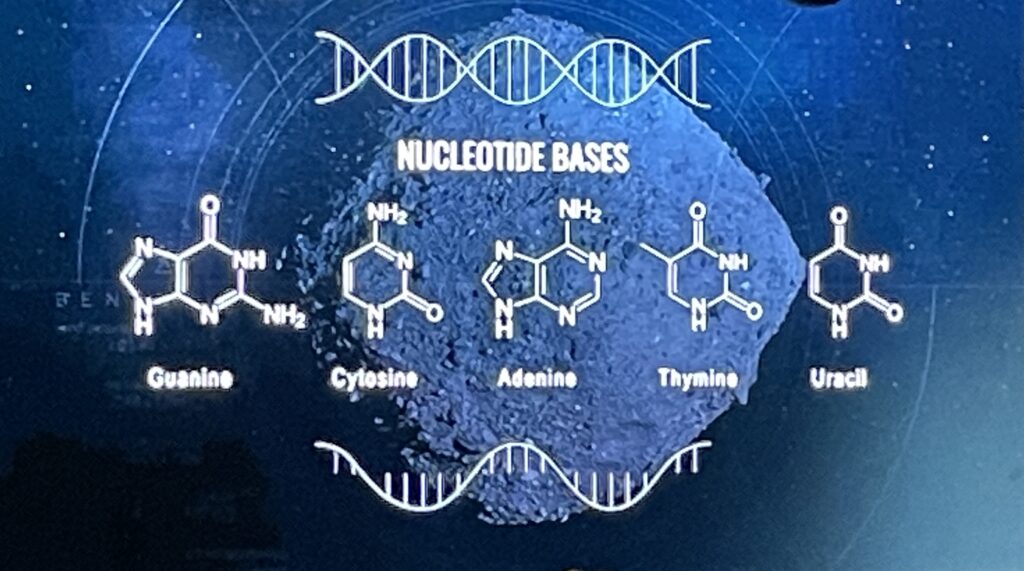
They also contain 15 of the 20 amino acids used to make proteins.
There are also crystal structures that can only occur in the presence of water
Essentially most of the elements of life are present or evidenced in this ball of space dust.
Oooooo!!!
On that happy note it was time for dinner.
Then it was back to the room for a typical evening.
We left port shortly after 9:00 pm and sailed slowly out of the Fjord entering the North Sea at about 10:30.
We know this because at that point the ship began to rock and roll, a lot.
It’s going to be an interesting night.
Tomorrow is Djupivogur.
Till then,
R