Note, if you read the Day 10 post before 10:20 am (Boise, 11:20 OK, 9:20 OR) on 9/2, you’ve read a non-current version.
After our late night yesterday it somehow made sense to start this morning with a walking tour – this time wandering thru 3 of the 6 districts of Venice (and briefly visitng the 4th) on our way to the Rialto Market and onward to lunch.
We met Elisa at the hotel in the Cannaregio District and followed her to a nearby plaza.
She explained how easy it is to find yourself in Venice.
Basically wherever there’s a bridge there’s a well, a church, and a campo (“campo” refers to a field of some sort. Originally they were communal gardens.) and the campo is named for the church.
She also showed us the pavers with holes. These allow rainwater from the campo to run into the cistern below the campo. Until Napoleon arrived this provided the water for washing and cooking. He decreed that this was unsanitary and began an aquaduct project to bring water from the mountains.
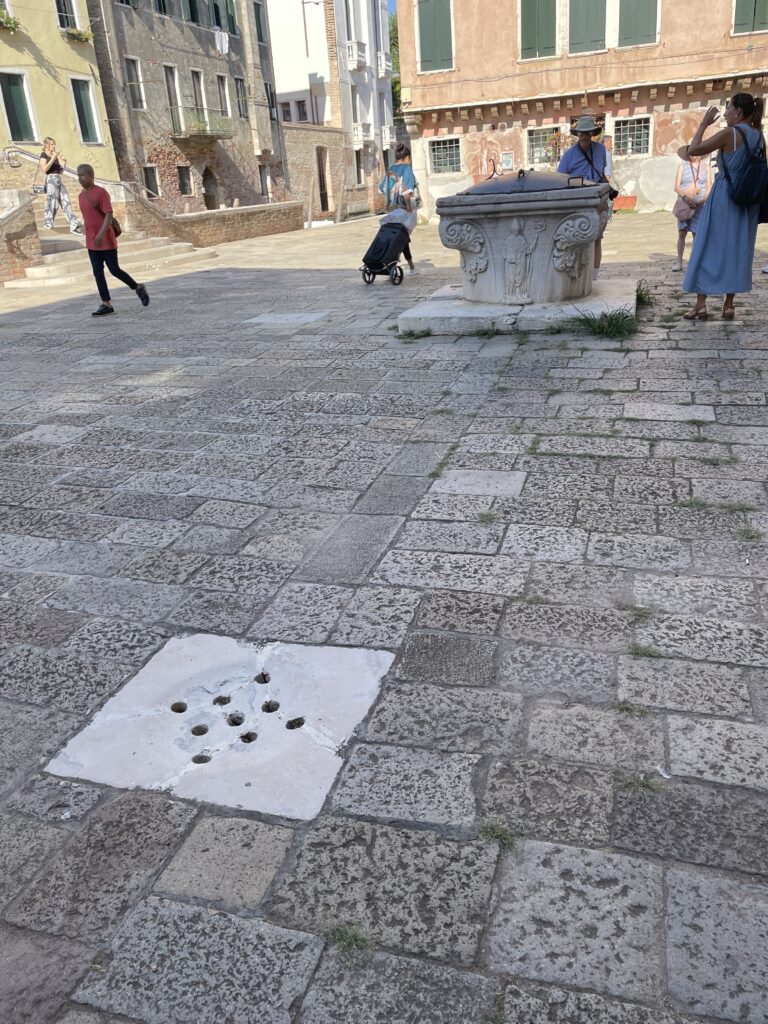
Note the drain to the cistern in the foreground.
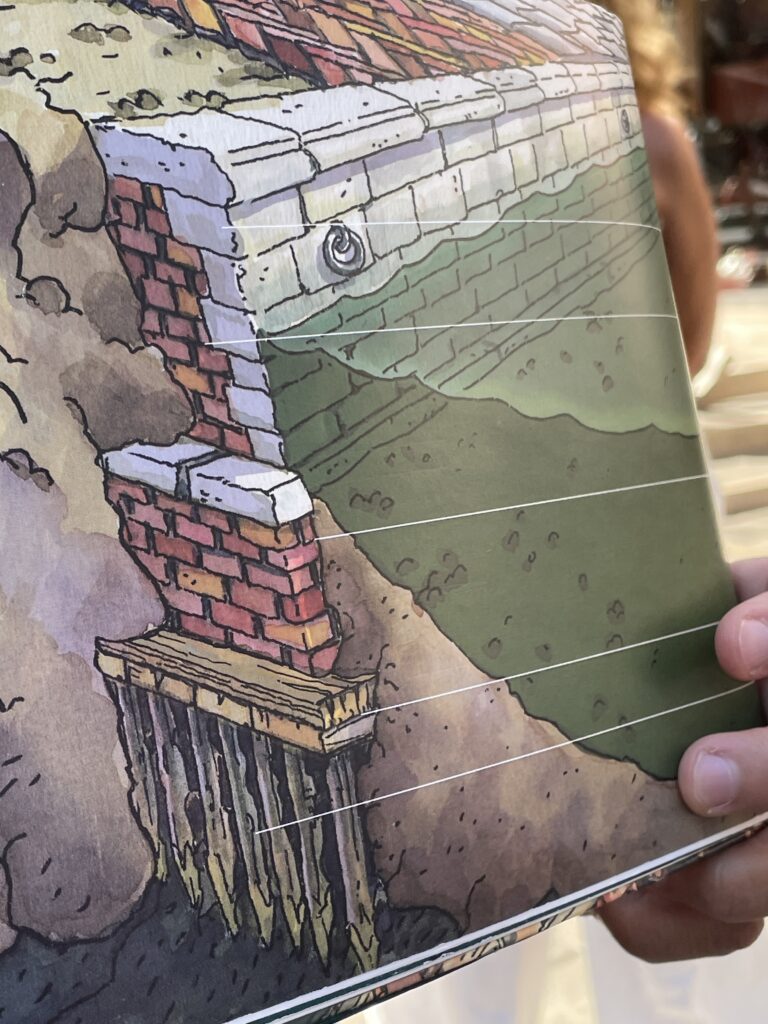
She also described the process used to build a city on a mud flat. She pointed out that the poles are driven into the ground to anchor the city on the bedrock. above the poles wood is layered to form the base and bricks are used in construction because they are lighter than comparable wood. To understand the scale of this process, under the Basilica di Santa Maria della Salute (You’ll see it later) over a million piles have been identified.
Walking on she talked about greenery around the city.
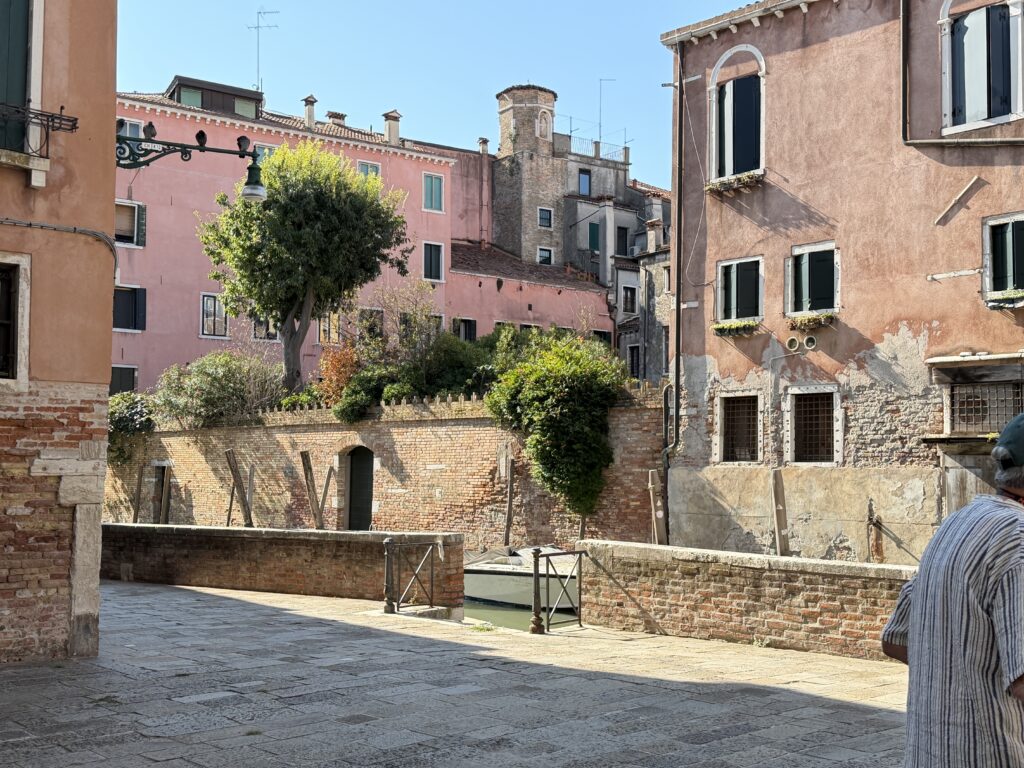
She also talked about high tides and their impact on the city. Yesterday we saw standing water in St. Mark’s square (the lowest point in the city) but throughout the city you can see evidence of flood mitigation efforts.
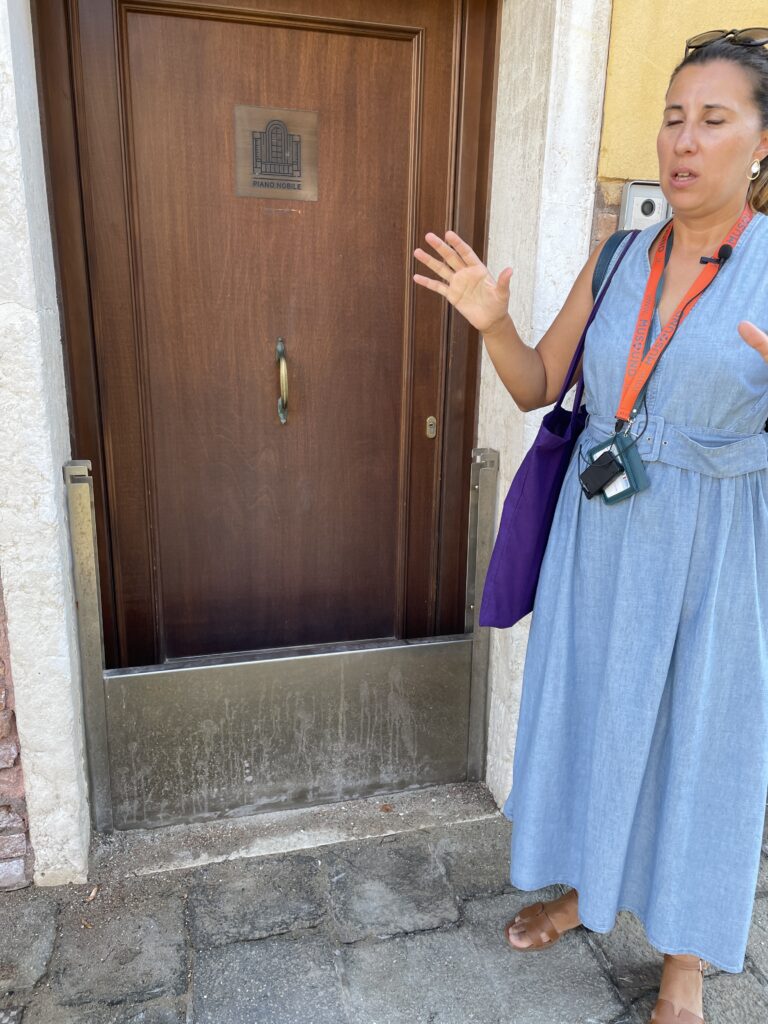
Neither will be high enough to manage the hugest tides (that can exceed 2 meters).
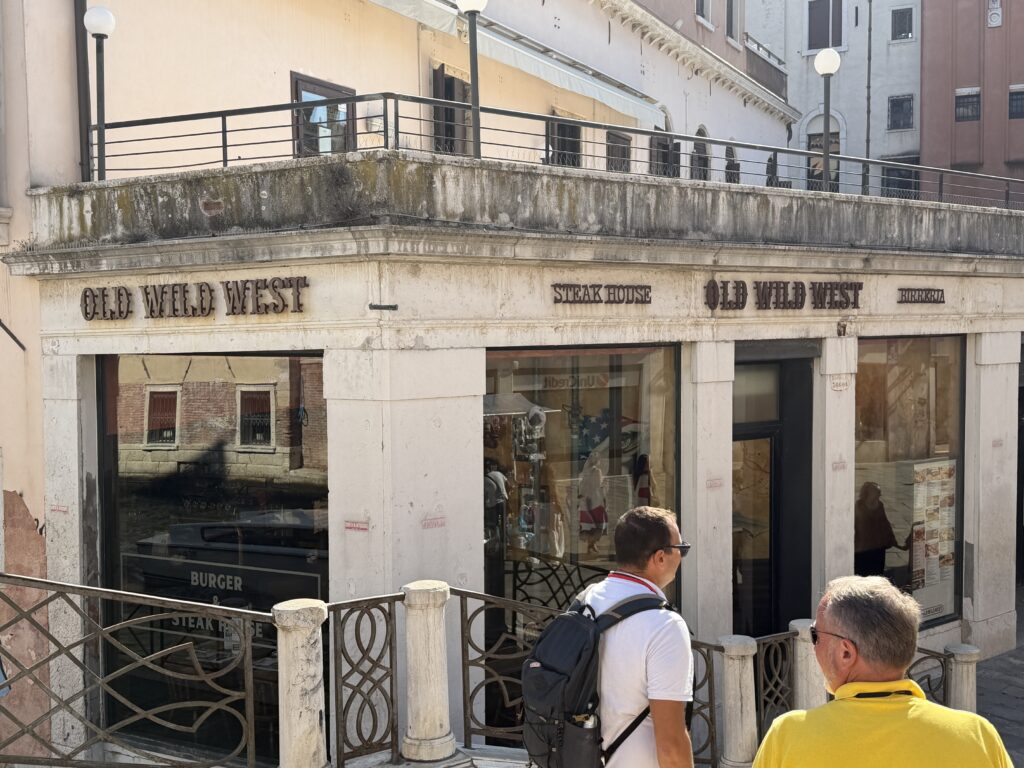
Moving into the more touristy area of the San Marco District we began to see evidence of tourist impact. We saw our first McDonalds (They also call it the American Embassy.) and other establishments with western influence.
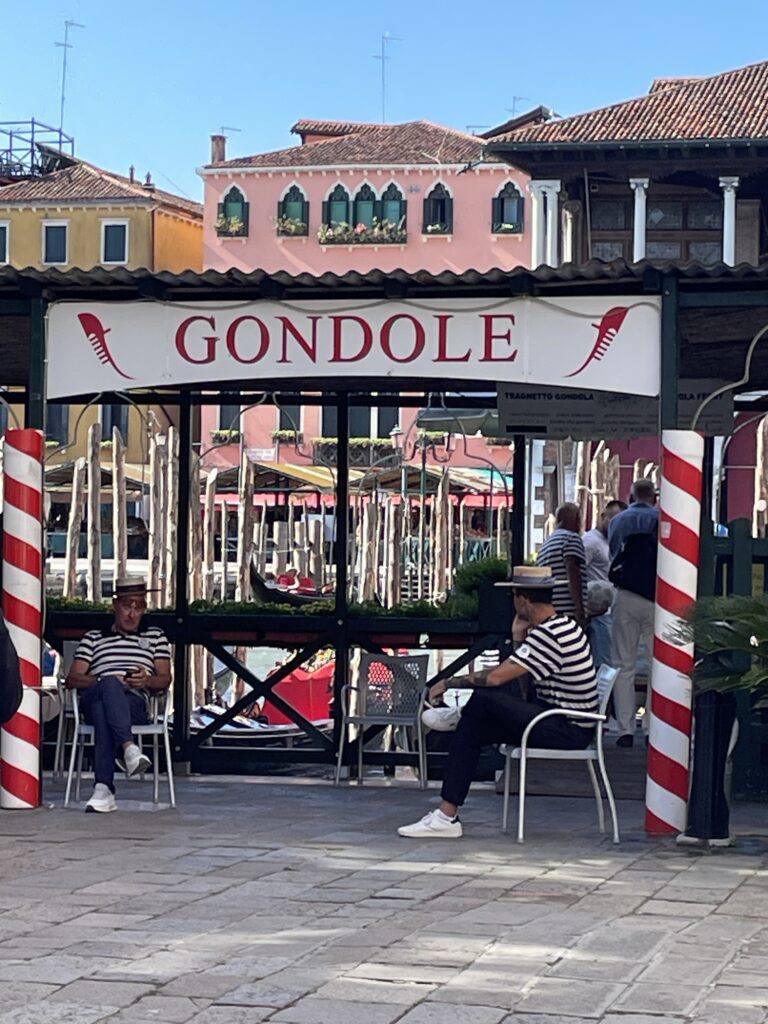
Along the way we stopped at a Gondola stand.
She talked about the boats that are passed down from father to son (and one or two daughters) along with membership in the guild, and the training involved in becoming a gondolier.
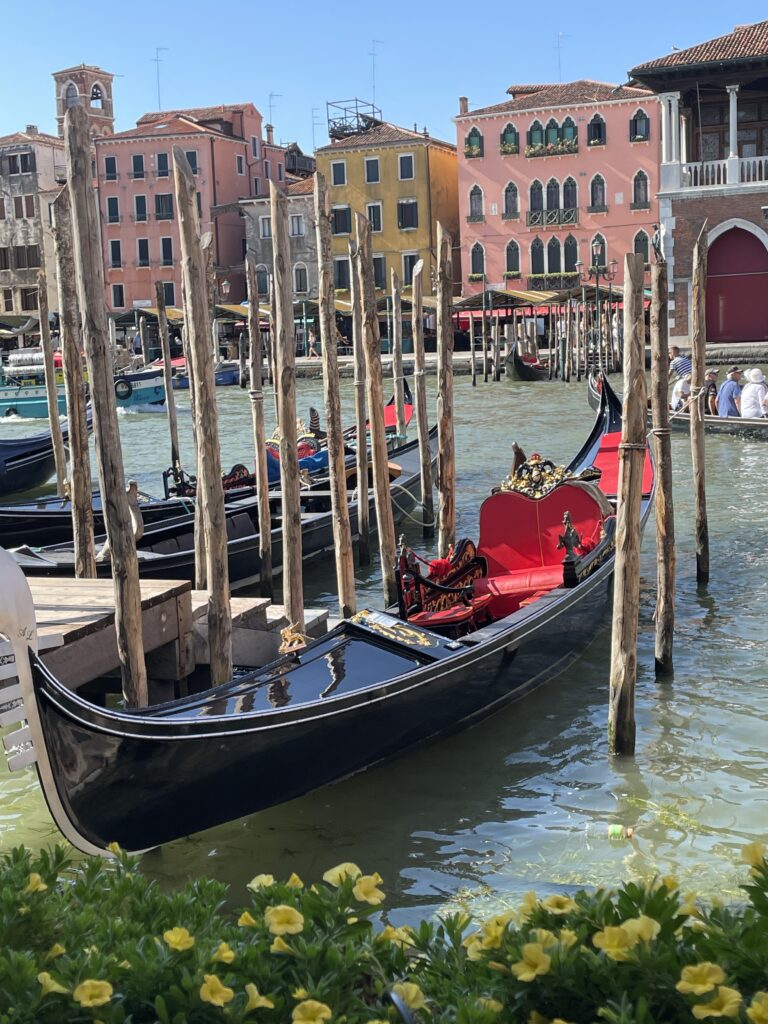
Our next stop was the Rialto bridge.
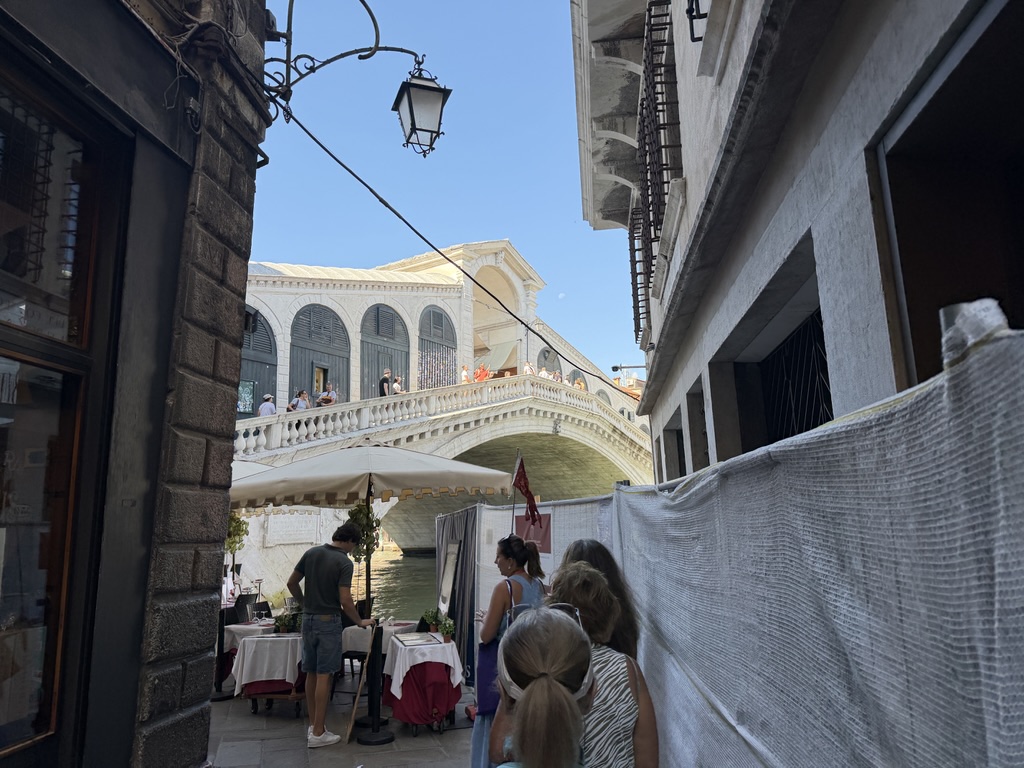
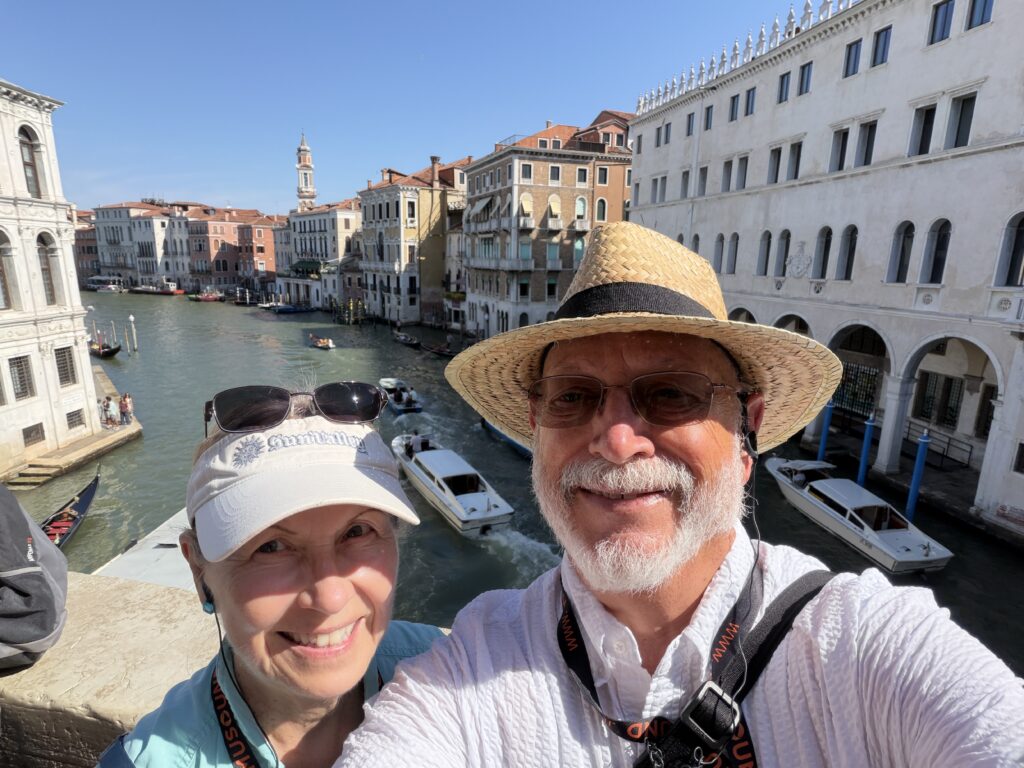
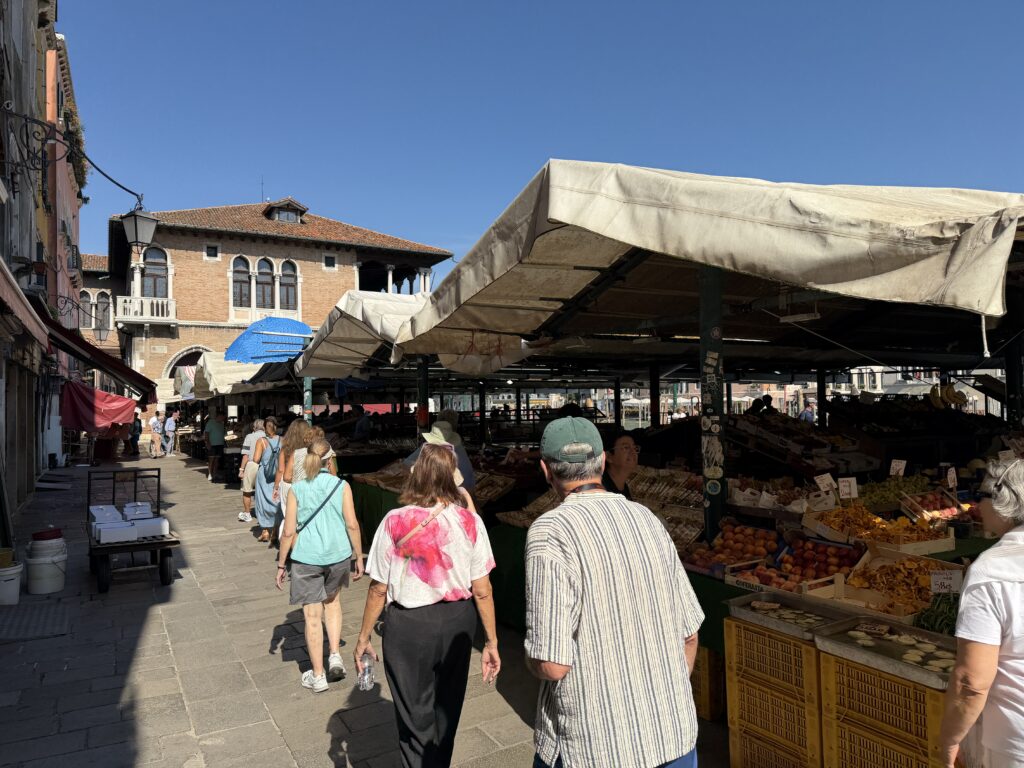
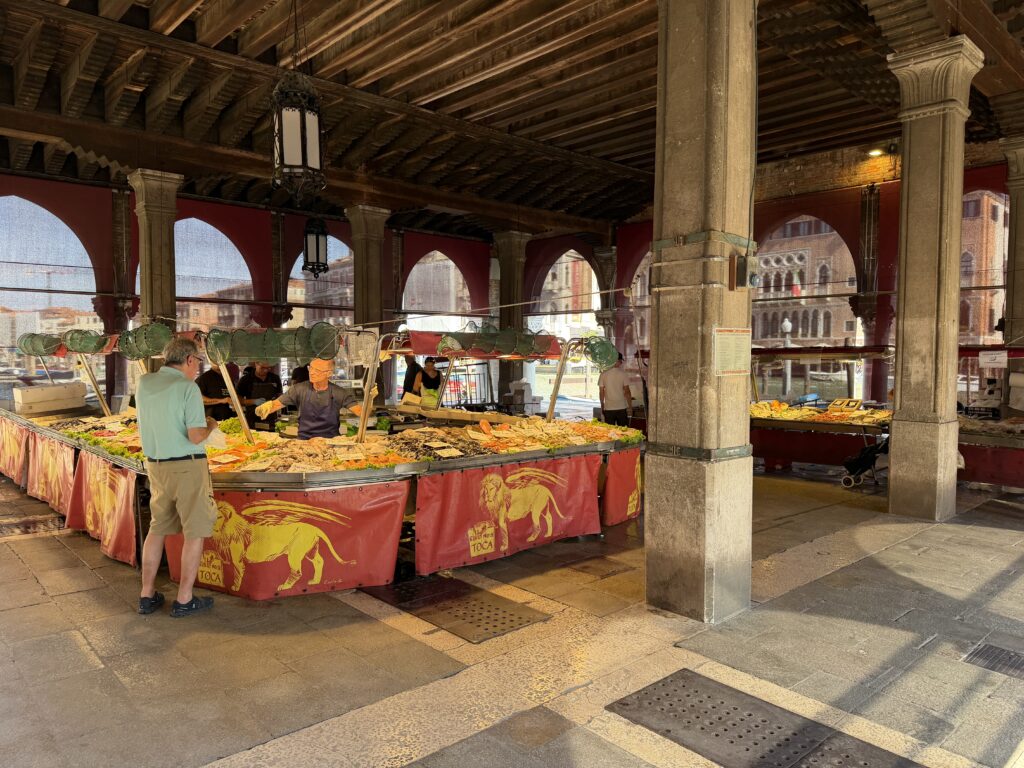
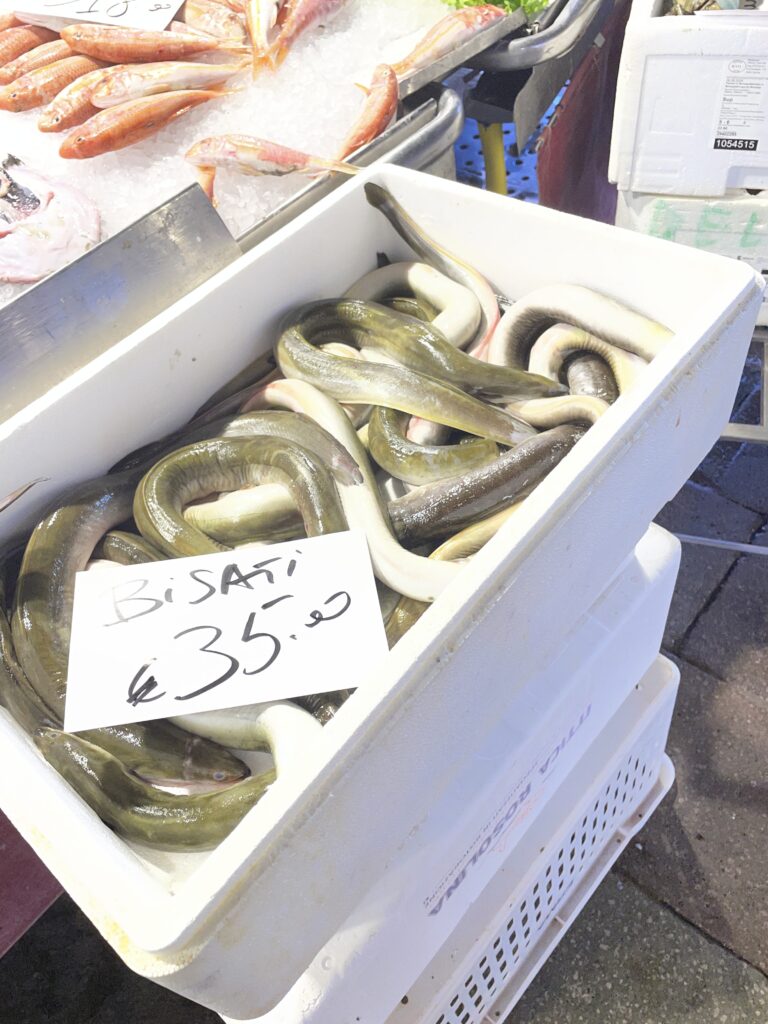
Crossing the bridge into the San Polo district we entered the Rialto Marketplace.
San Polo is the oldest area of the city and is its ‘business heart’.
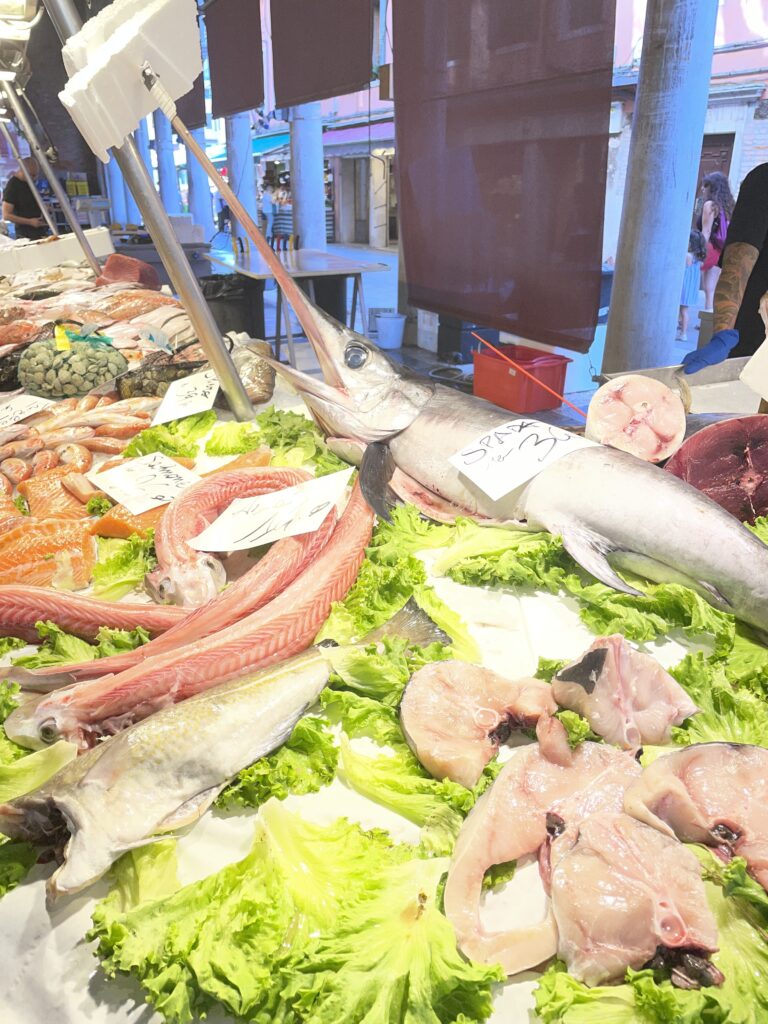
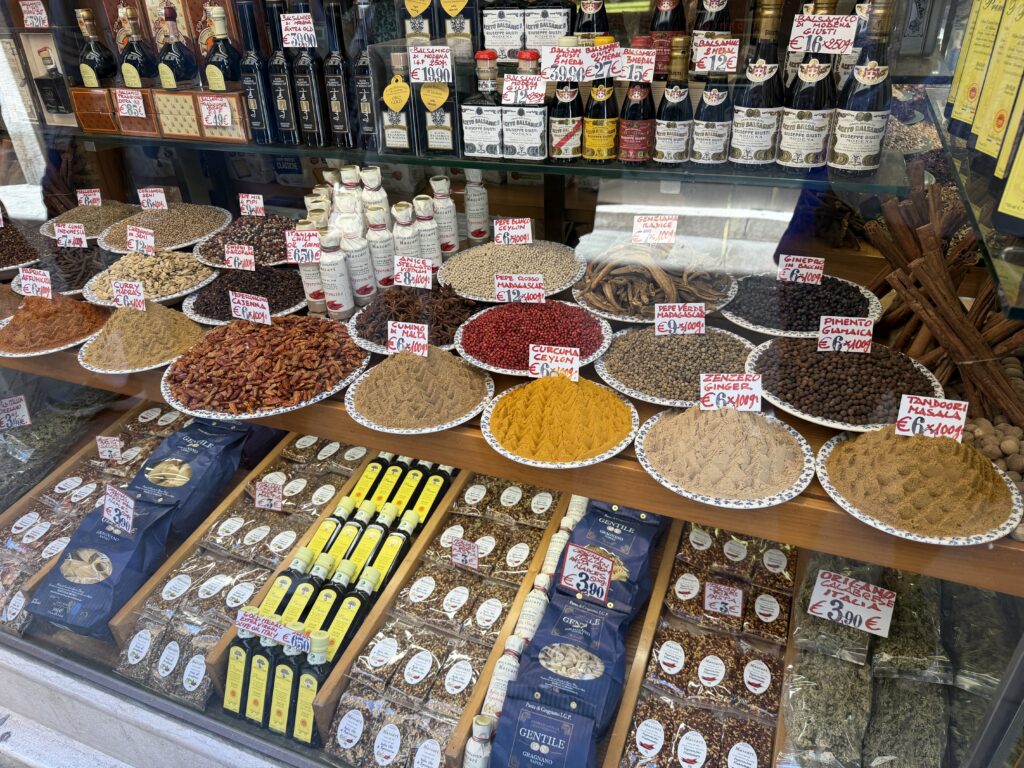
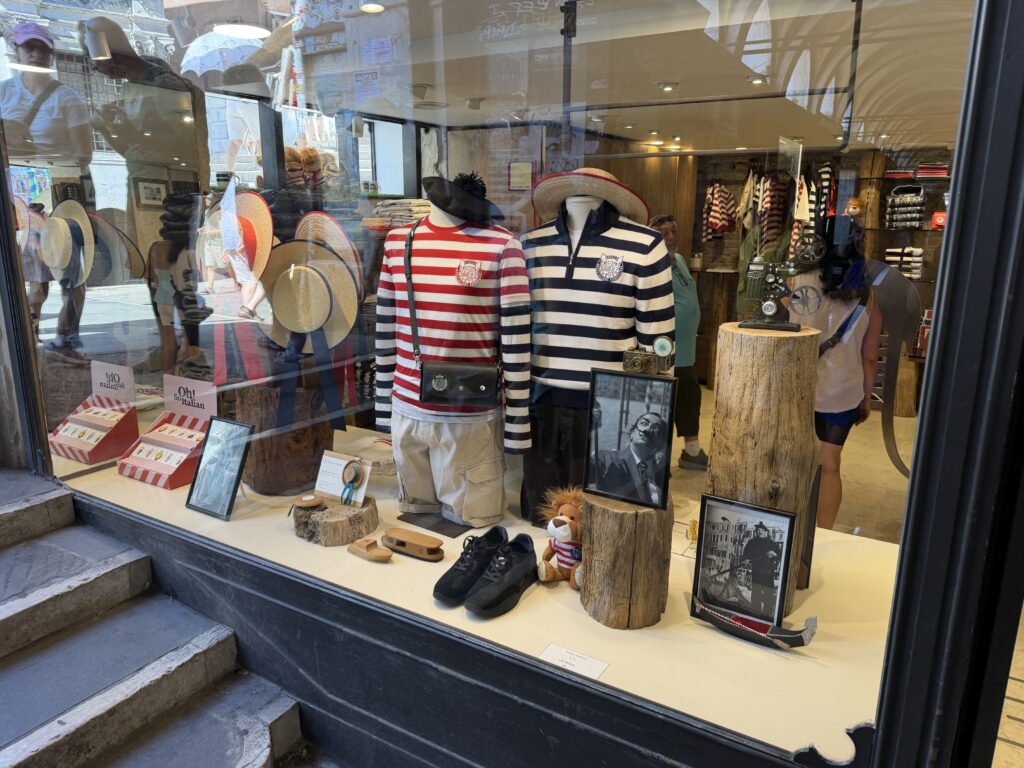
Leaving the San Polo district we had lunch at a neighborhood restaurant in the Castello District.
This district, the largest of the six is home to the ship building industry that built and maintained the great trading fleet.
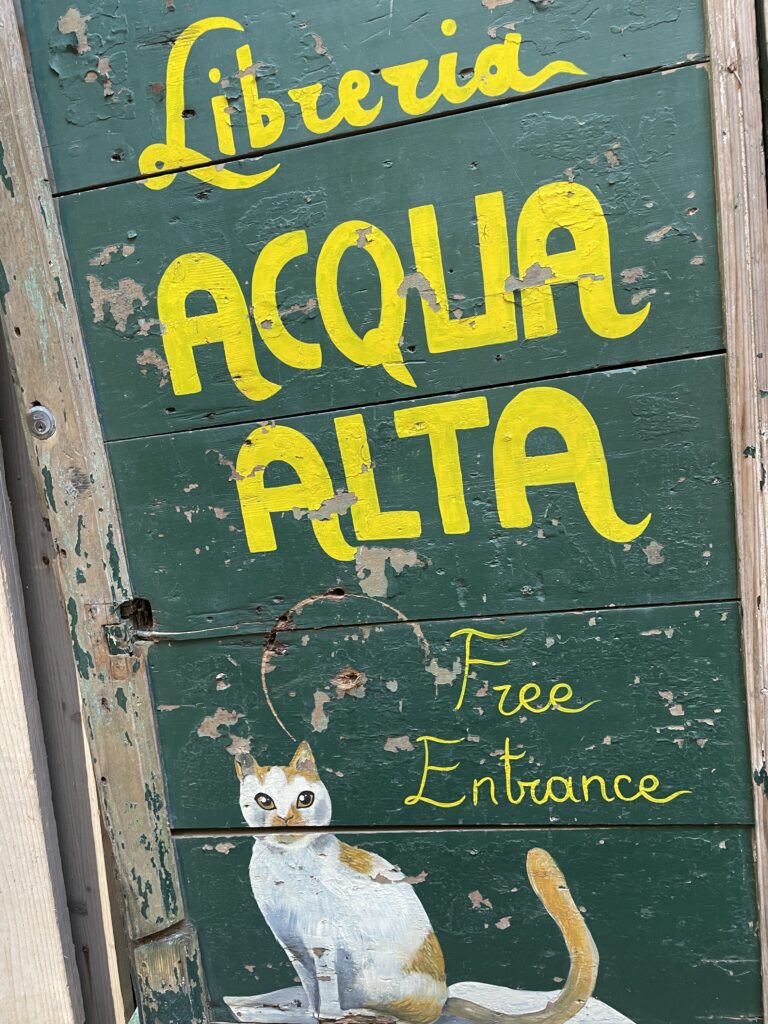
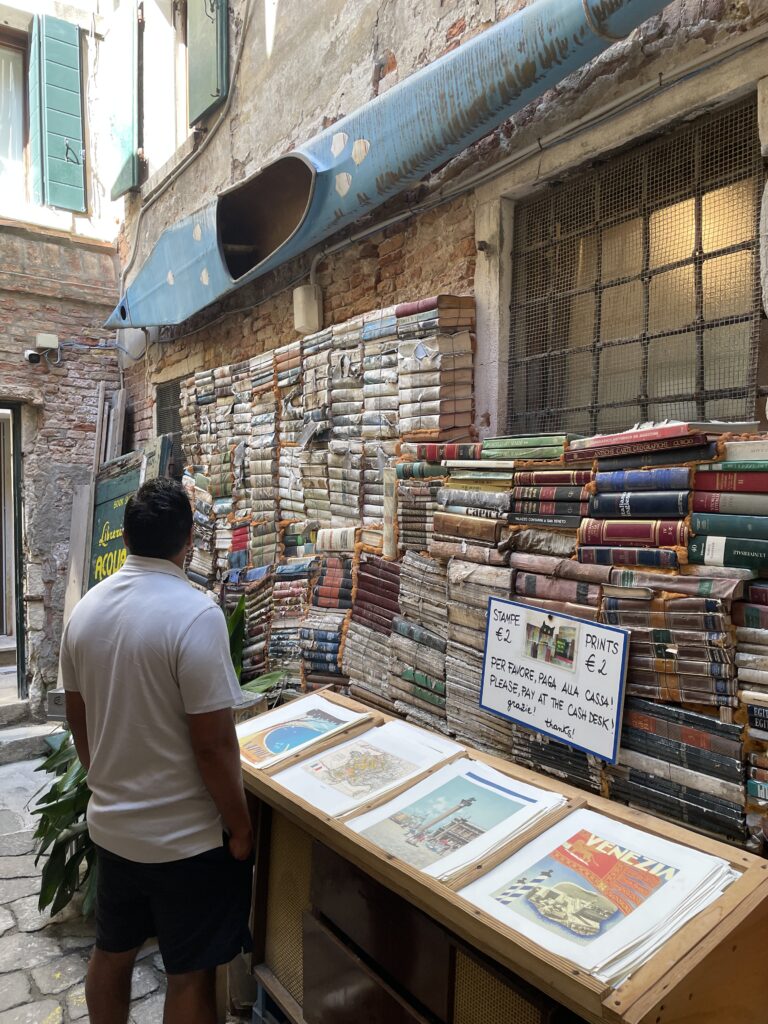
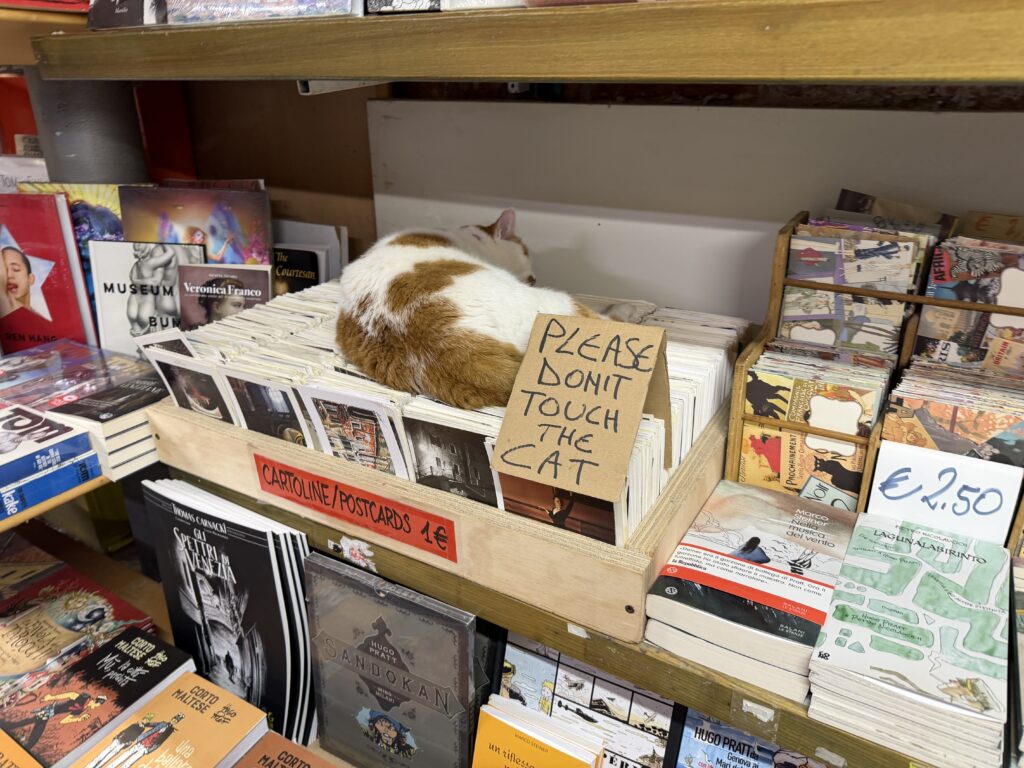
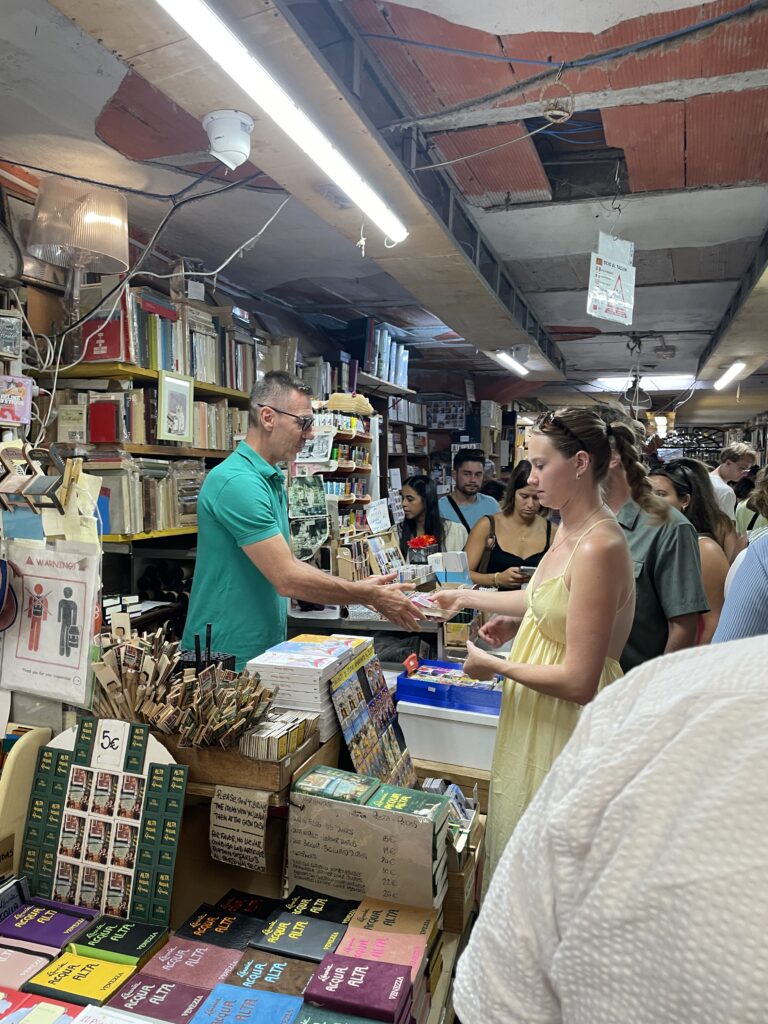
Along the way we noted several interesting architectural elements.
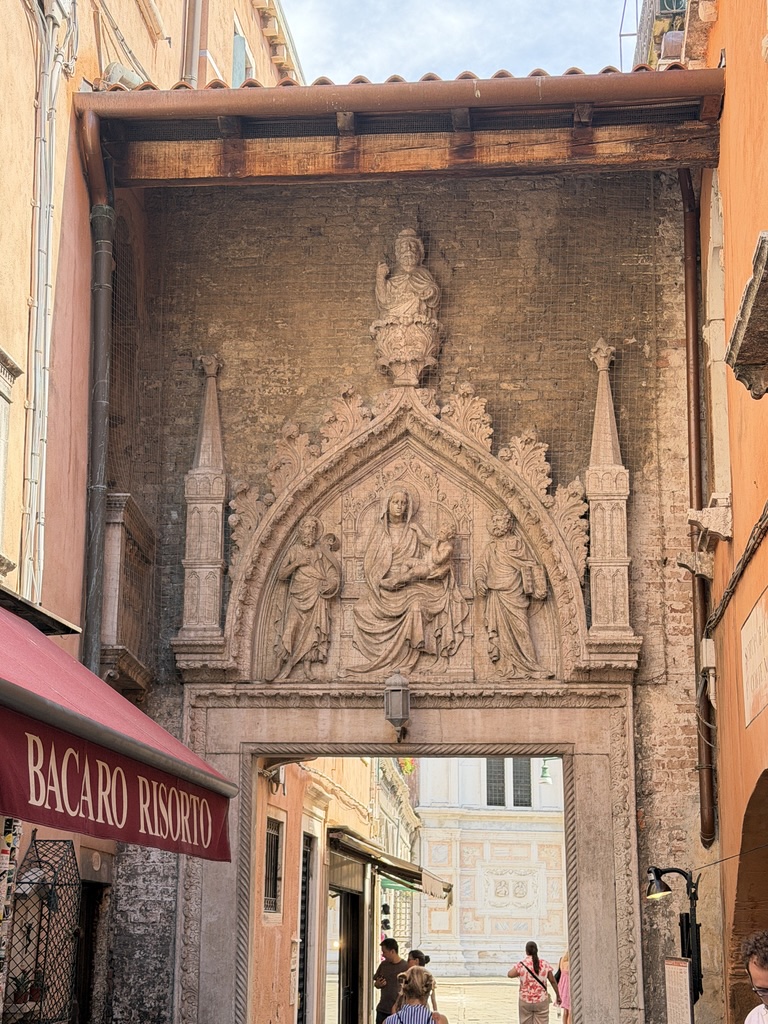
Portal connecting the Campo of St. Zaccaria to the Campo of St. Provolo 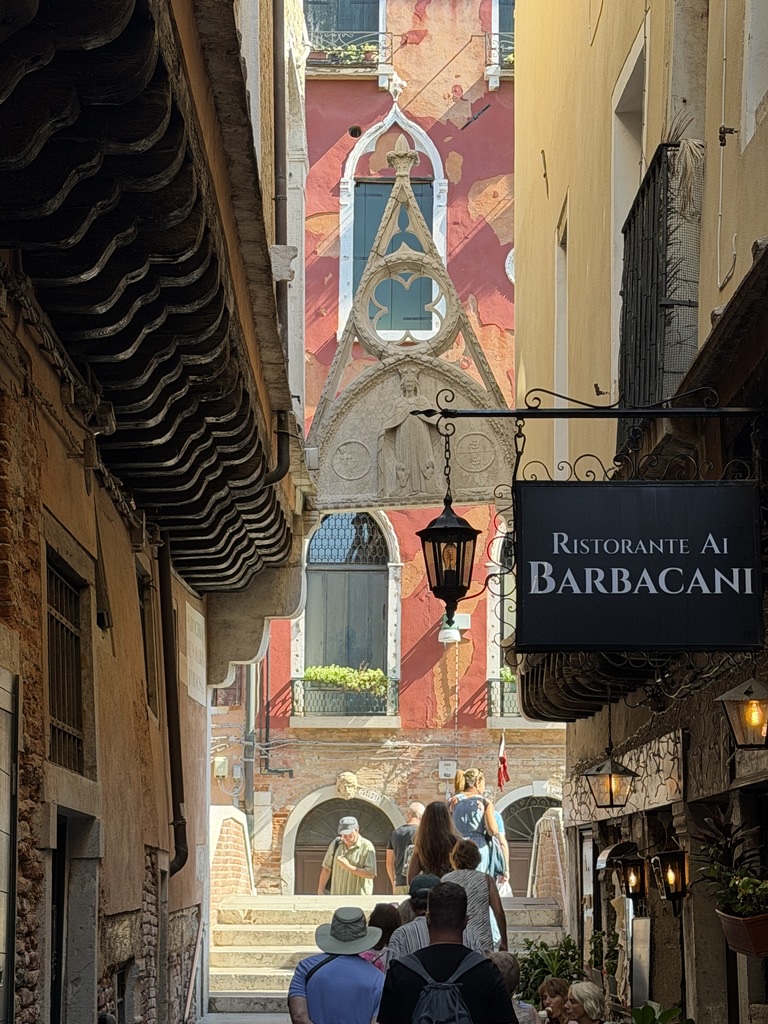
The Gothic Arch of Paradise crosses the historic Street of Paradise 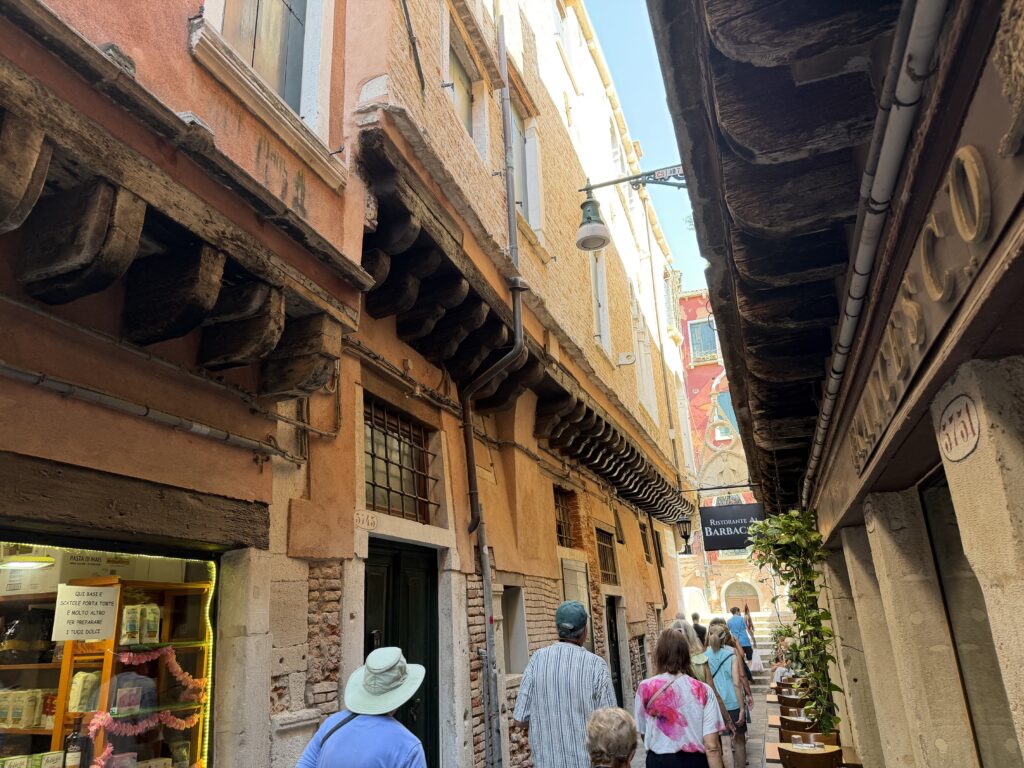
Note the upper story overhangs along the Street of Paradise. 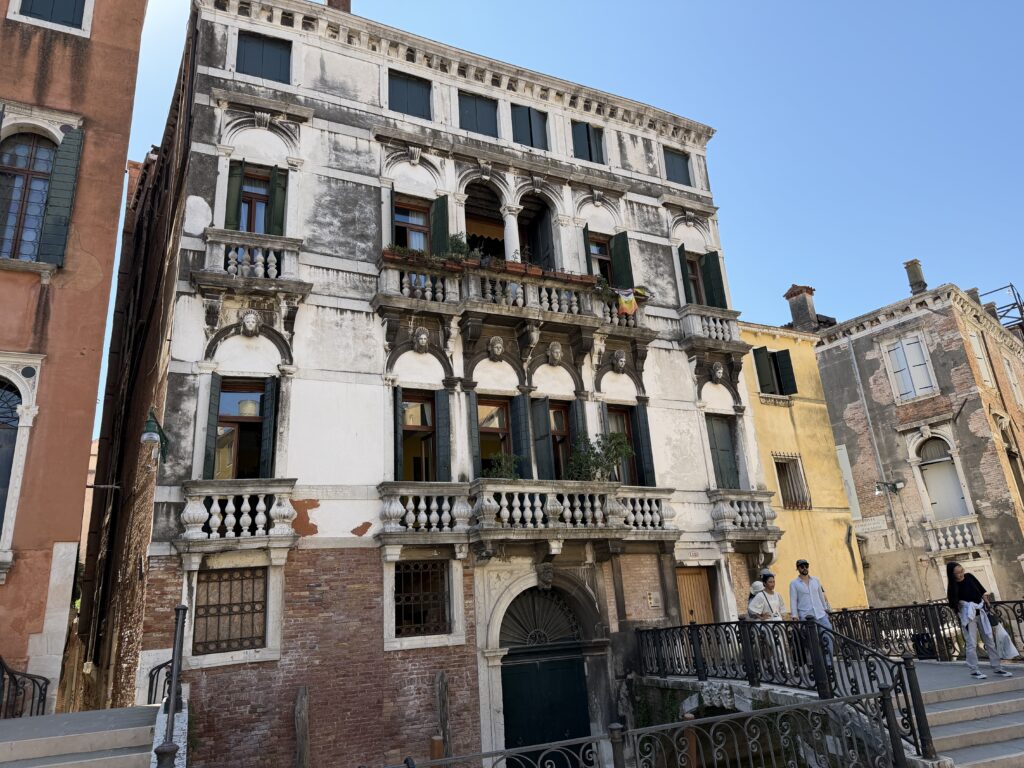
Palazzo Cavagnis, shows classic Venetian design features. 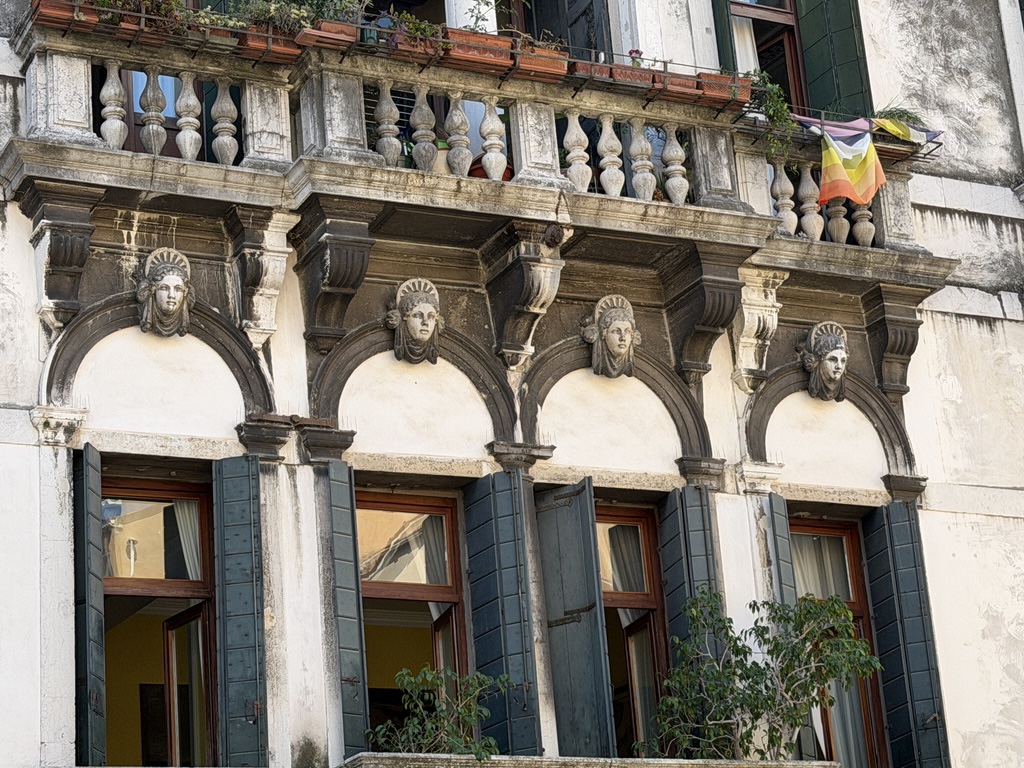
It was the carved stone head corbels supporting the upper balconies that caught my eye. 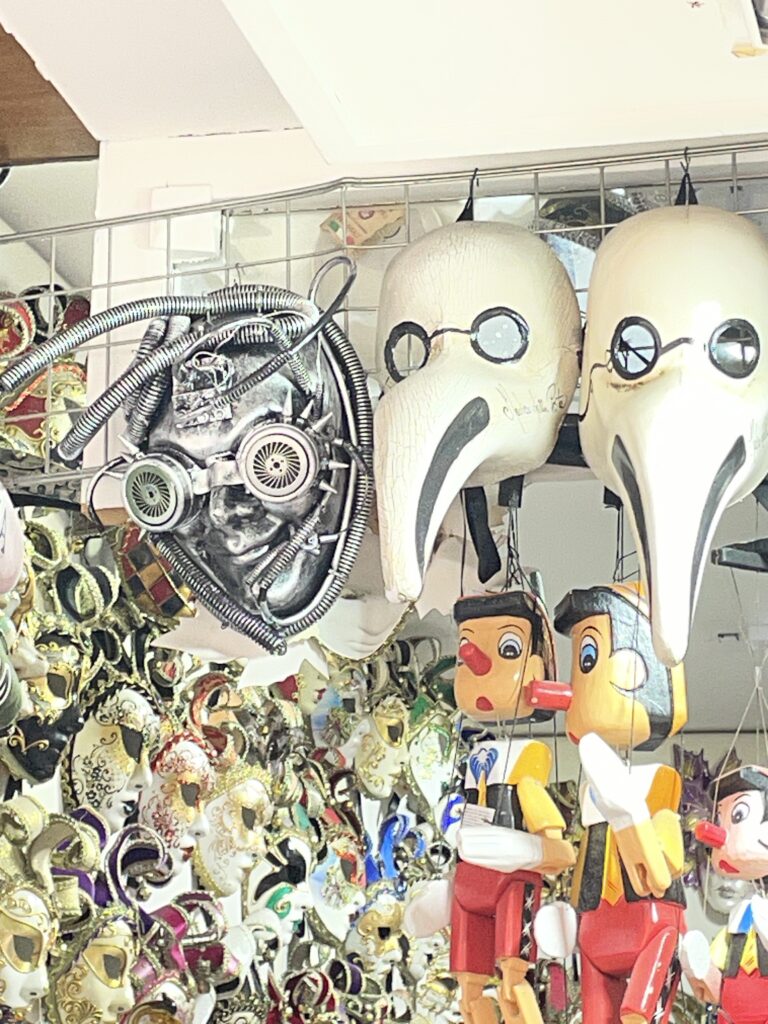
We passed several stores selling masks. Here Classic and Steam Punk designs mingle. 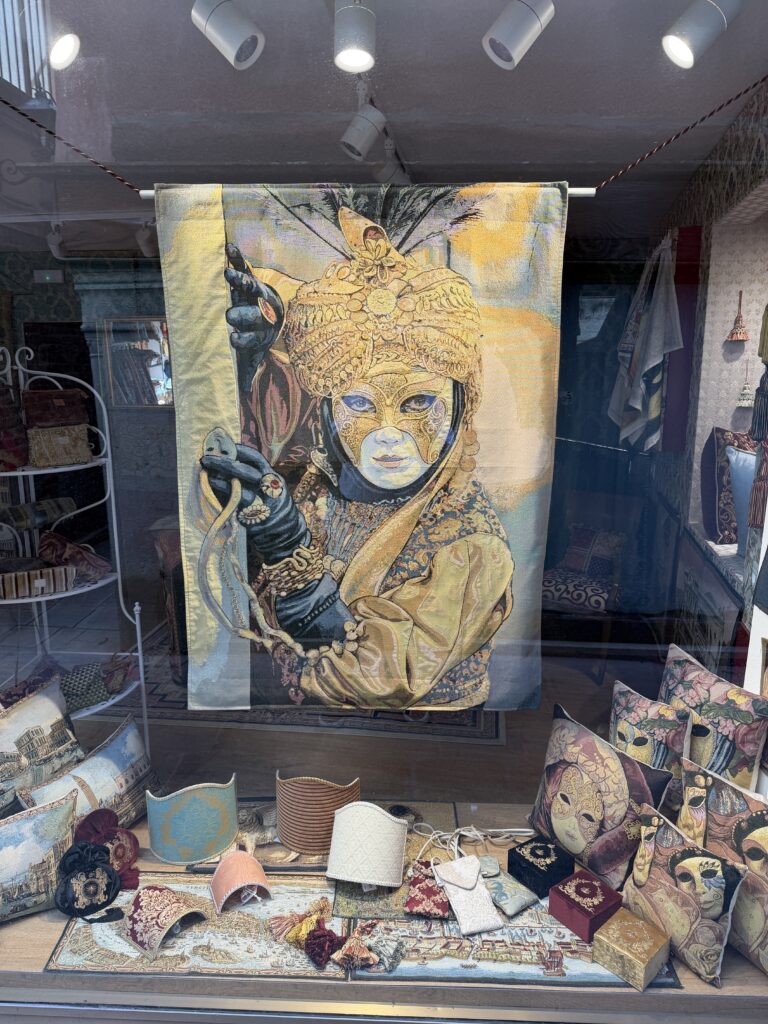
And where there are masks and cats…
After lunch it was back to the San Marco district, past St. Mark’s Cathedral, across the Plazetta San Marco…
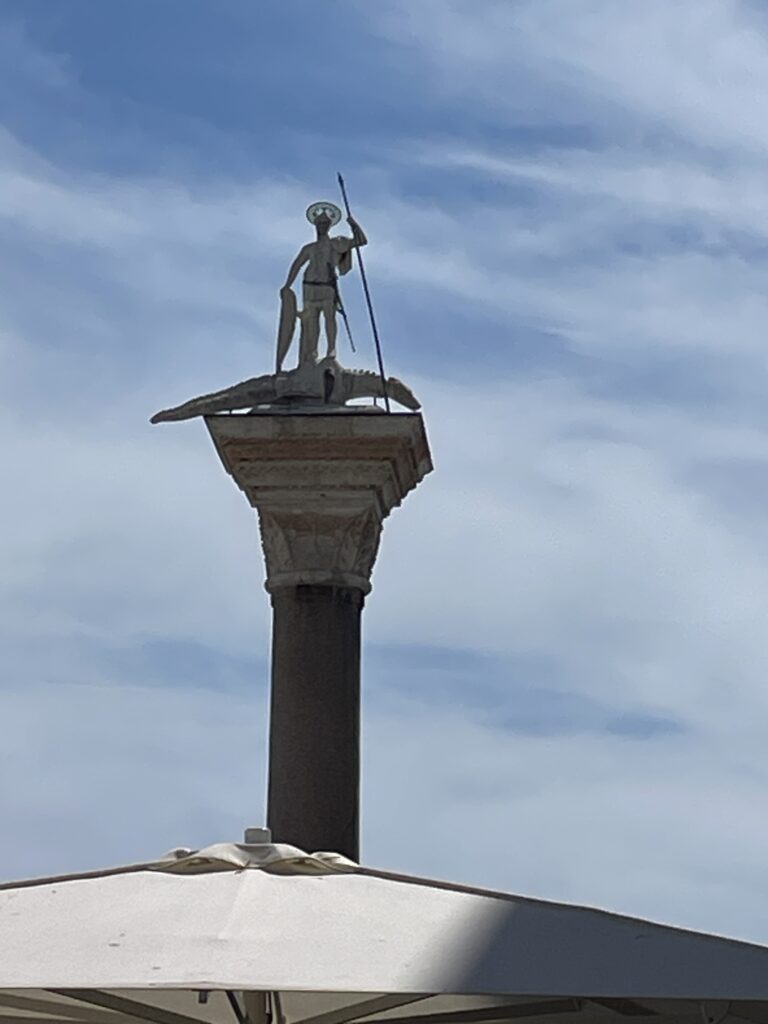
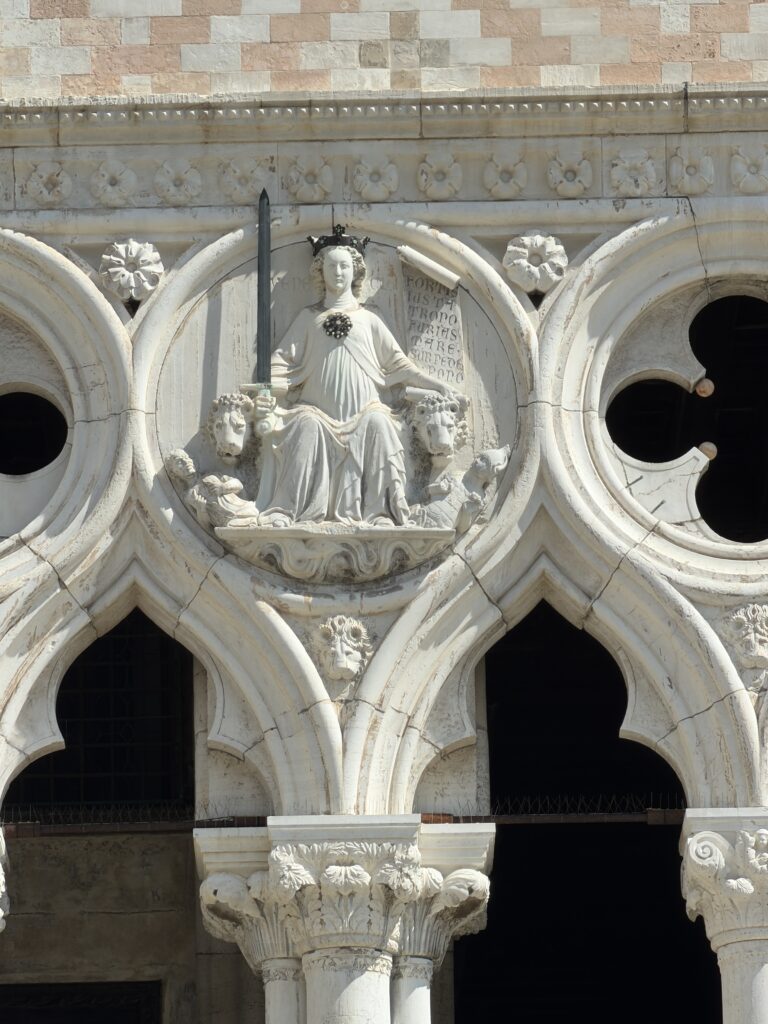
…to a couple of waiting taxis that took us up the Grand Canal and back to our hotel.
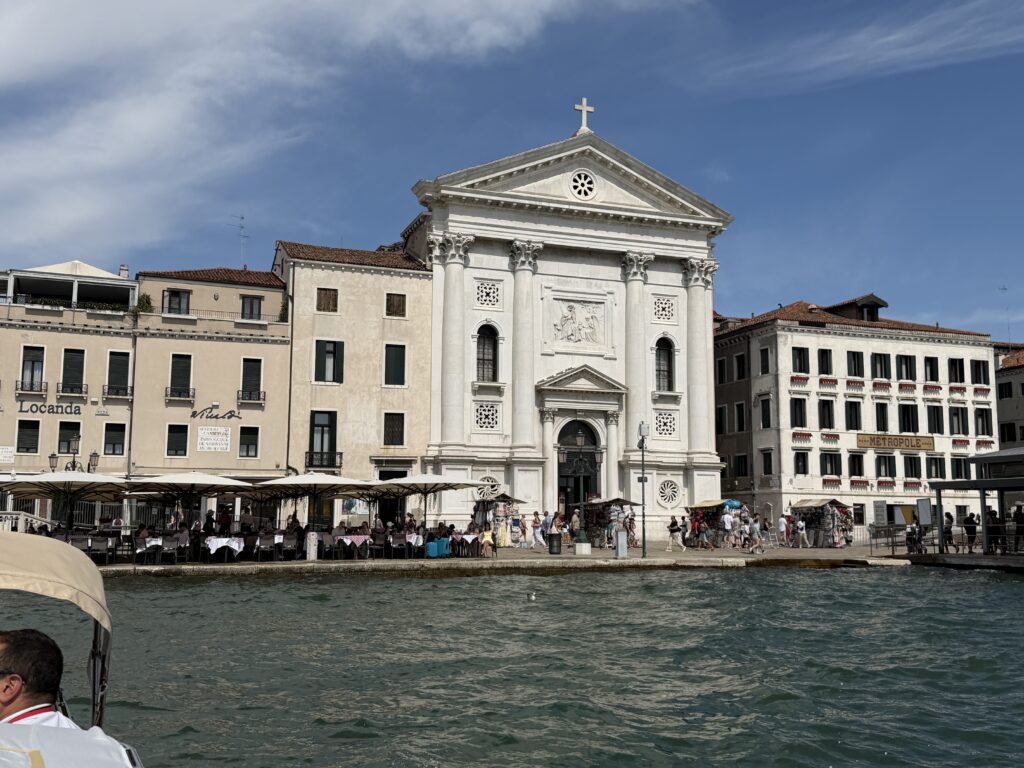
Church of Santa Maria della Pieta and the orphanage of the same name where Vivaldi worked and wrote music 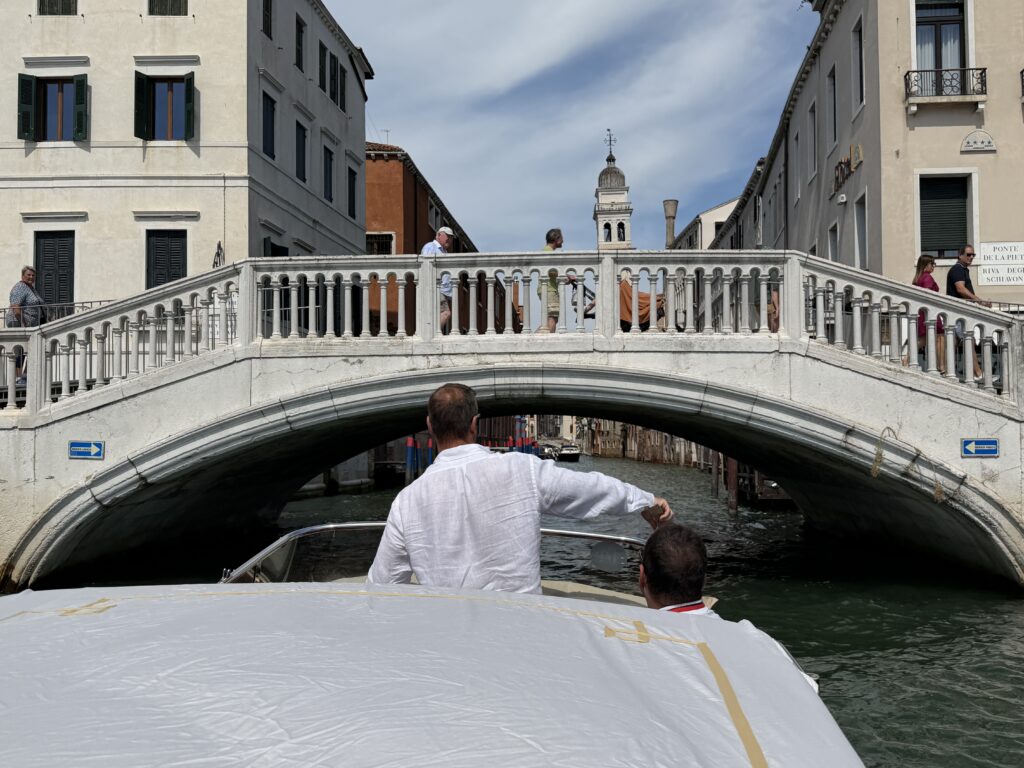
Leaving the Grand Canal, smaller canals gave us low bridges at high tide 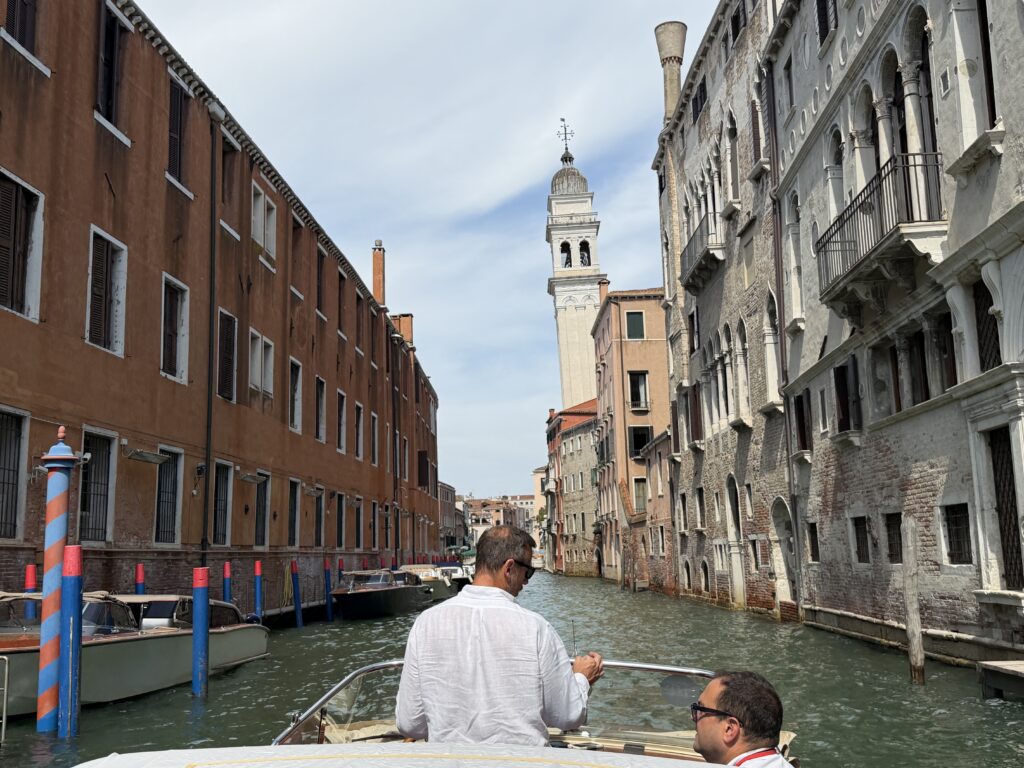
The leaning bell tower of the Greek Orthodox Church of St. George 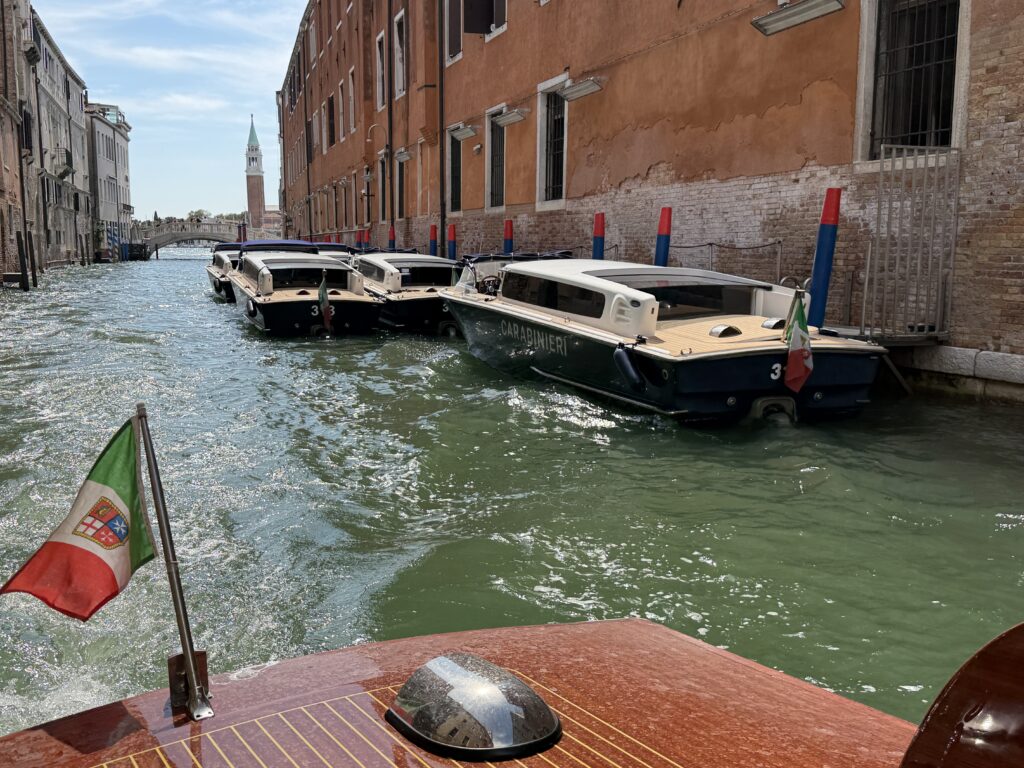
Police boats 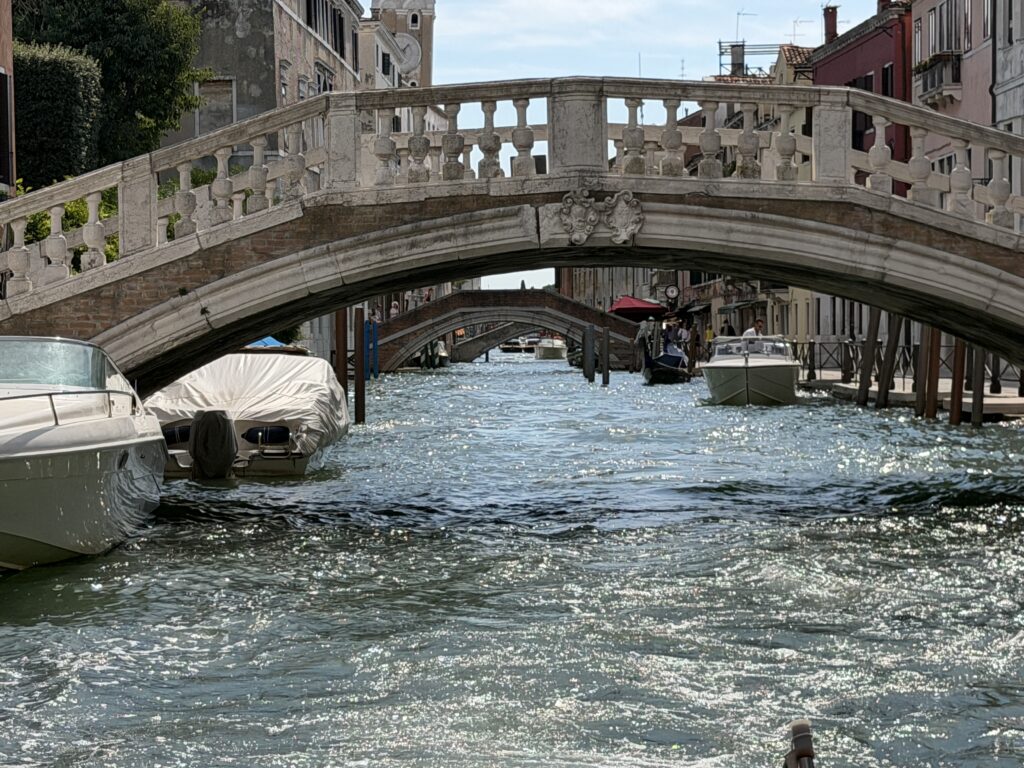
3 Bridges view 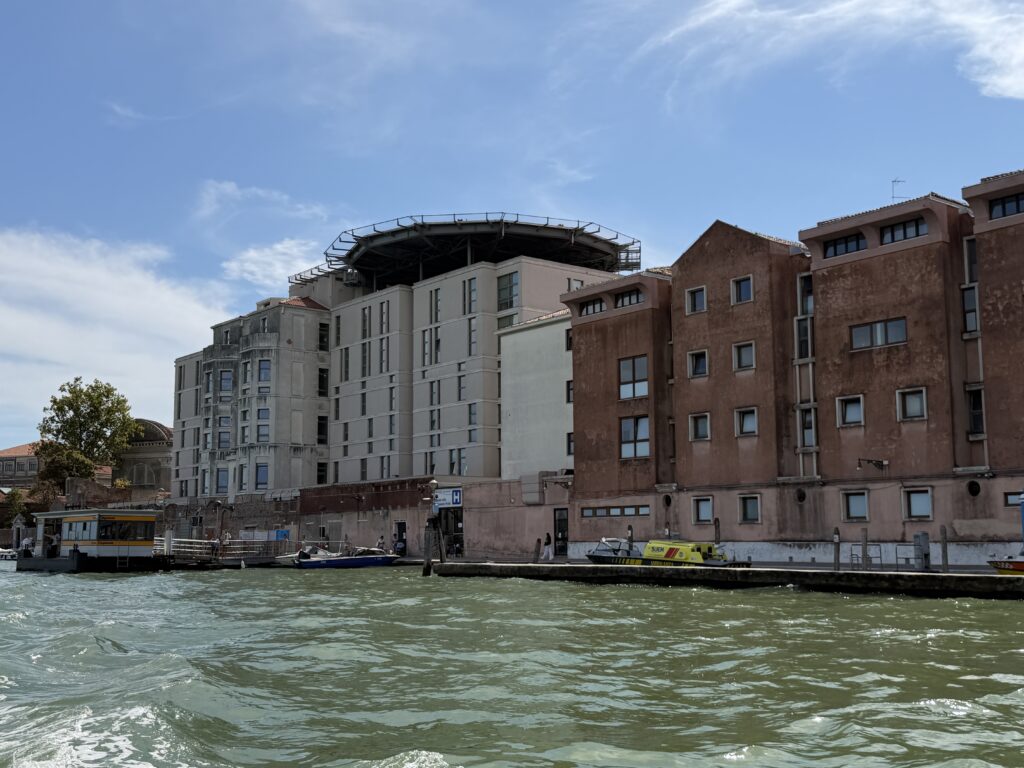
The new hospital (with helipad) 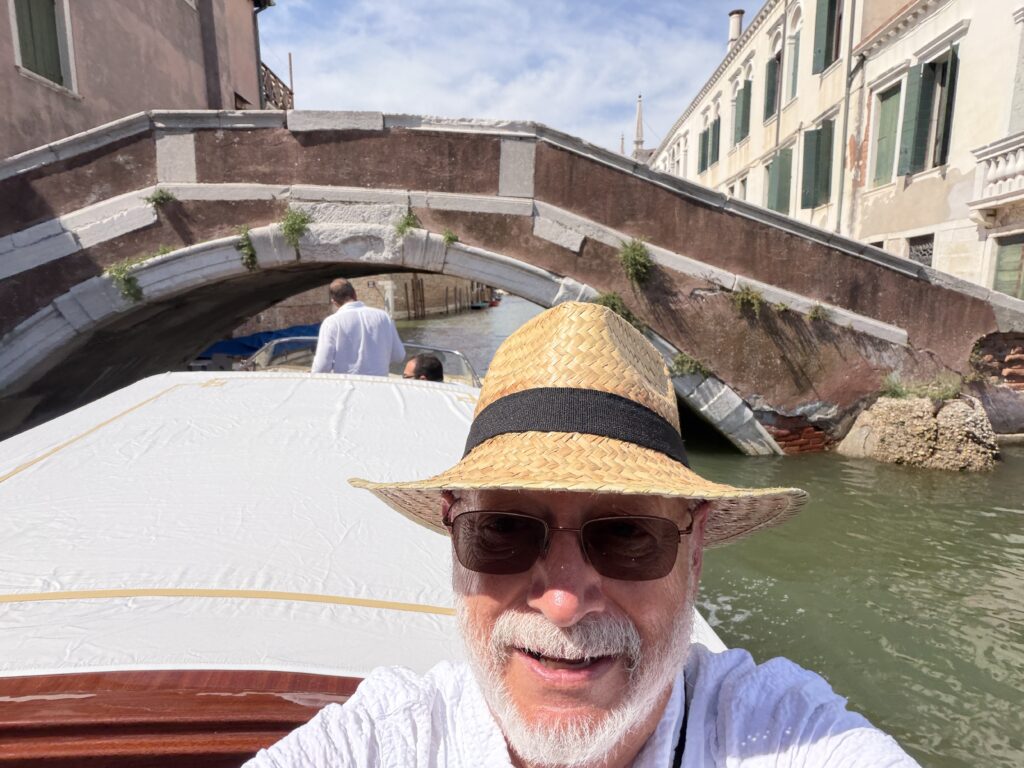
Seconds before the guy standing with me in the back of the taxi yelled “DUCK”
Back at the hotel Cheryl took a nap while I ventured out to find an ATM (We came really close on our Euros estimate but needed a small cash infusion for the last round of tips.) and enjoyed my favorite activity in a medieval city – getting lost. It wasn’t really fair this time. Having criss-crossed the district so many times I had ample landmarks to help, but it still took a while to get back to the hotel.
Then we packed.
After dinner it was back into the taxis for a narrated evening tour of the Grand Canal.
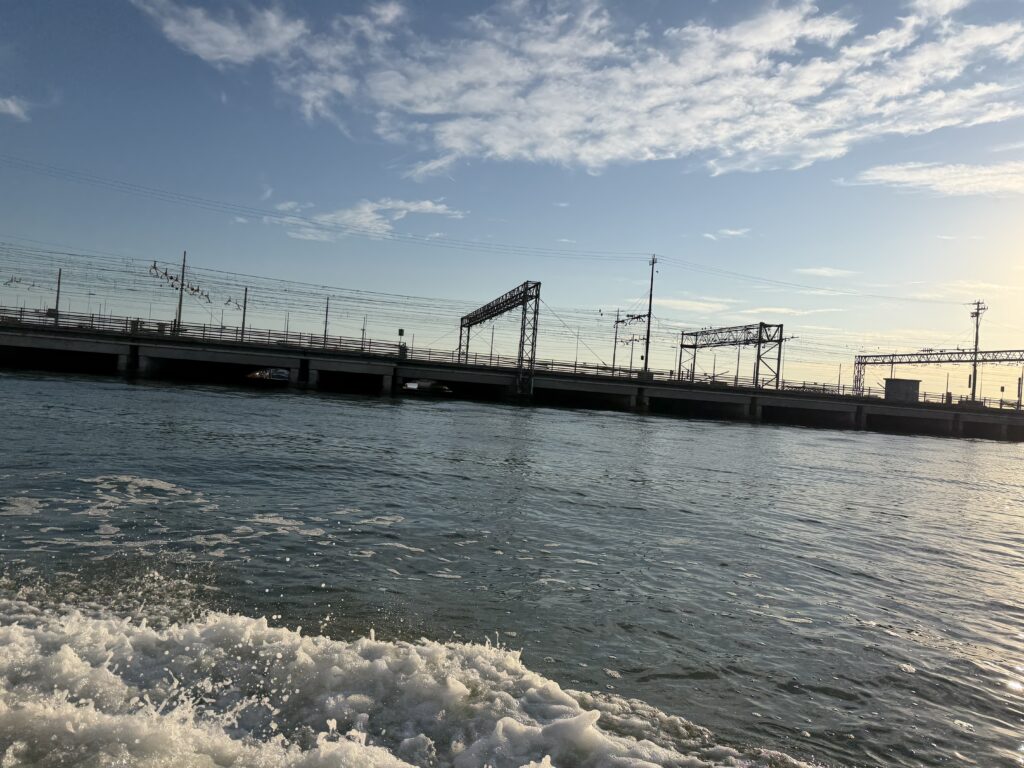
We crossed under the railroad bridge to the mainland. 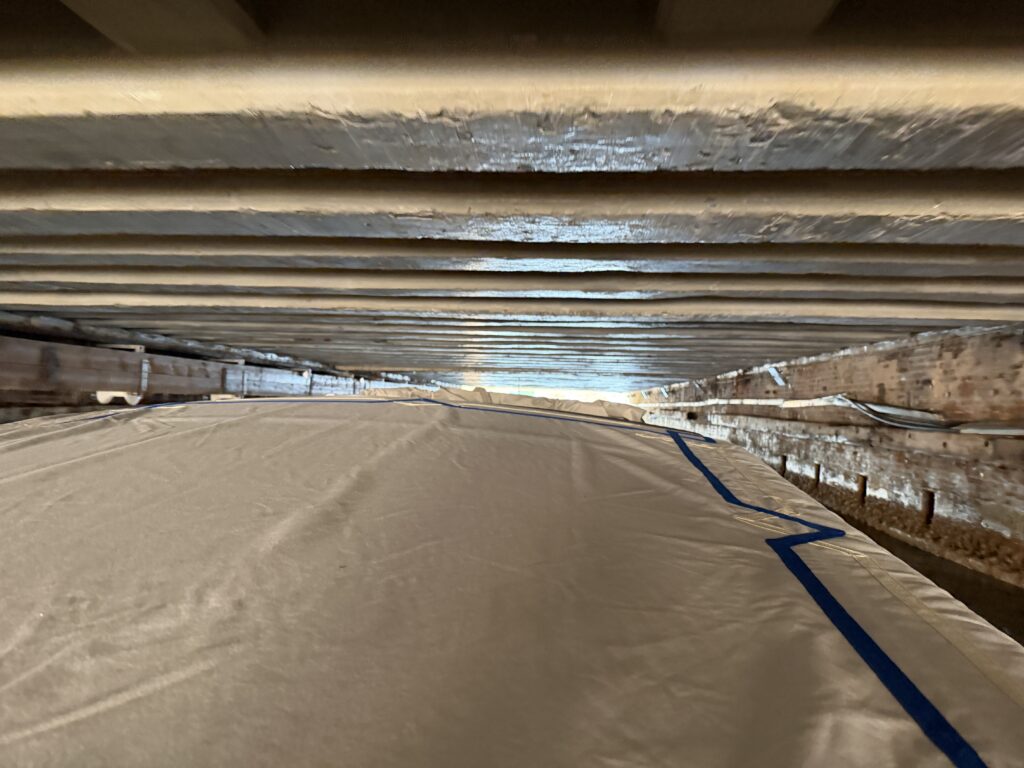
We crossed under the railroad bridge to the mainland. 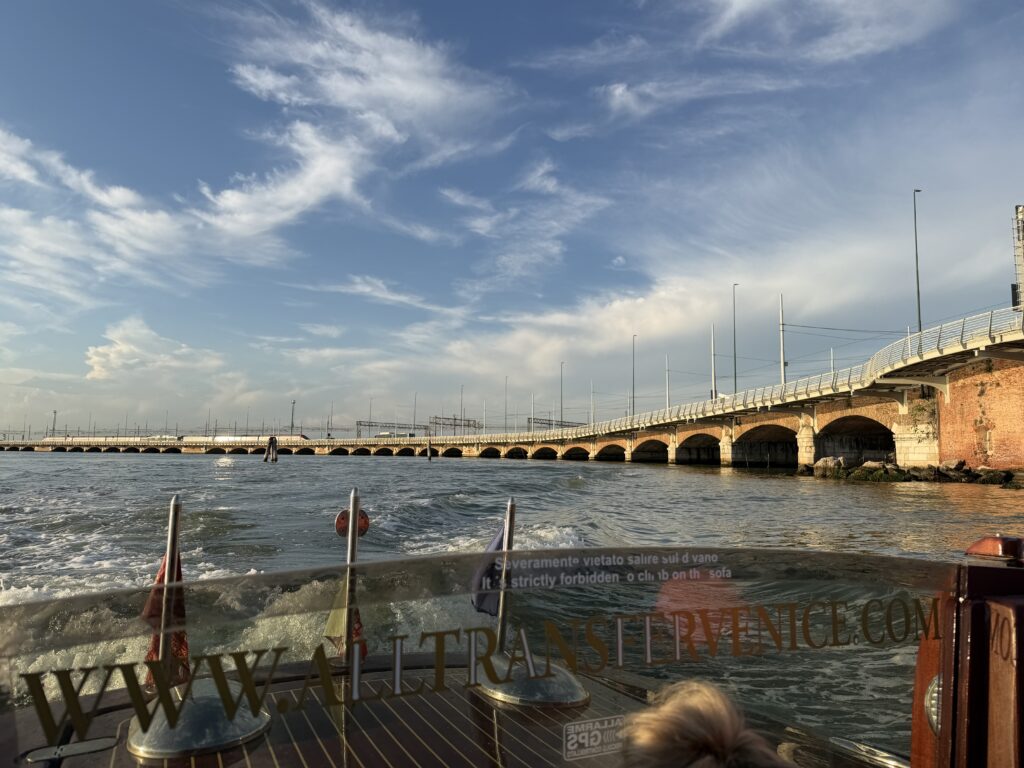
We crossed under the auto bridge to the mainland. 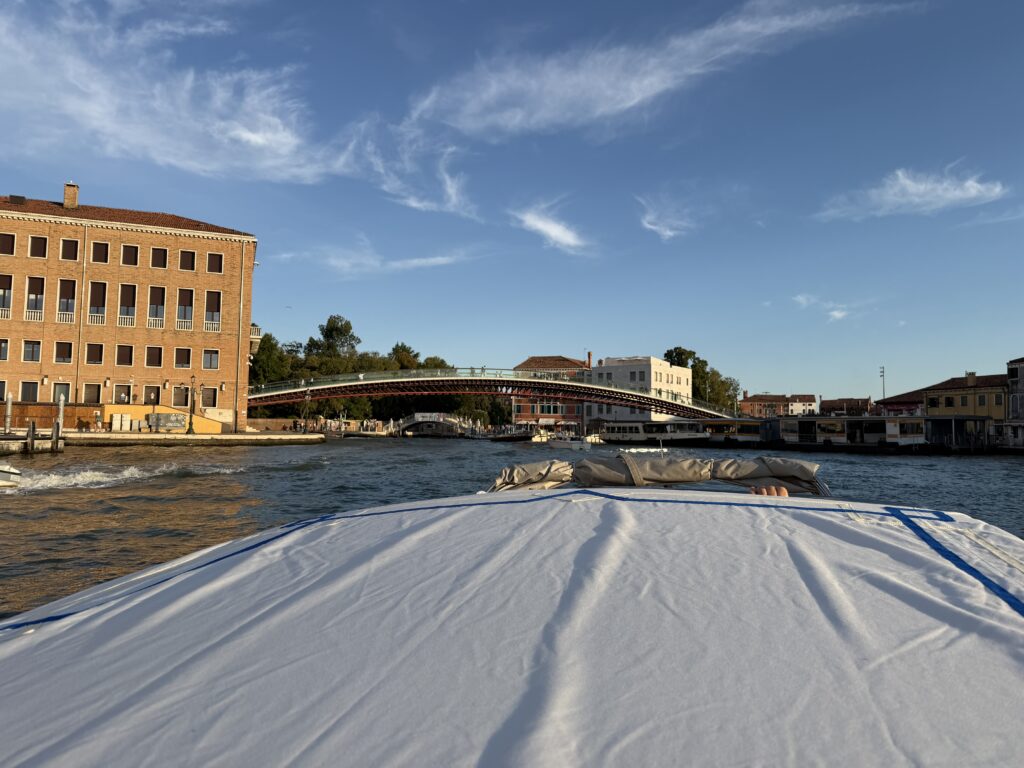
We saw the newest bridge – a pedestrian bridge connecting the car park to the train station. 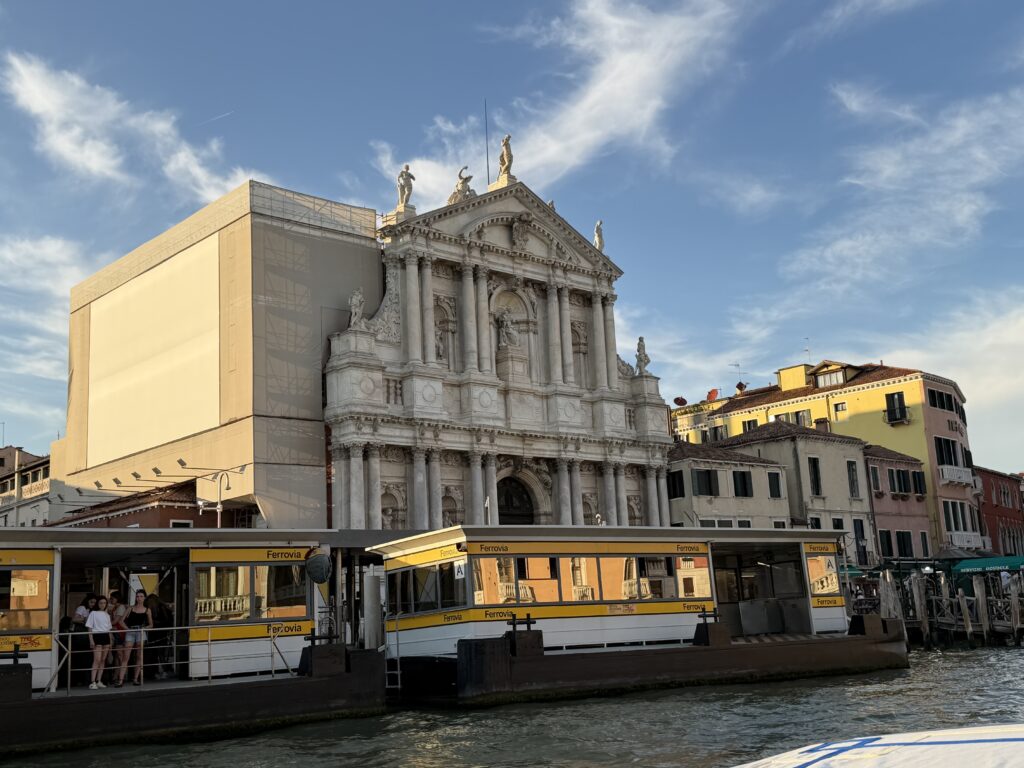
Church of Santa Maria of Nazareth aka “Church of the Scalzi” (barefoot) Mid 17th c. 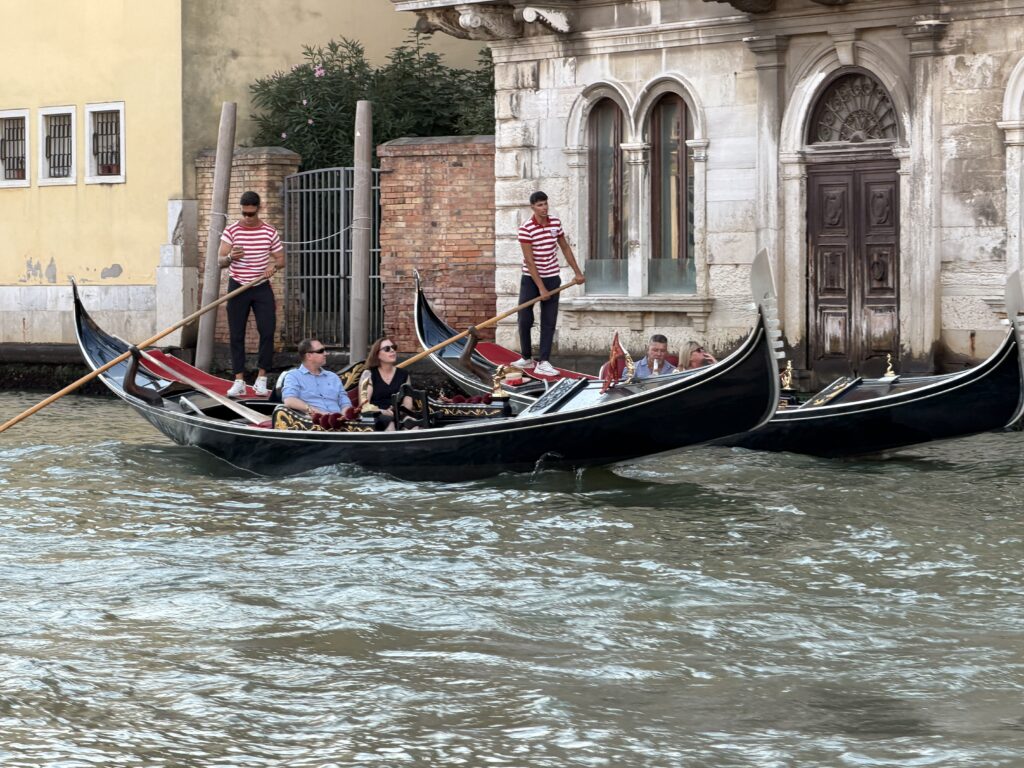
Gondolas on the Grand Canal 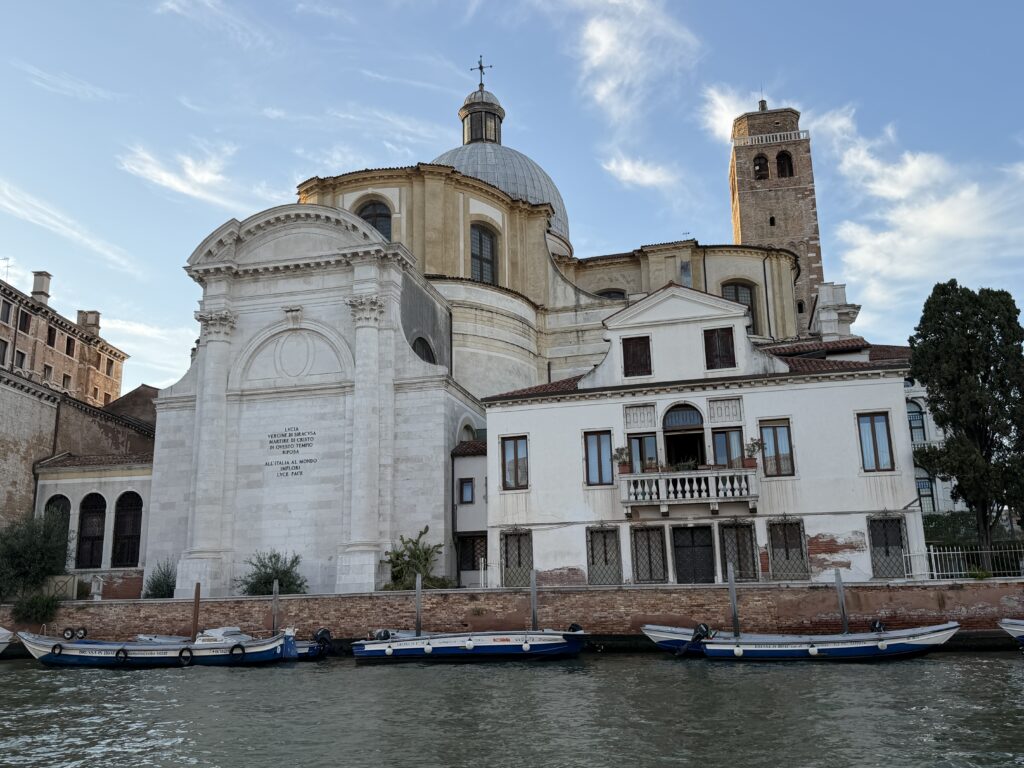
Church of Saints Geremia and Lucia, Originally built in the 11th century and rebuilt in 1753 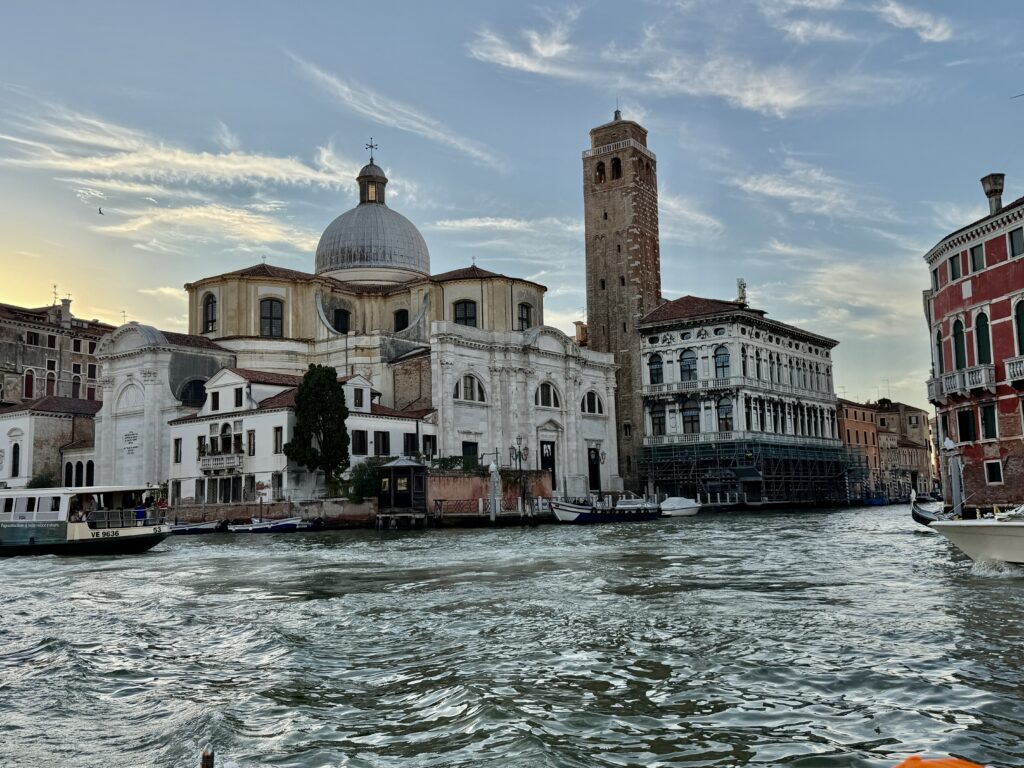
Church of Saints Geremia and Lucia – canal-side entrance. 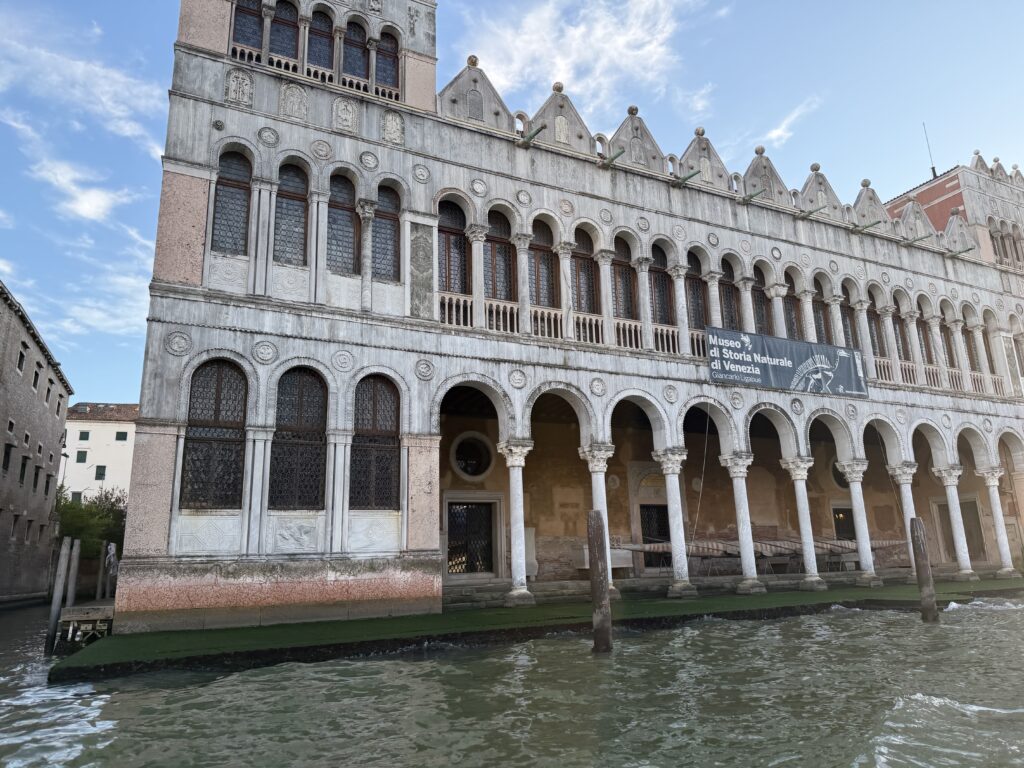
Fontego dei Turchi (Turks Inn) served as residence, warehouse, and market for Turkish traders in Venice from the 17th – 19th centuries. Now the Natural History Museum 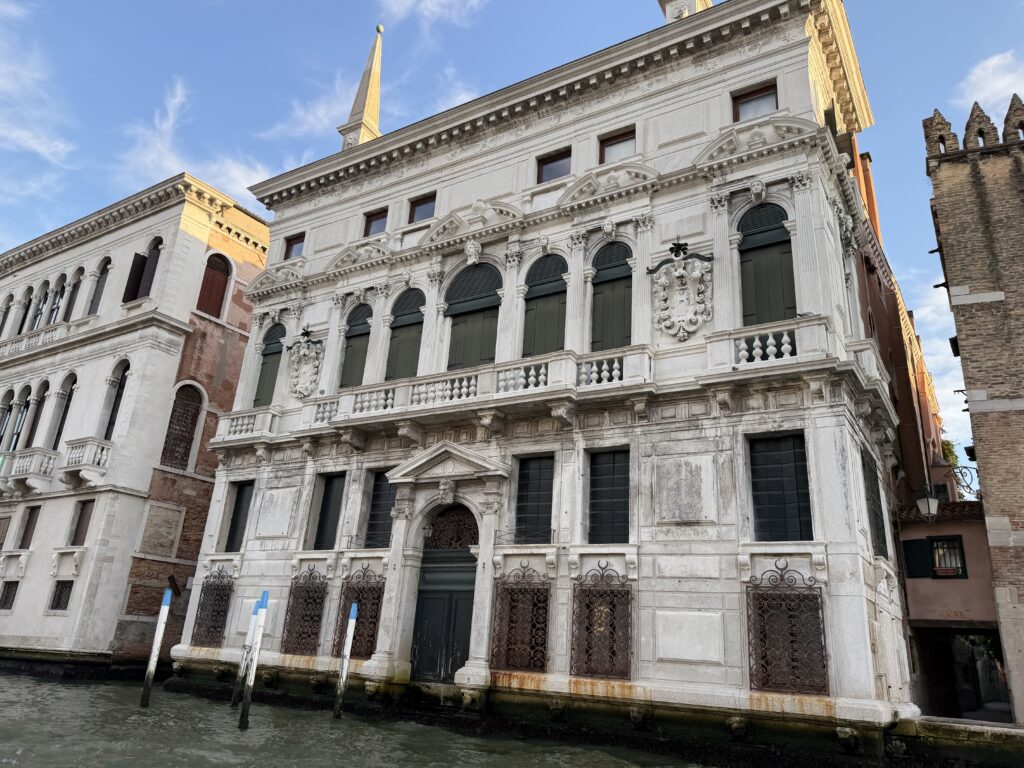
Palazzo Belloni Battaglia Mid 17th c home of the Belloni family 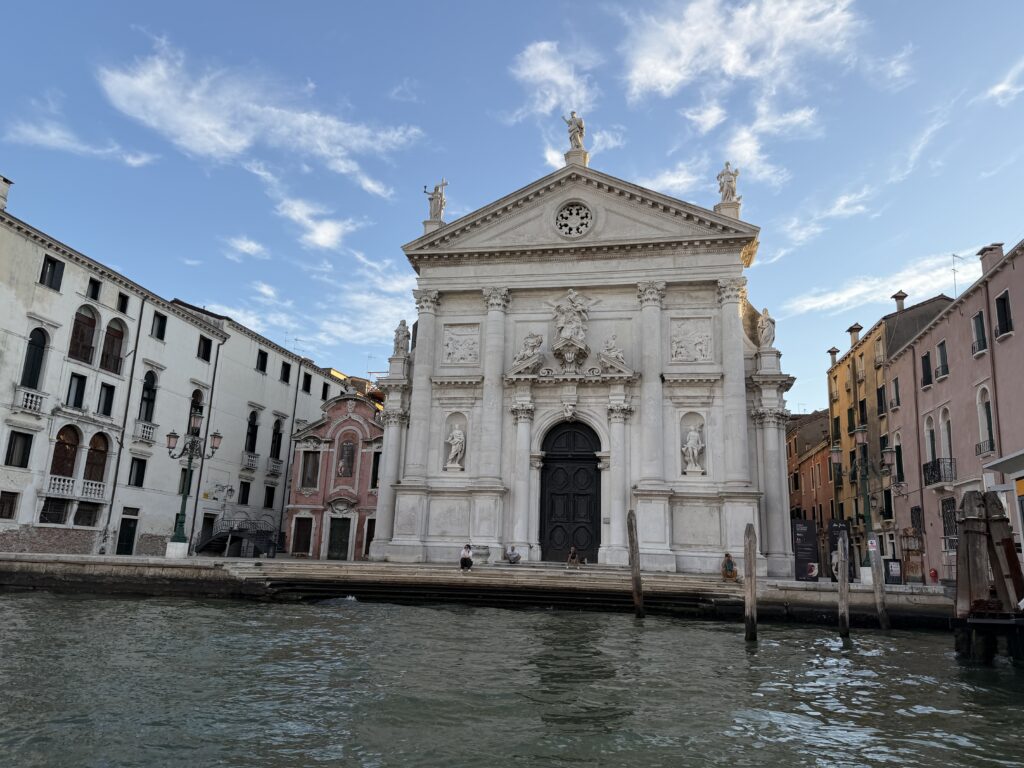
18th c Church of Saint Eustace Note smaller building to left – 1711 Guild hall for workers of Gold Leaf and Spun Gold 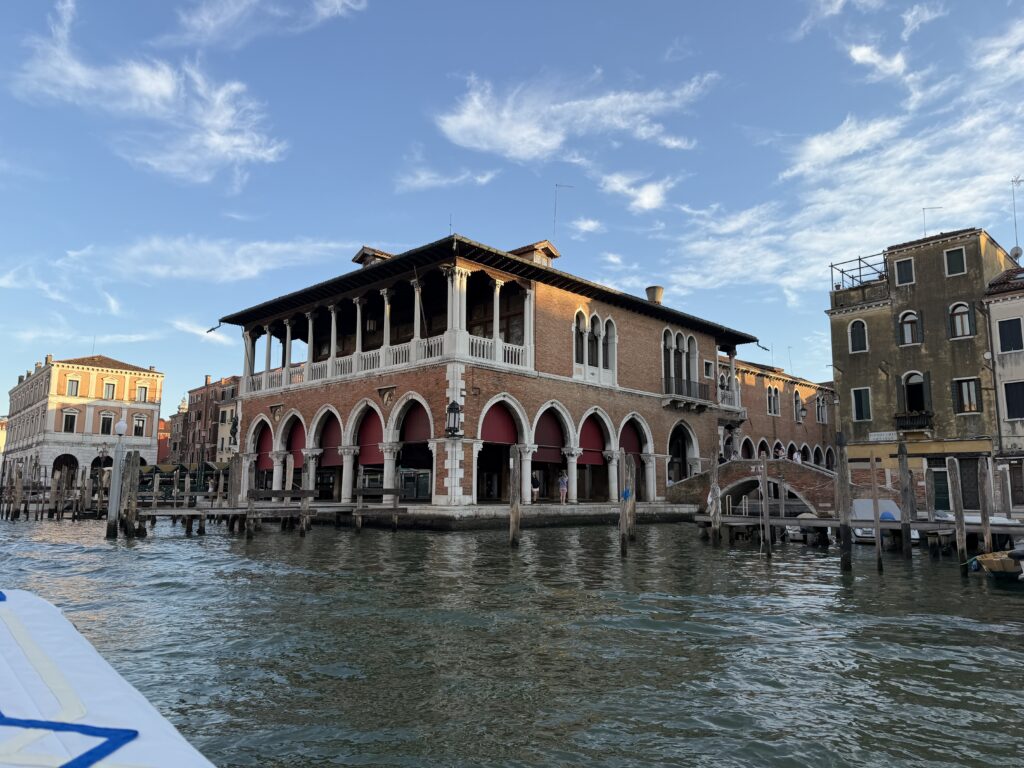
Rialto Fish Market – Opened in 1907. 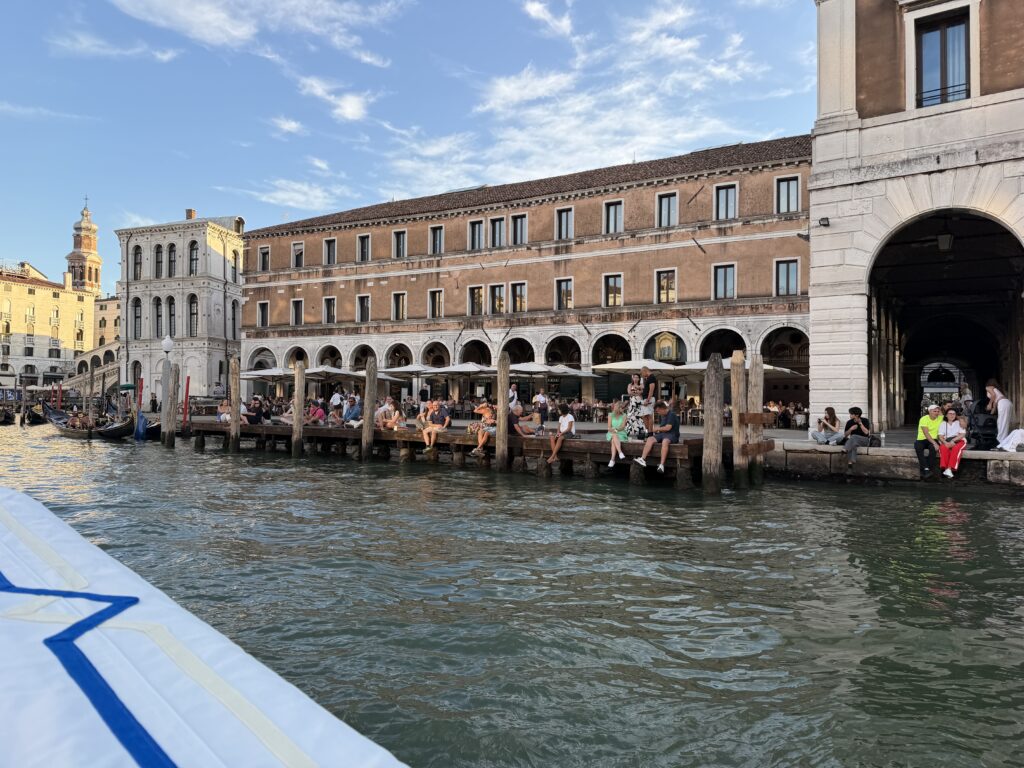
Evening activity in the Rialto Market 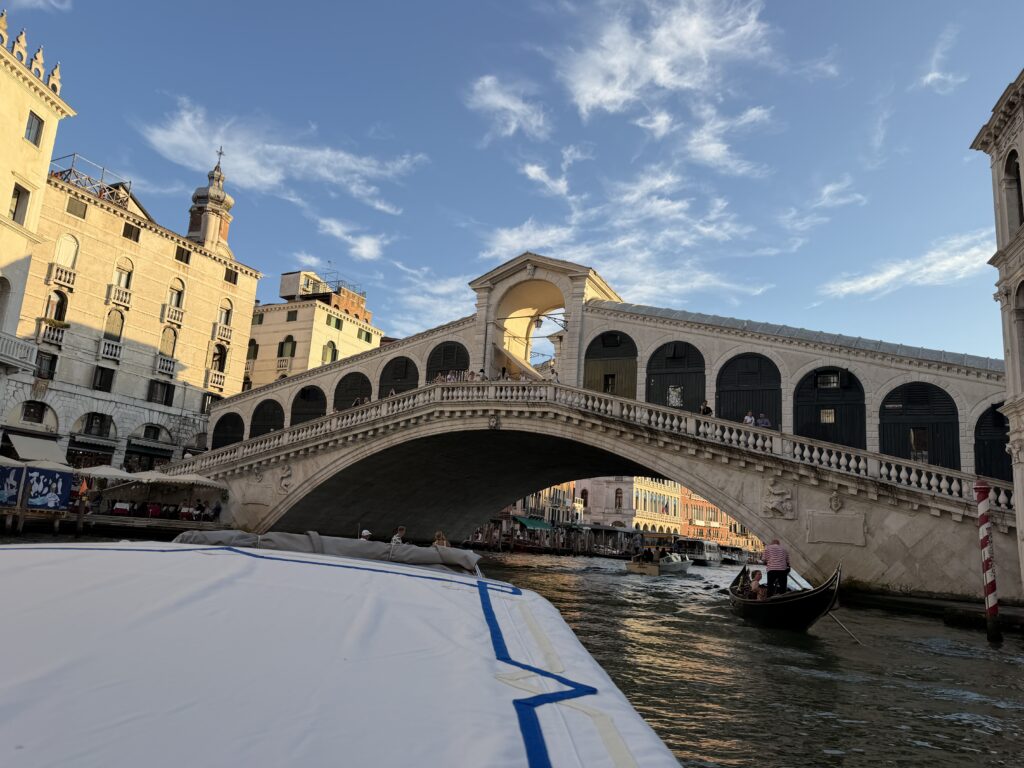
Another view of the Rialto bridge 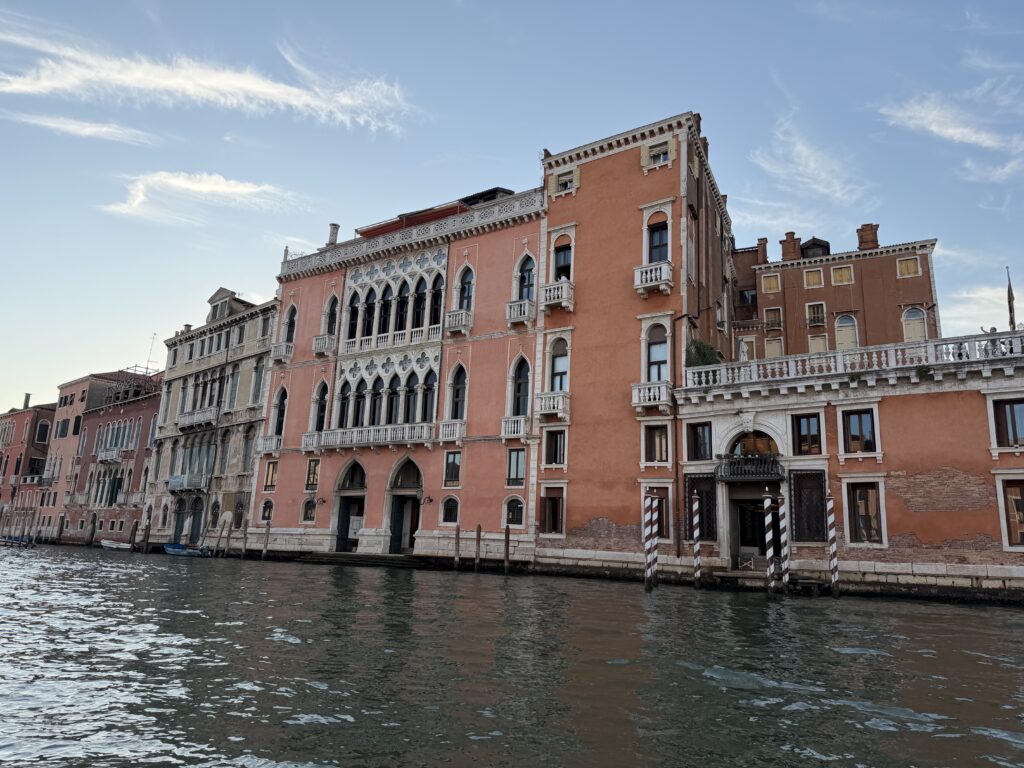
Palazzo Pisani Moretta, Built in the 1400’s by the Bembo family and passed to the Pisani family in 1629 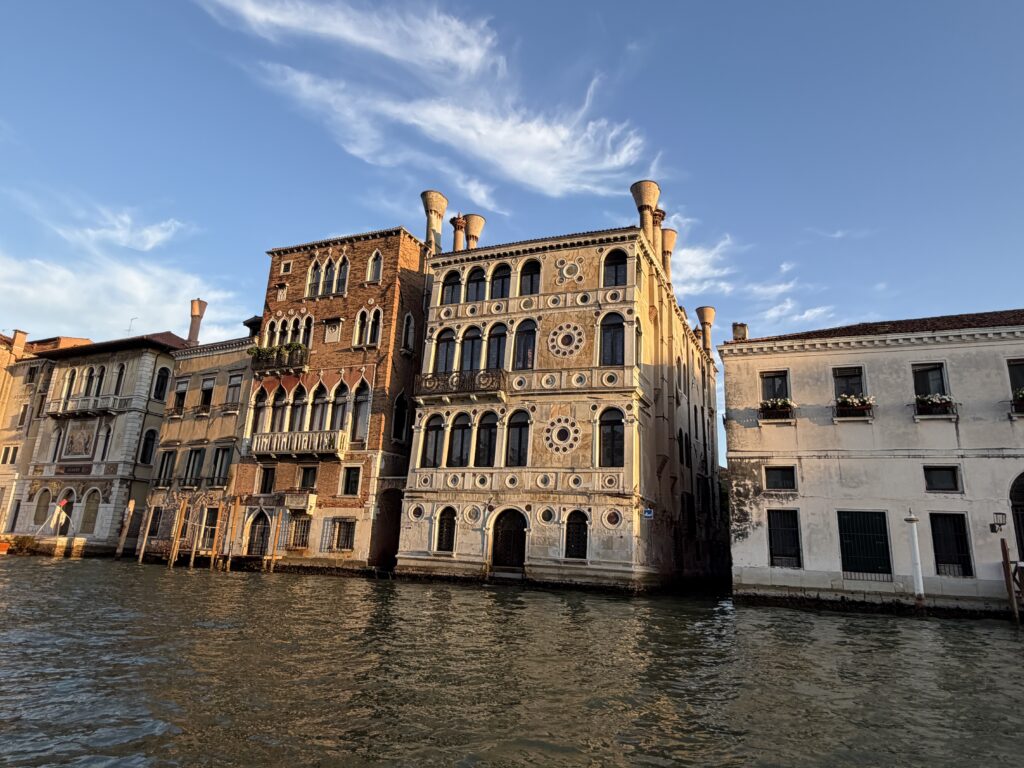
Left: Palazzo Barbaro Wolkoff, 15th c; Right: Palazzo Dario, 15th c, known as the Cursed palazzo due to a long history of sudden financial ruin, scandals, and tragic deaths associated with many of its past owners. 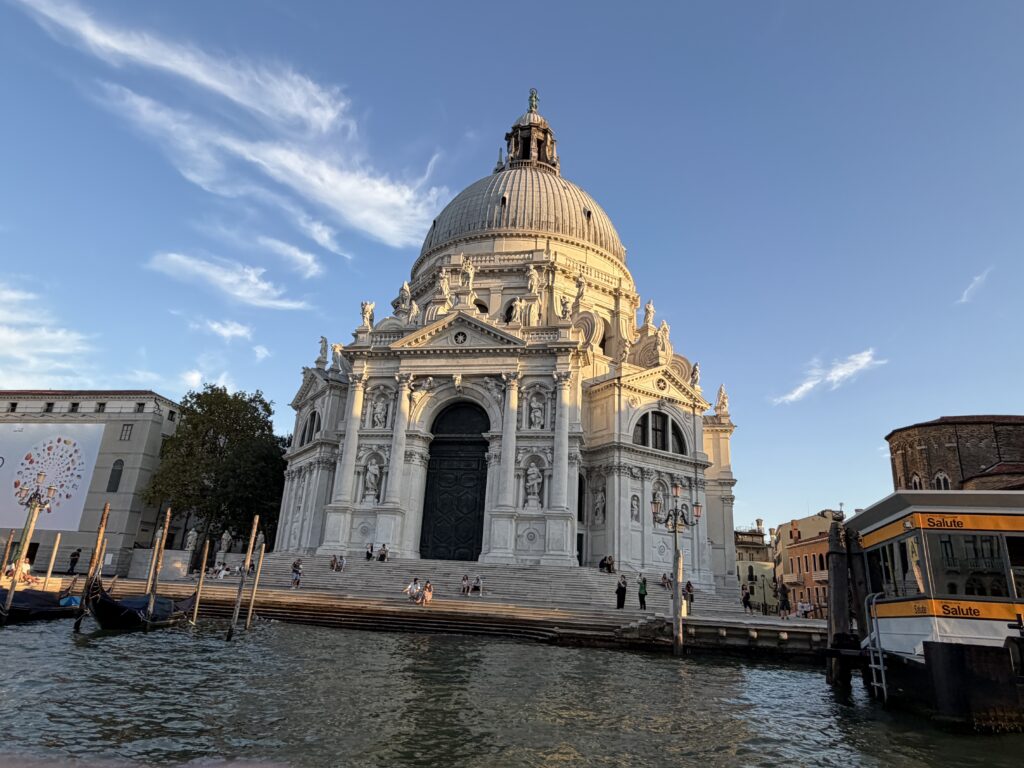
Basilica di Santa Maria della Salute (Saint Mary of Health), Started in 1631 to give thanks after a major plague outbreak; It occupies a prominent position at the south entrance to the Grand Canal, across from the Piazza San Marco. 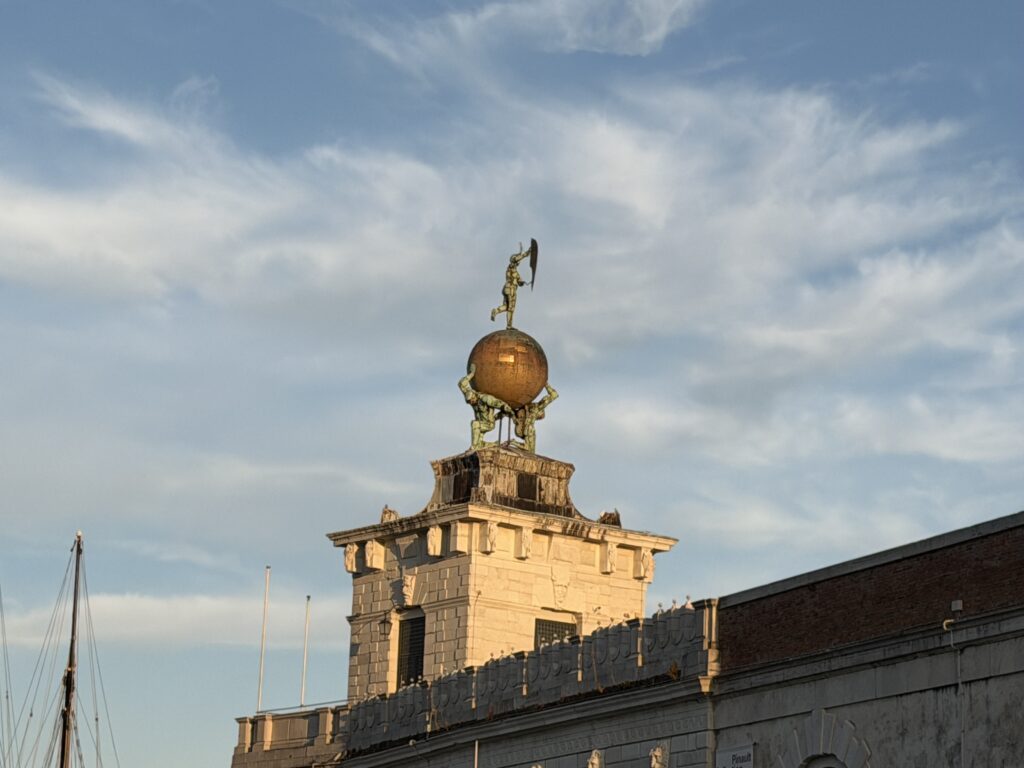
17th c. tower of former Customs Building, weather vane sculpture of Fortuna (fortune) atop golden globe supported by two bronze Atlases.
Along the way we noted several temporary art installations.
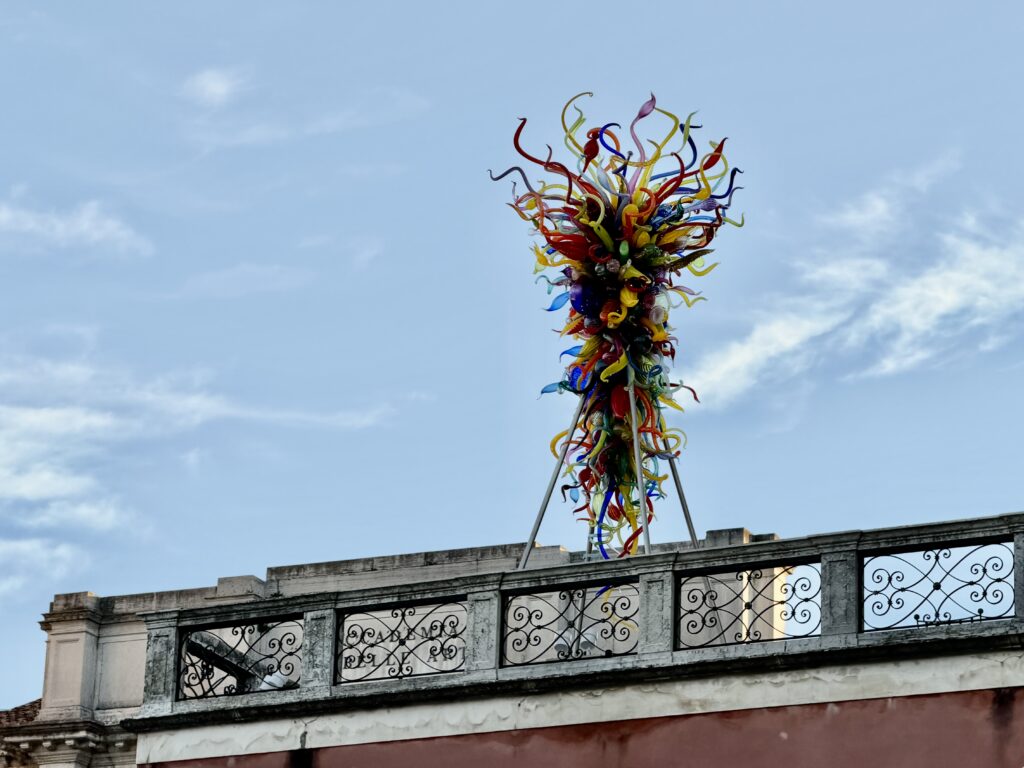
“End of the Day Chandelier”, Dale Chihuly, “Chihuly Over Venice” exhibition 5/4/26-11/24/26 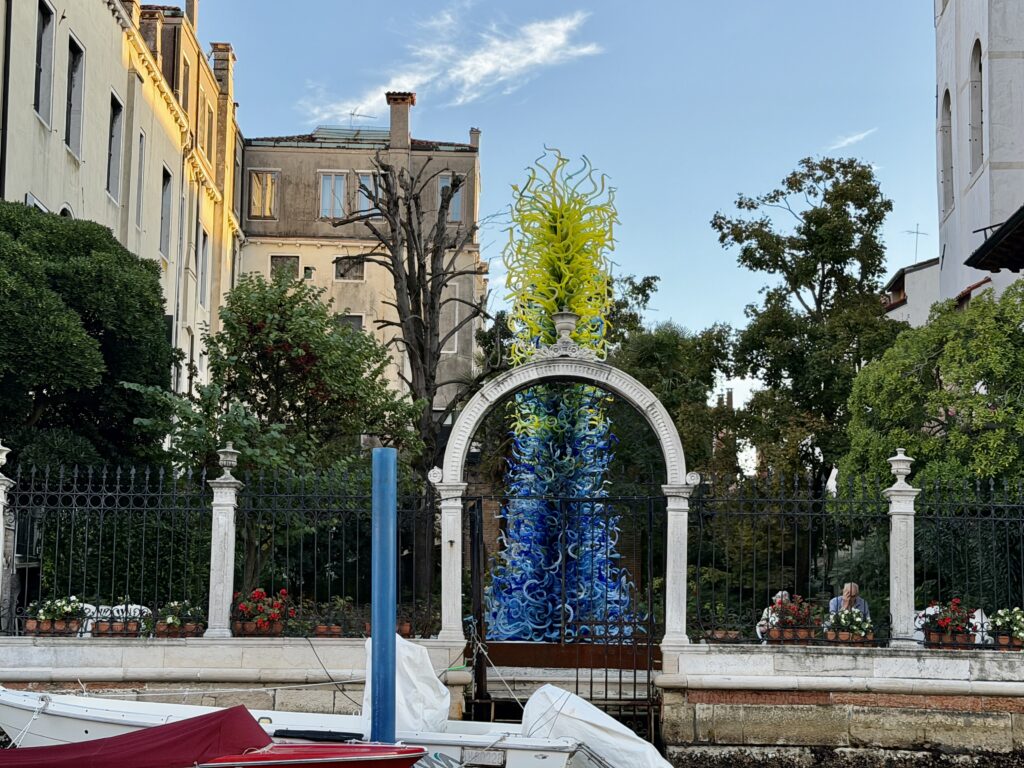
“Blue and Green Tower”, Dale Chihuly, “Chihuly Over Venice” exhibition 5/4/26-11/24/26 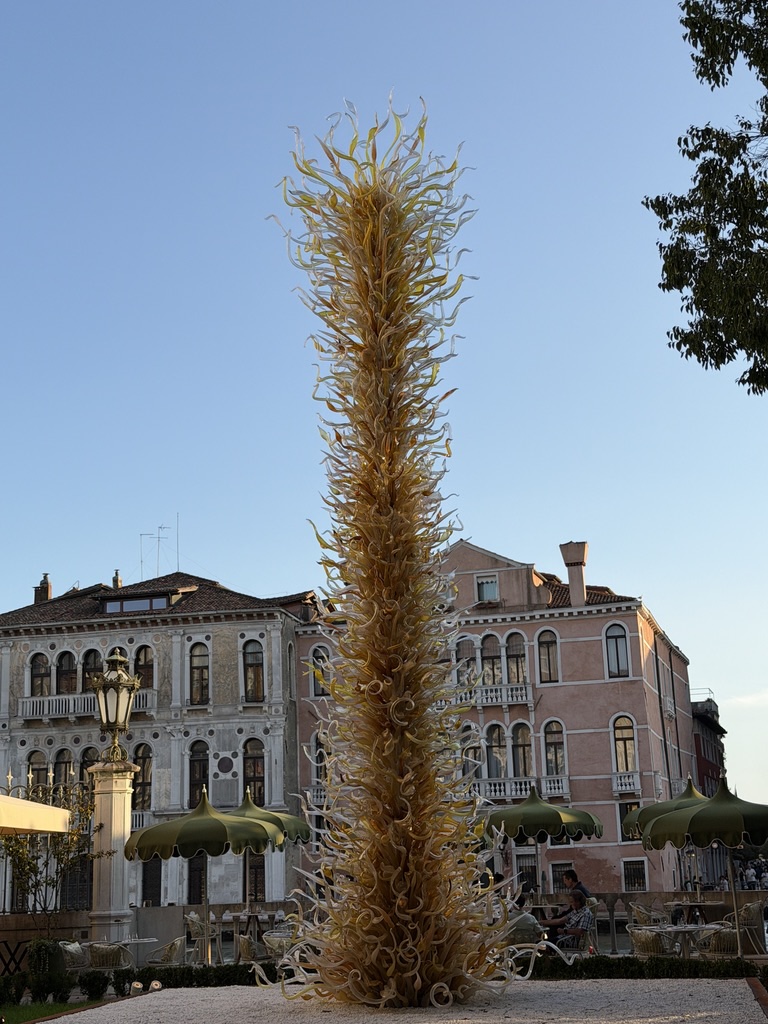
“Gold Tower”, Dale Chihuly, “Chihuly Over Venice” exhibition 5/4/26-11/24/26 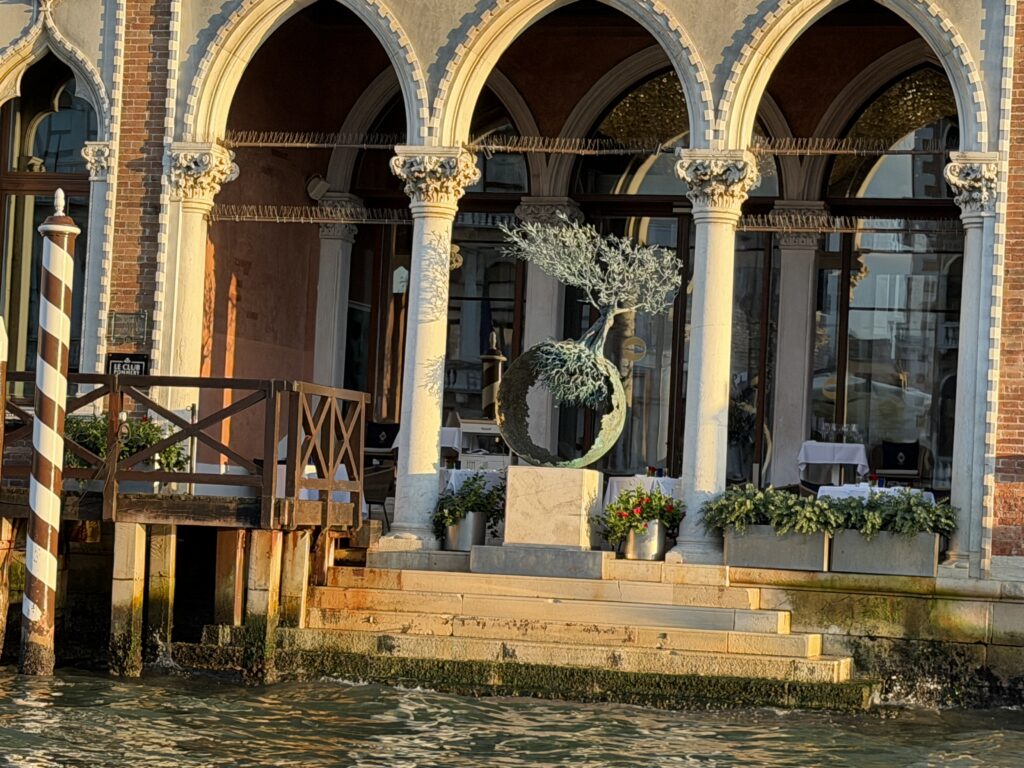
“L’Equilibrio del Nostro Amore” (The Balance of Our Love), Andrea Roggi, 6/11/25 – 11/22/26 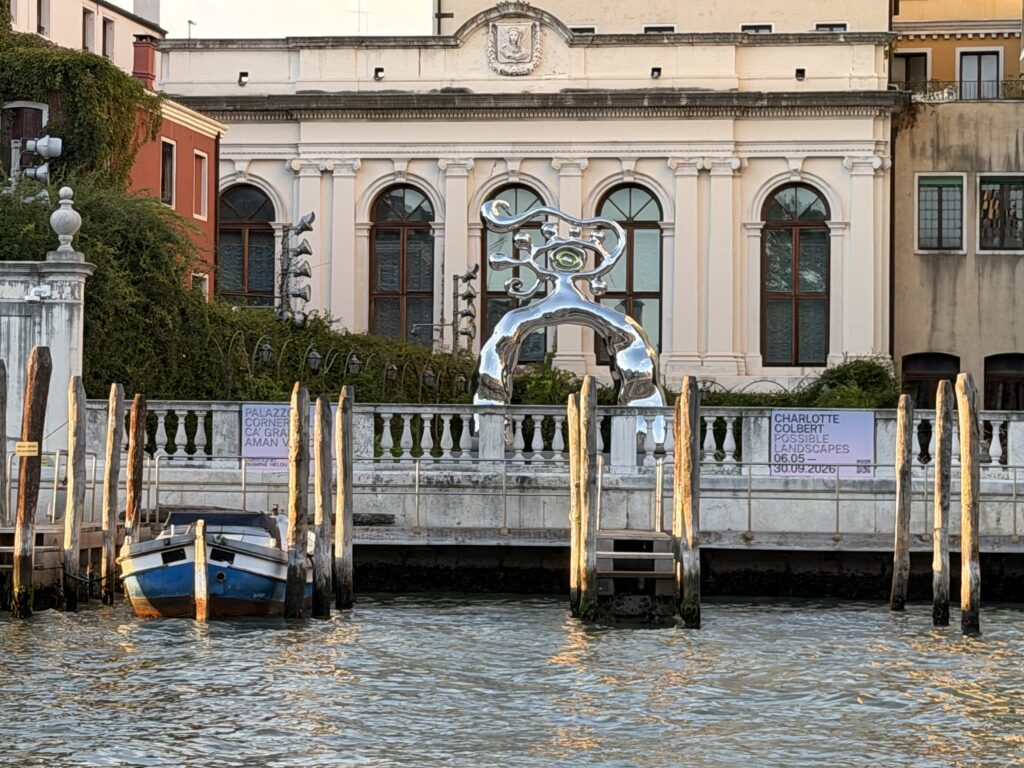
“Possible Landscapes”, Charlotte Colbert, 5/6/26 – 9/30/26
Leaving the Grand Canal we made our way back to our hotel thru the center of town.
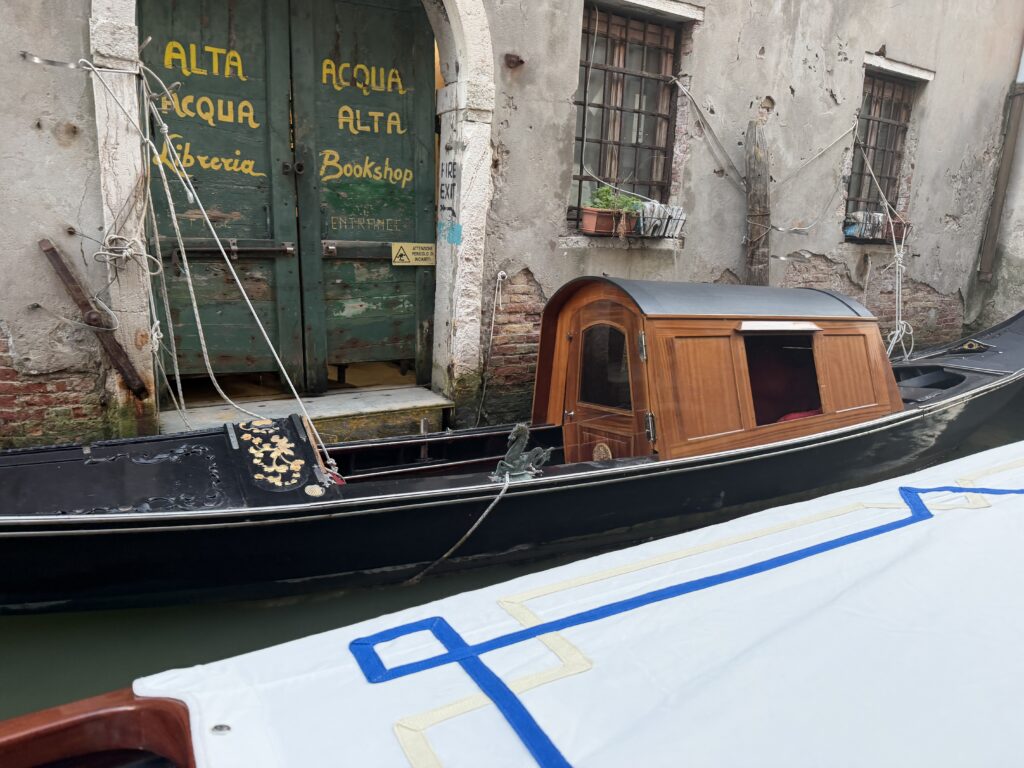
Covered gondola with louvered shutters (often considered the origin of the term Venetian Blinds) for clandestine meetings, secret assignations, and discreet trips to gambling houses 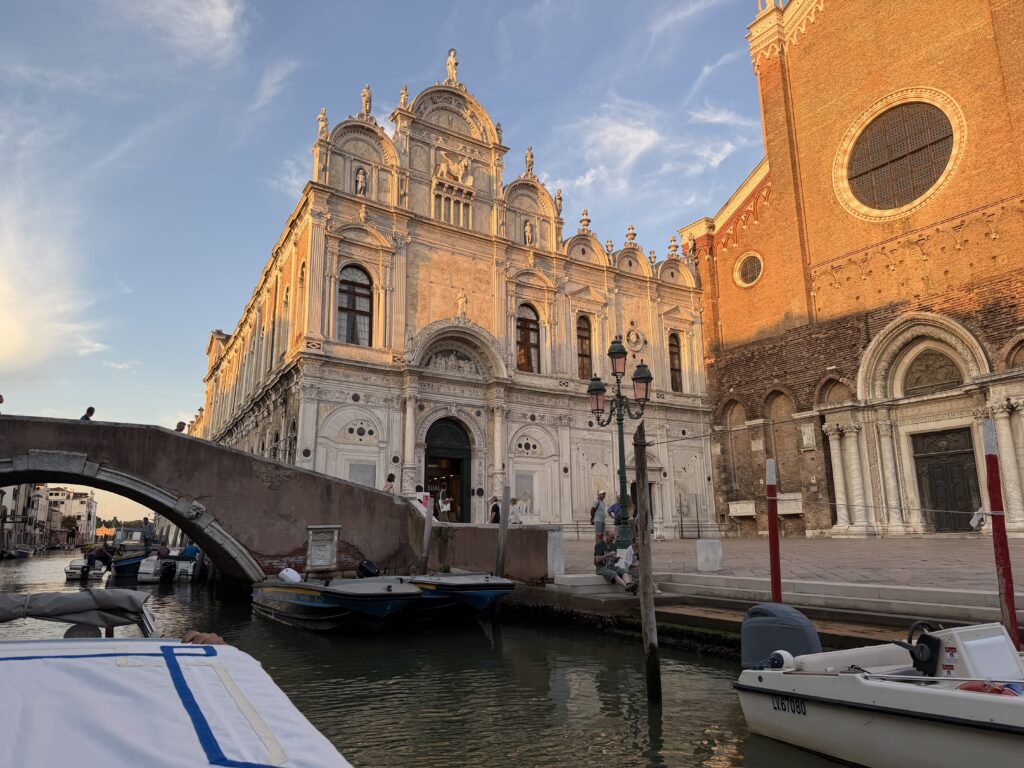
Originally the Scuola Grande di San Marco (Grand School of St. Mark), Late 15th c, Napoleon converted it to a hospital now named: San Giovanni e Paolo Civil Hospital. 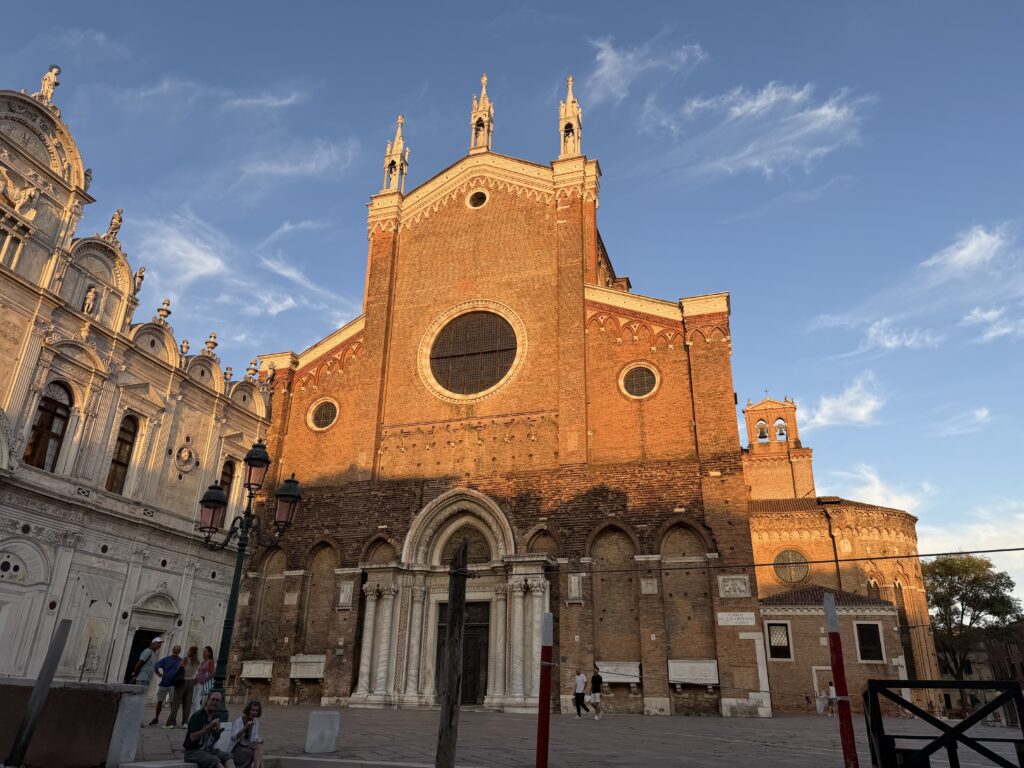
Basilica of Sts. John and Paul aka San Zanipolo, 1333-1430, one of the largest churches in the city with 25 Doges buried inside. The John and Paul here are not the apostles but 2 obscure Roman martyrs. 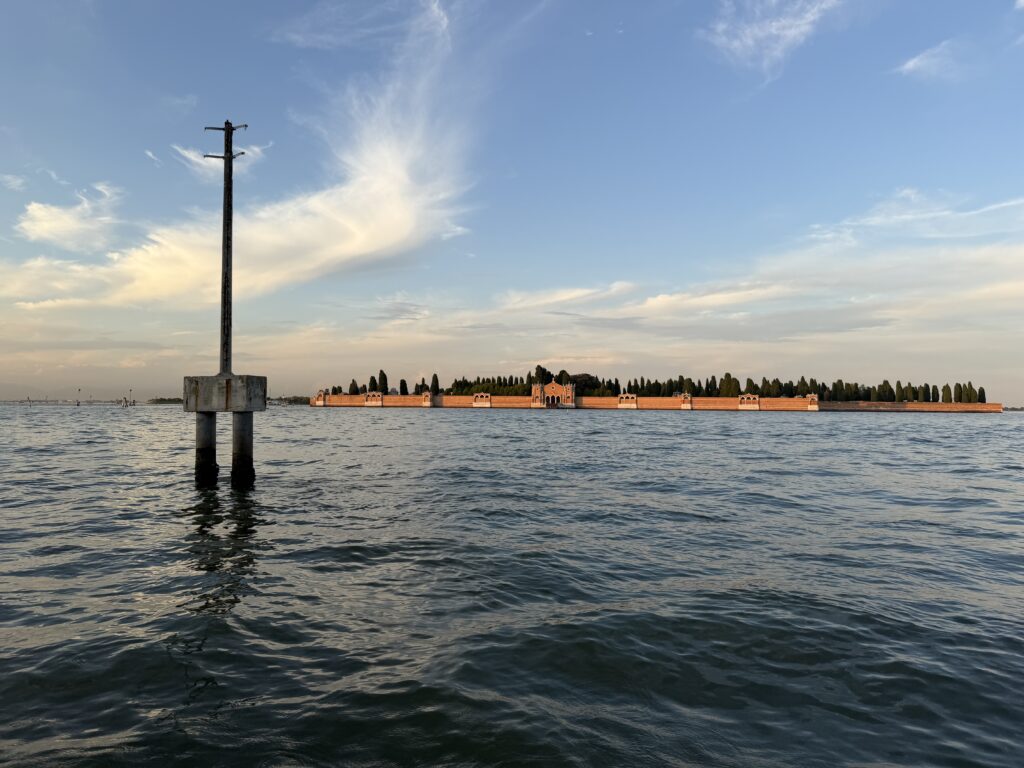
Island of San Michele, designated a cemetery island when Napoleon stopped burials within the city 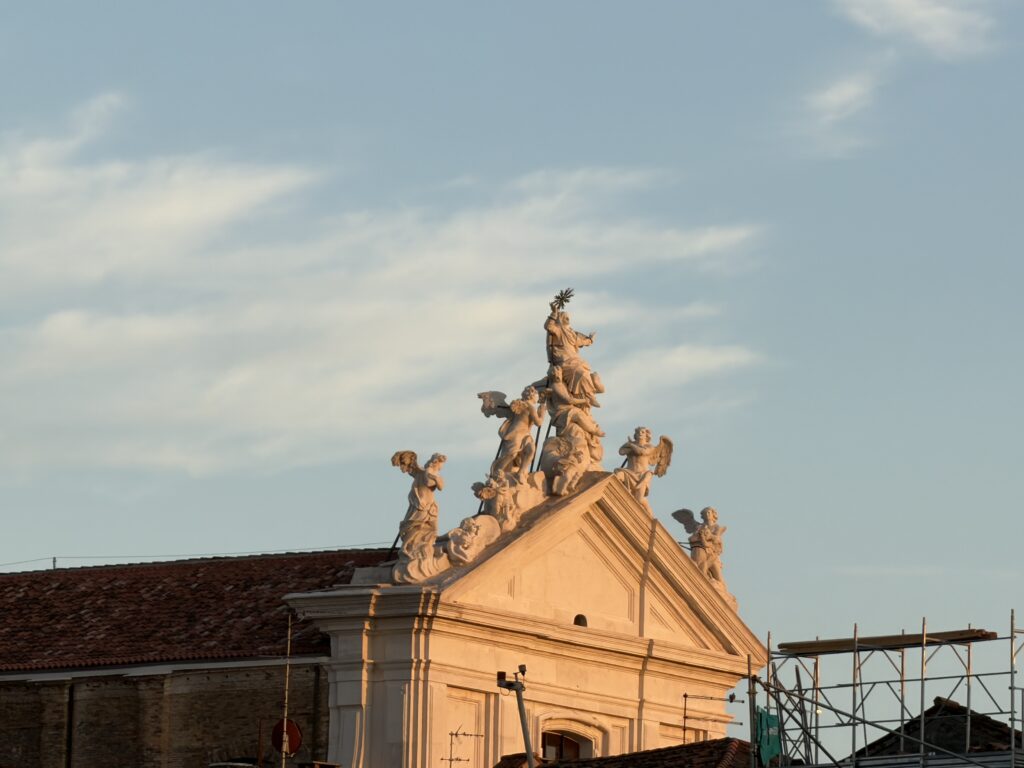
Sculptural pediment of the Church of Santa Maria Assunta, (aka “I Gesuiti”), early 18th c., depicts the assumption of the Virgin Mary with angels.
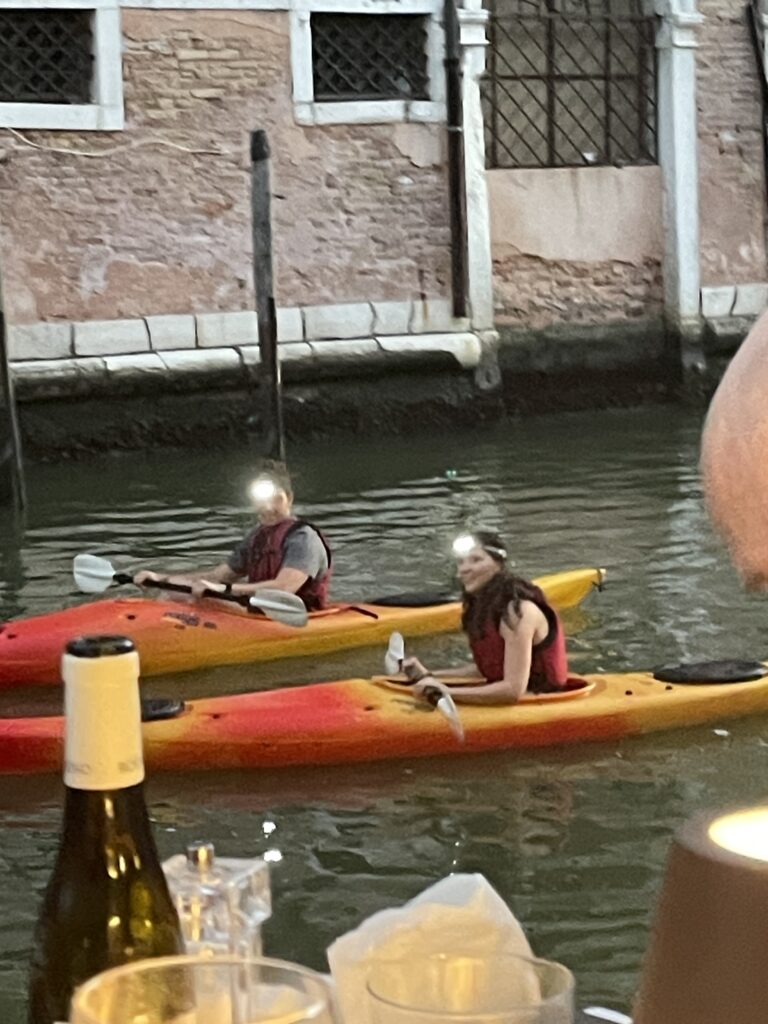
Back at the hotel we dropped our bags and walked back to ‘restaurant row’ – where canal-front dining was so popular that we walked quite a ways before finding a table. Turns out it was the same restaurant as before, but the black ravioli stuffed with sea bass and served with a scampi cream was outstanding. And it was pleasant to dine with the locals enjoying a few brief moments of Gemütlichkeit before returning to the hotel to finish packing.
Tomorrow we plan to be downstairs at 6:00 (when they promise breakfast boxes will be available) so we can eat before our taxi arrives at 6:30.
It’s the last night of this adventure (Good Lord willin’ and the flights all run).
Tomorrow will be just over 25 hours long as we make our way west.
Till then,
R