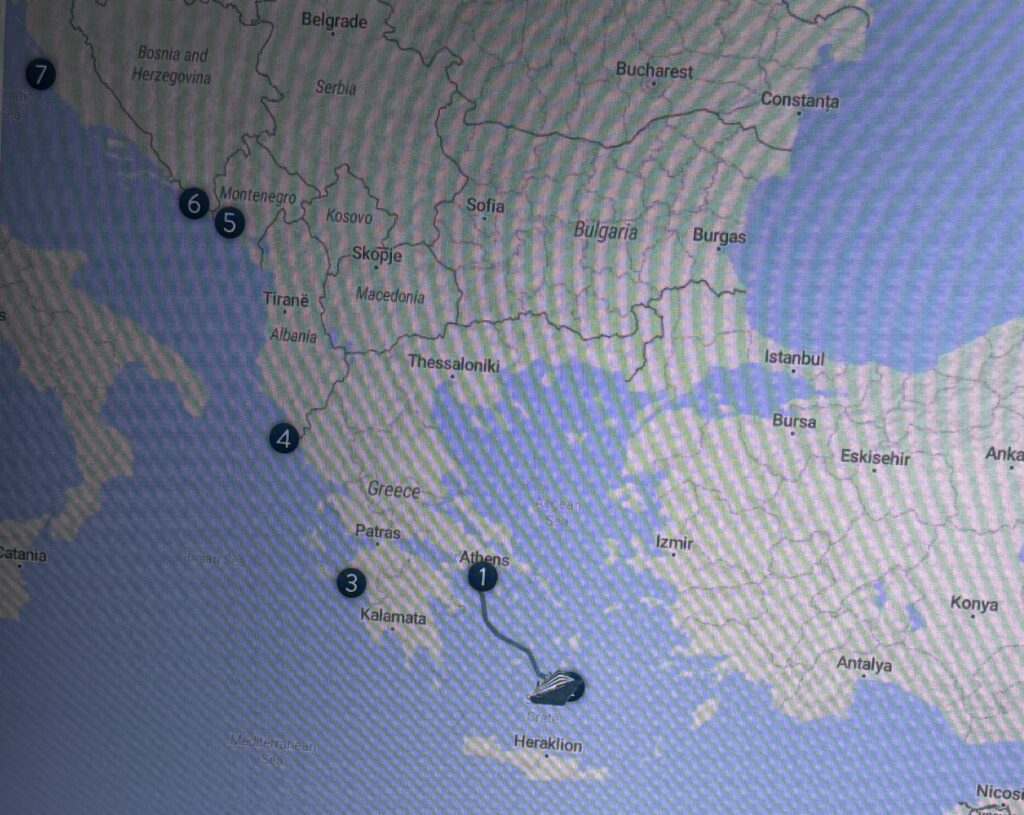
Sunny Blue Aegean Skies so you almost don’t see the smoke in the air.
Hi Temp 88;
Sunrise 6:42, Sunset 8:02 (The smoke is really evident when the sun is close to the horizon.)
We had an 8:00 excursion call this morning (along with most everyone else on the ship) so we chose not to exercise and ordered room service breakfast.
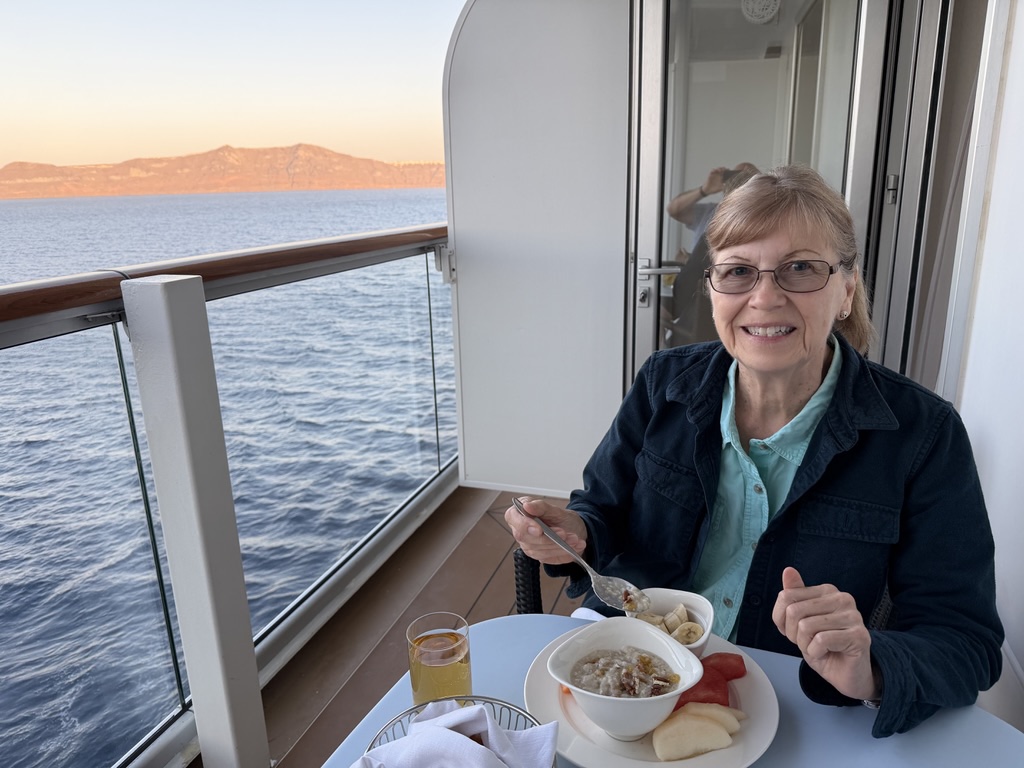
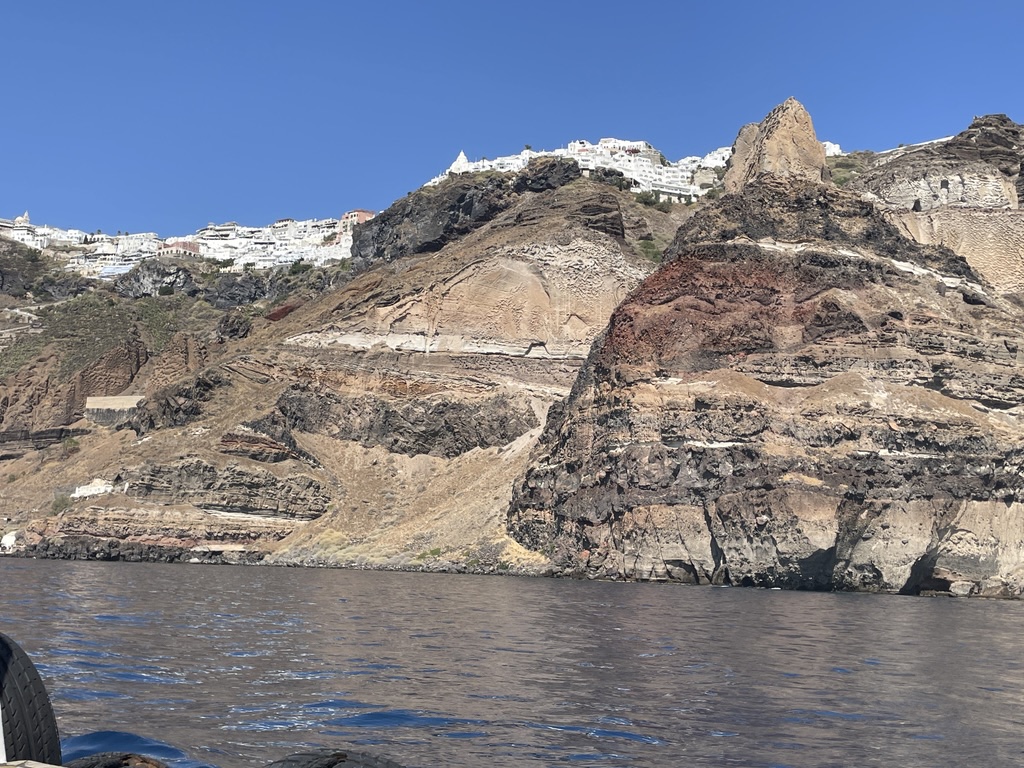
This allowed us to watch as we sailed into the Santorini caldera.
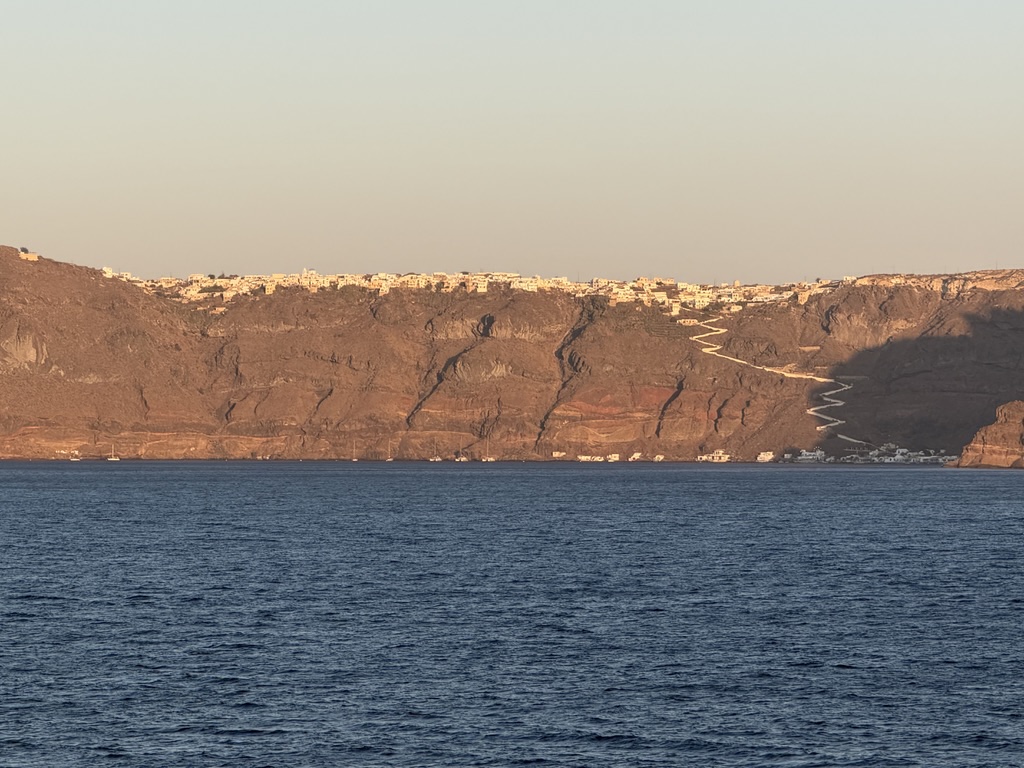
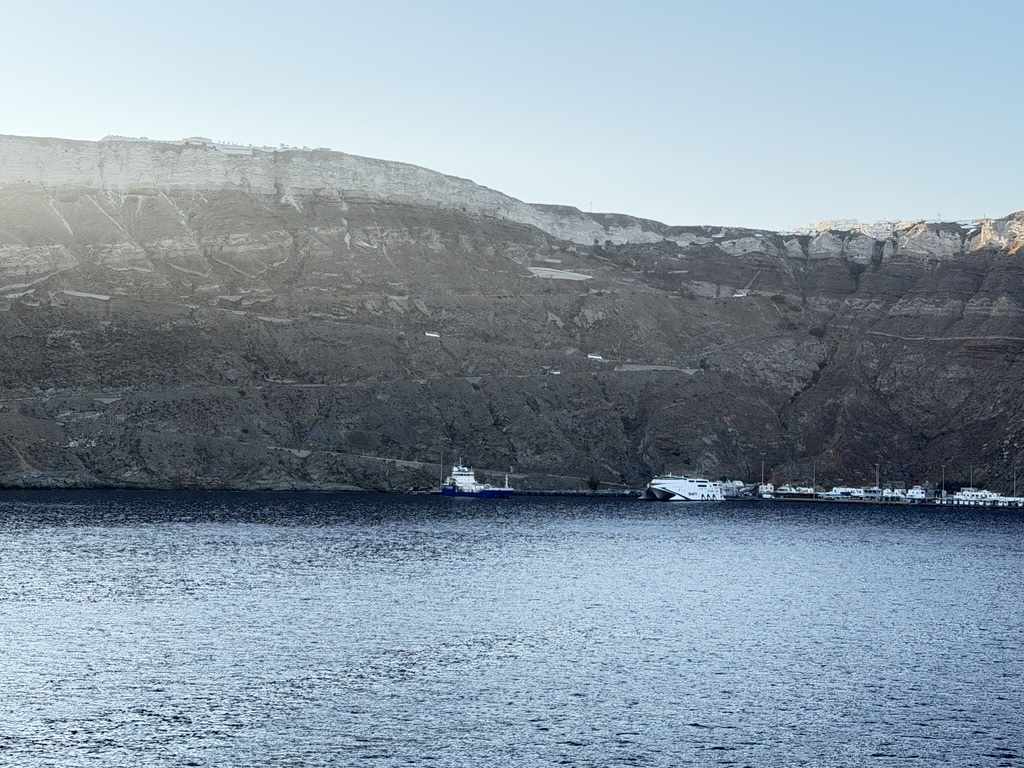
After a brief tender ride we boarded our bus and headed up the canyon wall.
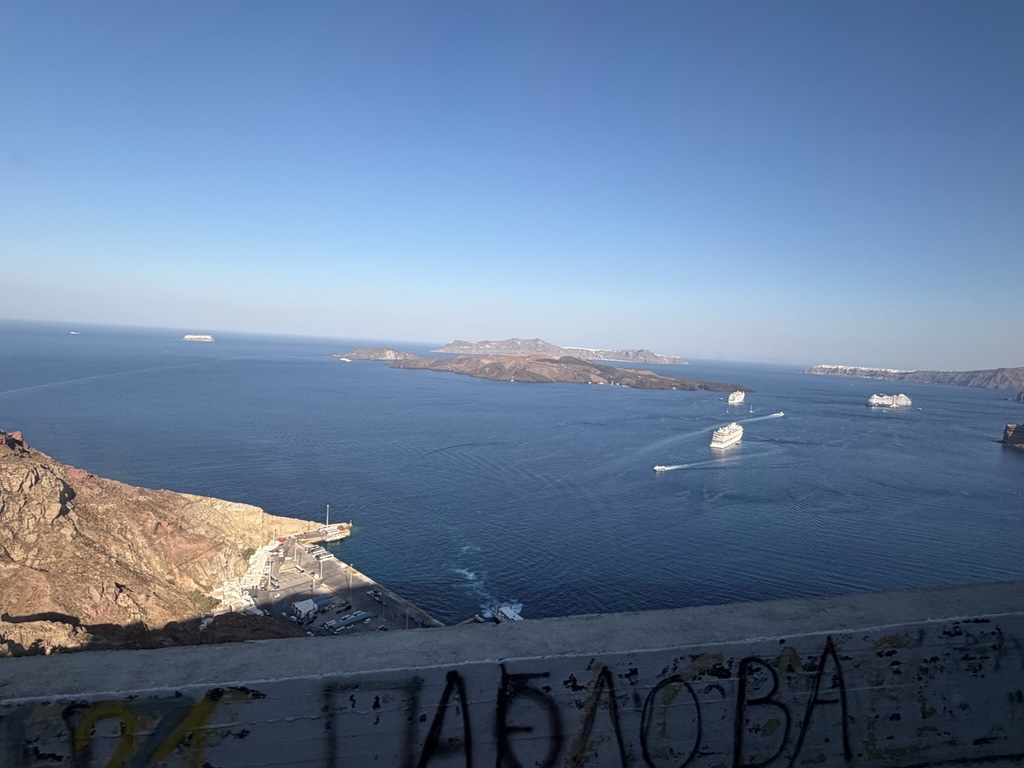
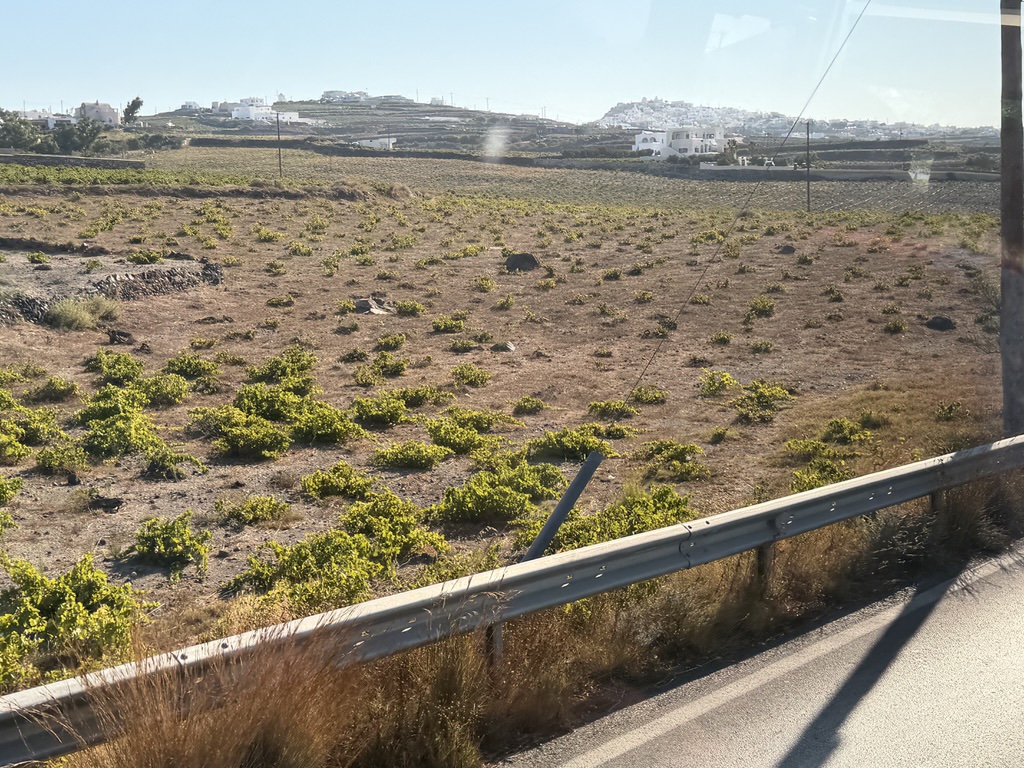
Heading south to the first stop we watched the island scenery pass by.
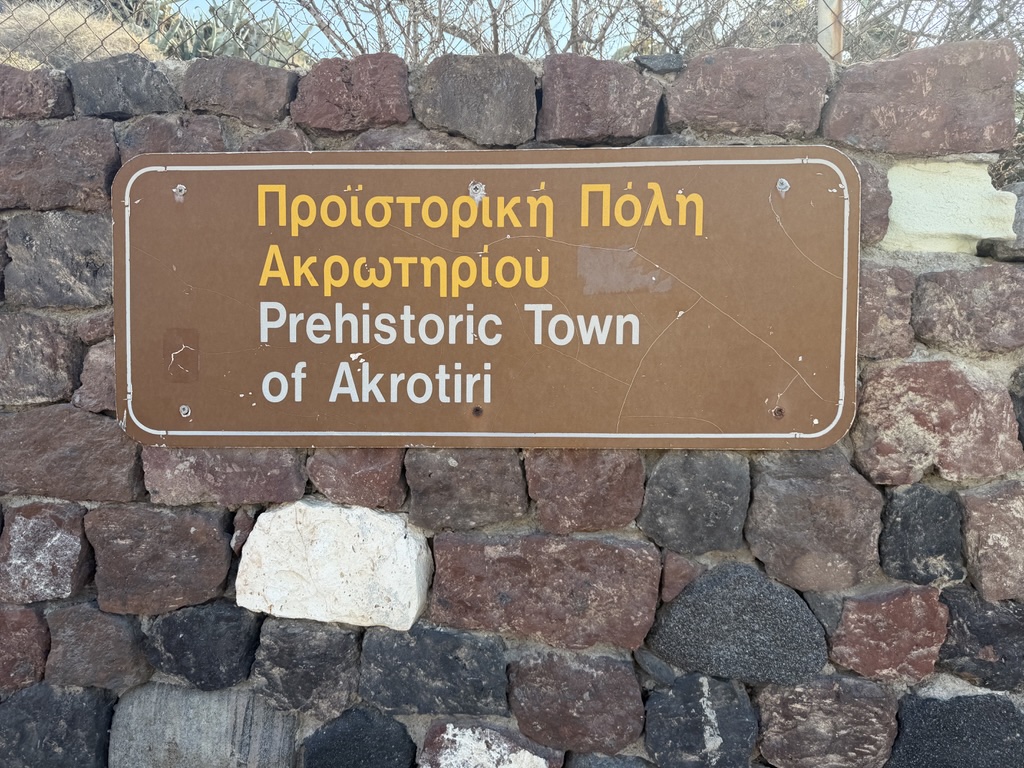
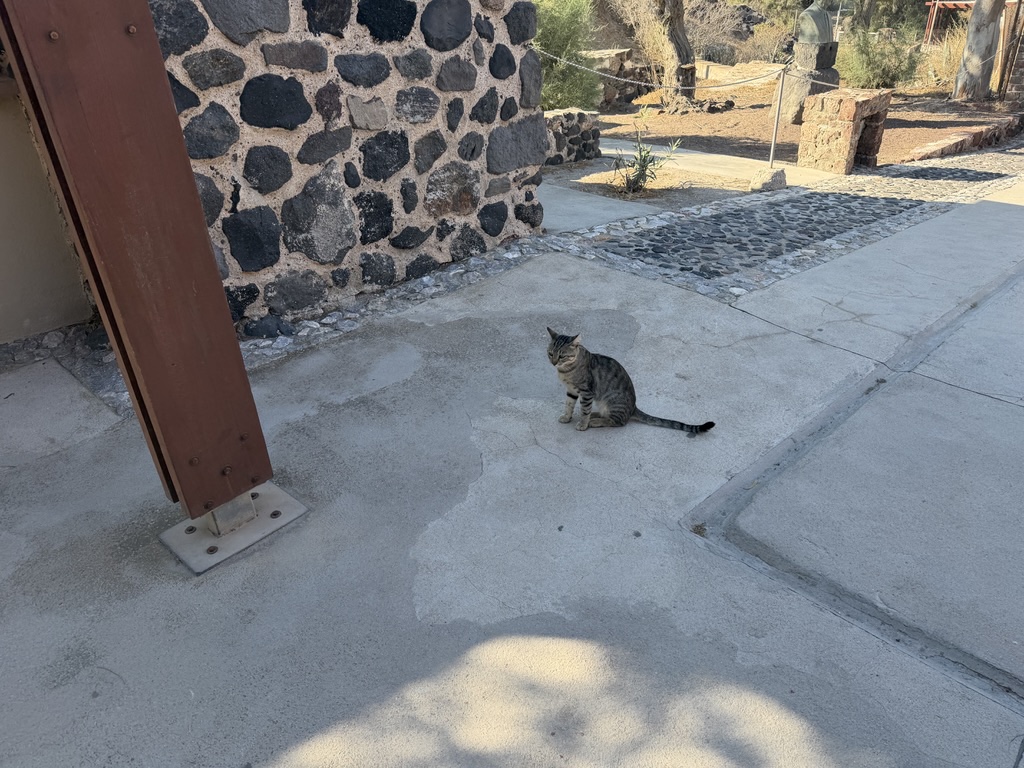
This bronze age Minoan port city (occupied since at least 4000 BCE) was buried under volcanic ash between 1620 and 1530 BCE.
Excavations began at the site in 1867, but work in earnest didn’t start until 1967 and are continuing. Only a small part of the original city has even been identified.
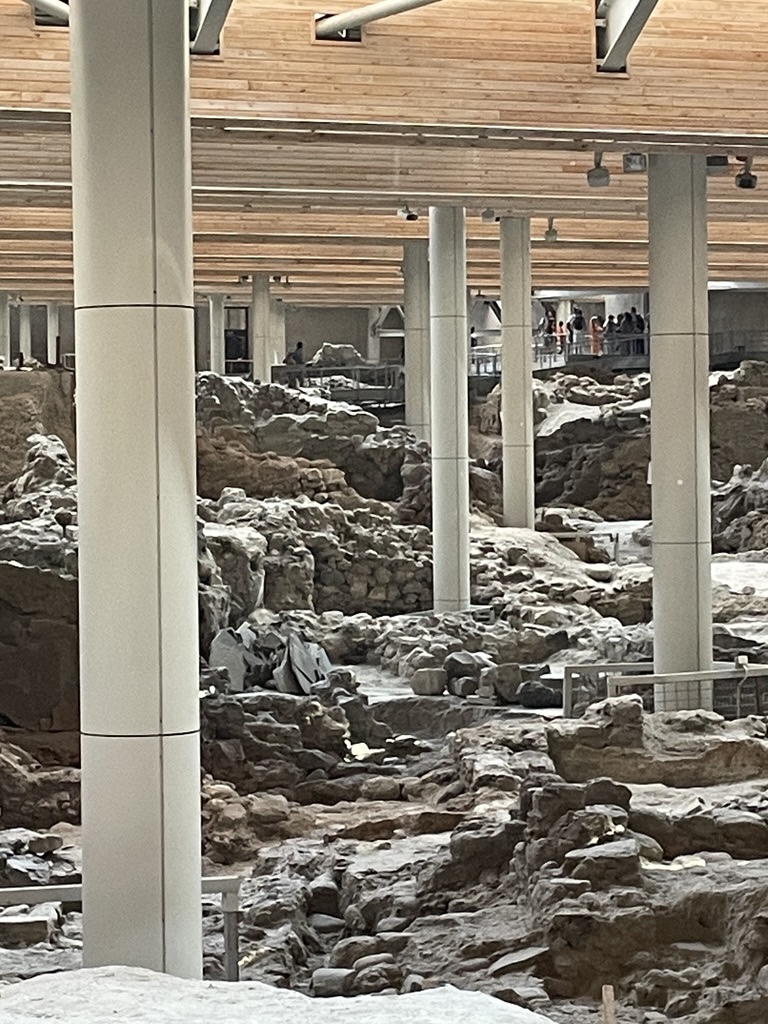
The protective roof structure was completed in 2012. 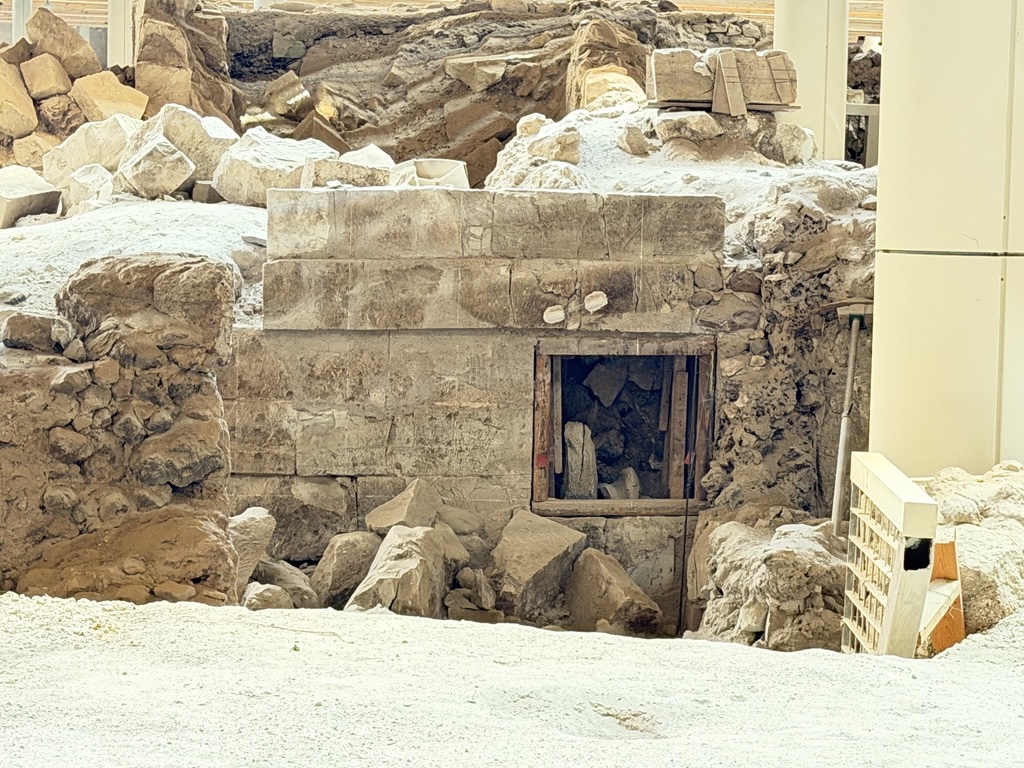
The windows were framed in wood. During the digging the holes left by the disintigrated wood were filled with plaster to create an authentic reproduction. 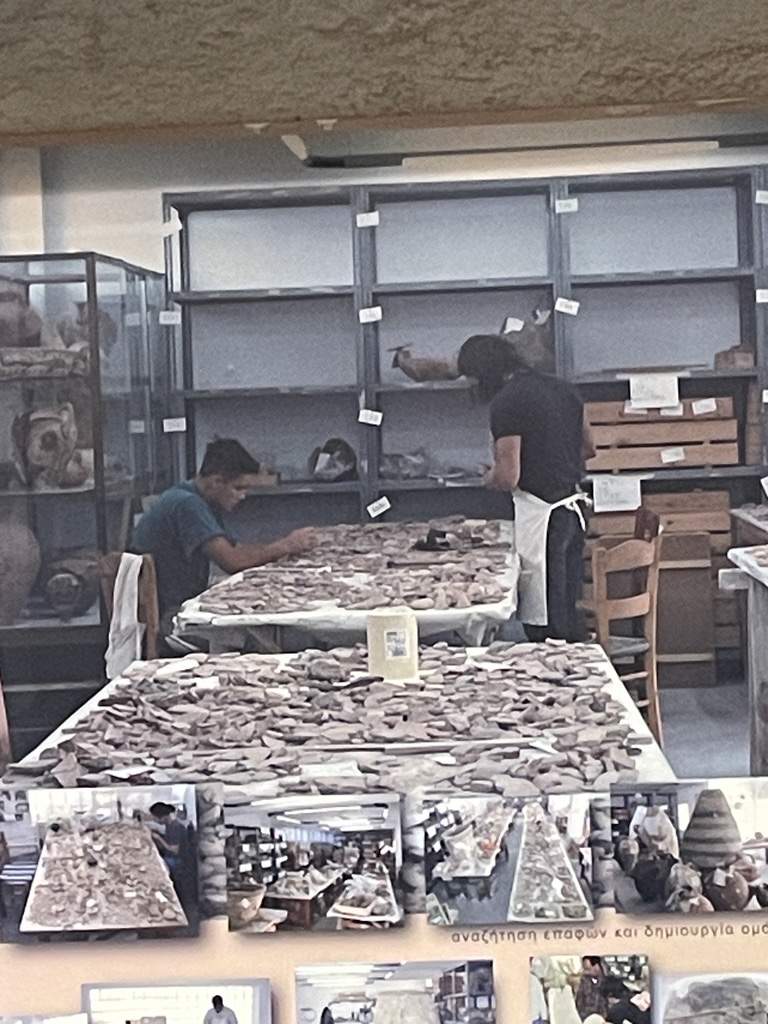
Workers piecing together frescoes 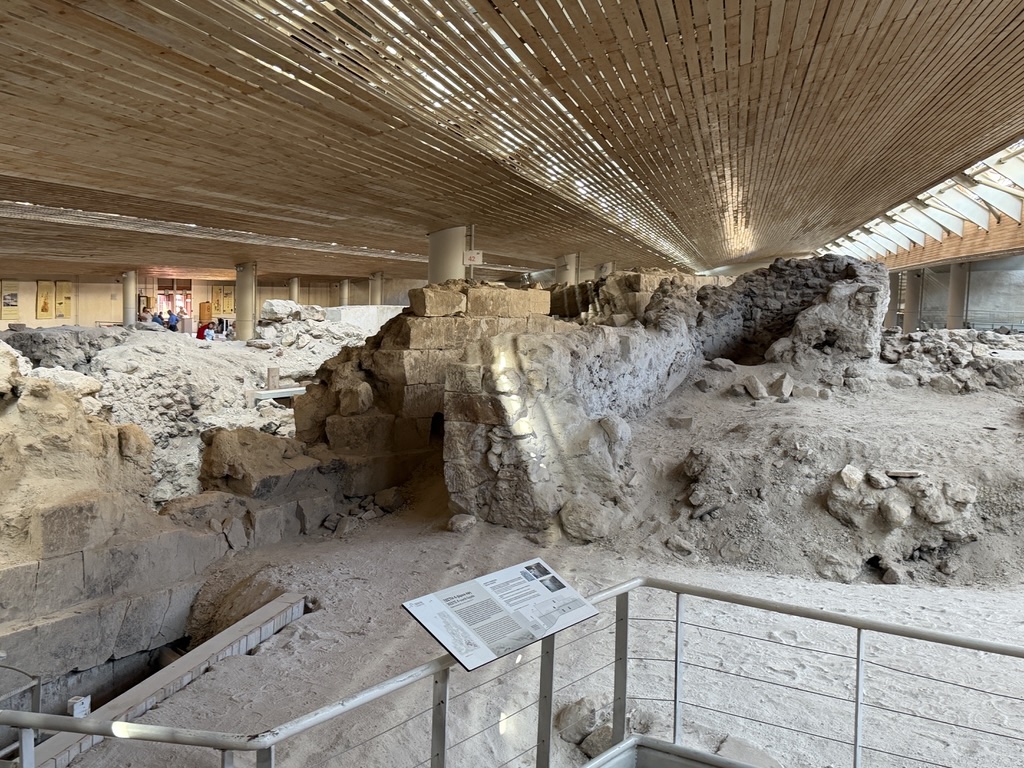
Notice the passageway built with dressed stone. 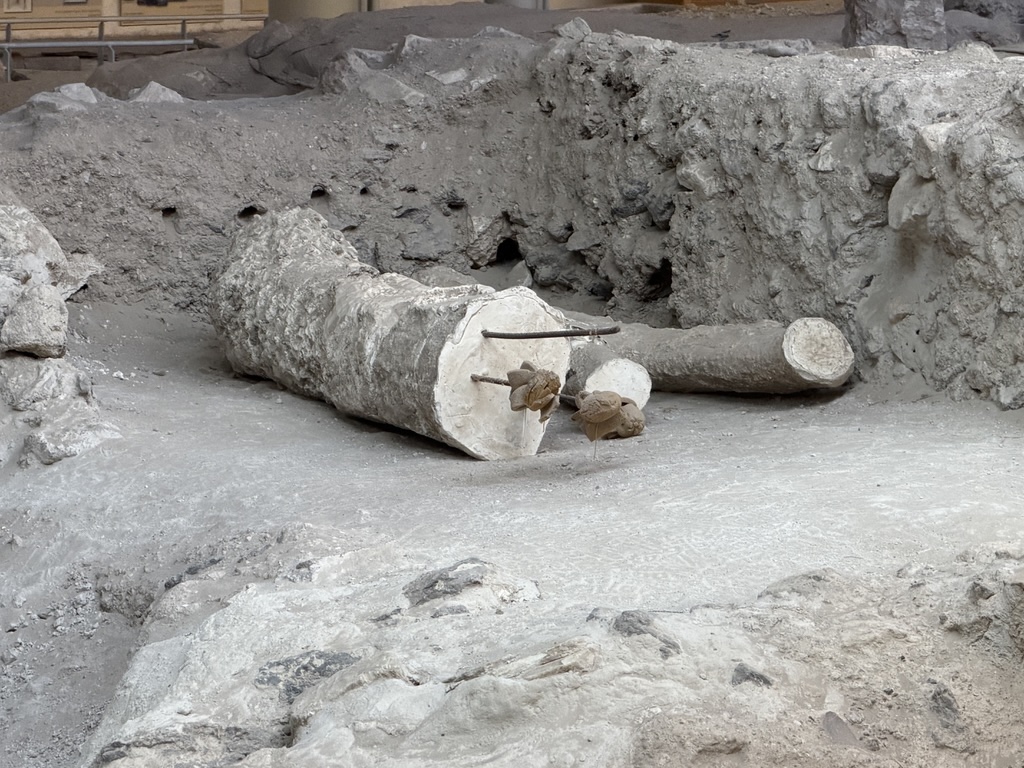
Plaster casting also identified tree trunks 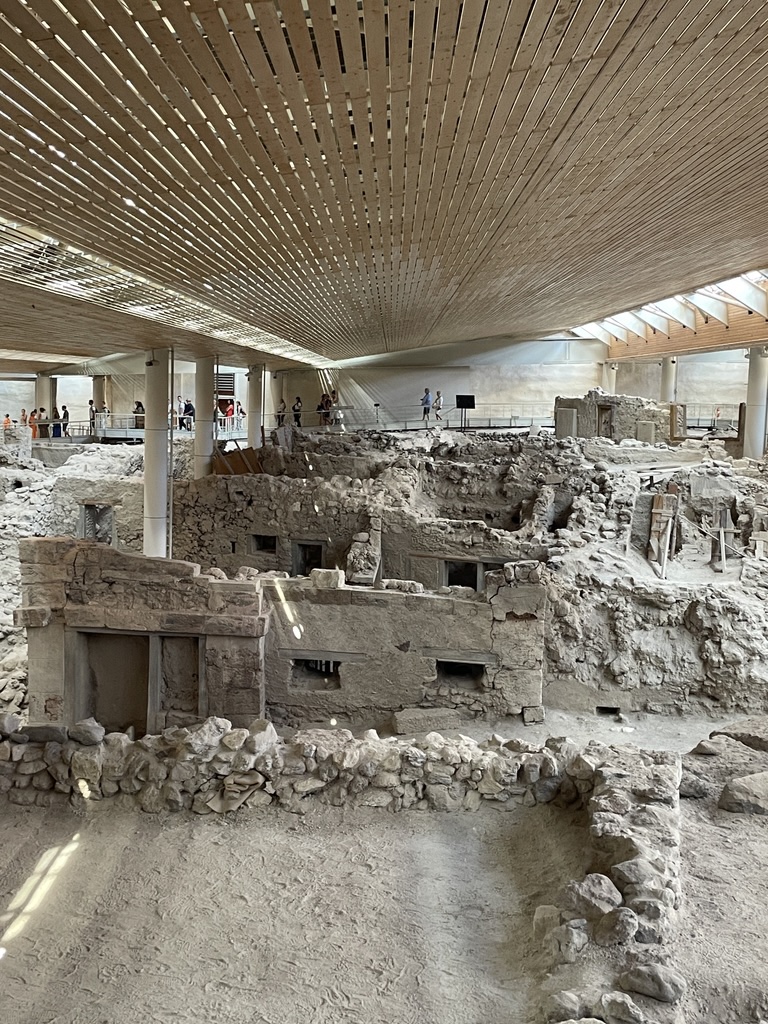
House with multiple rooms 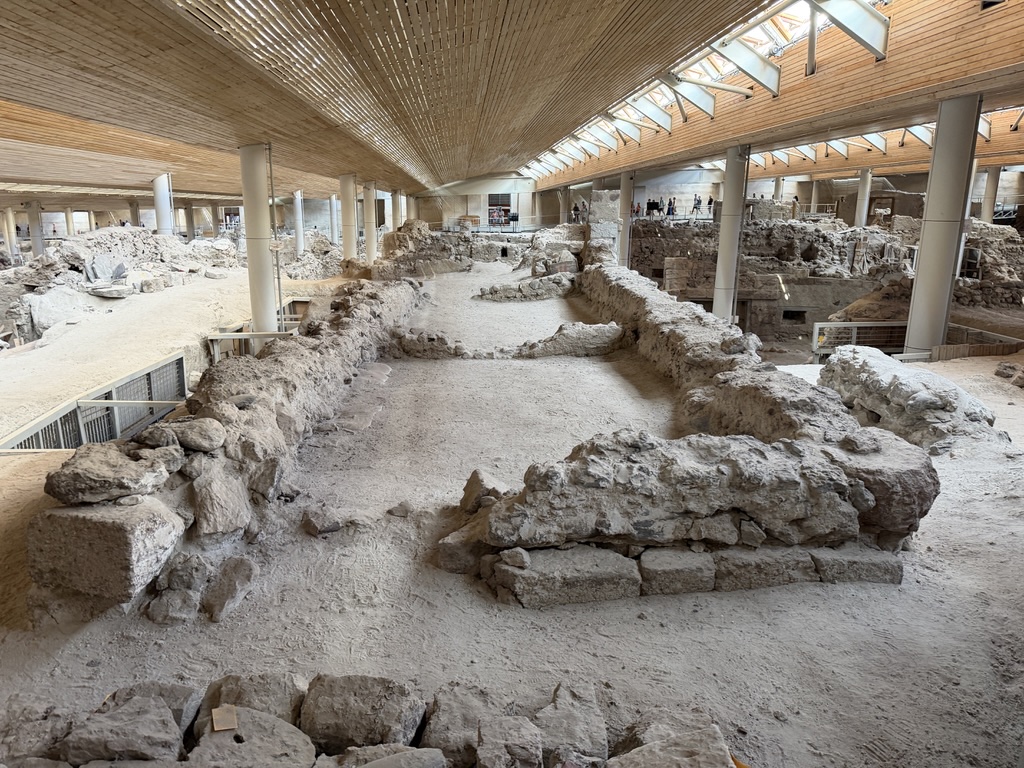
Possibly a warehouse 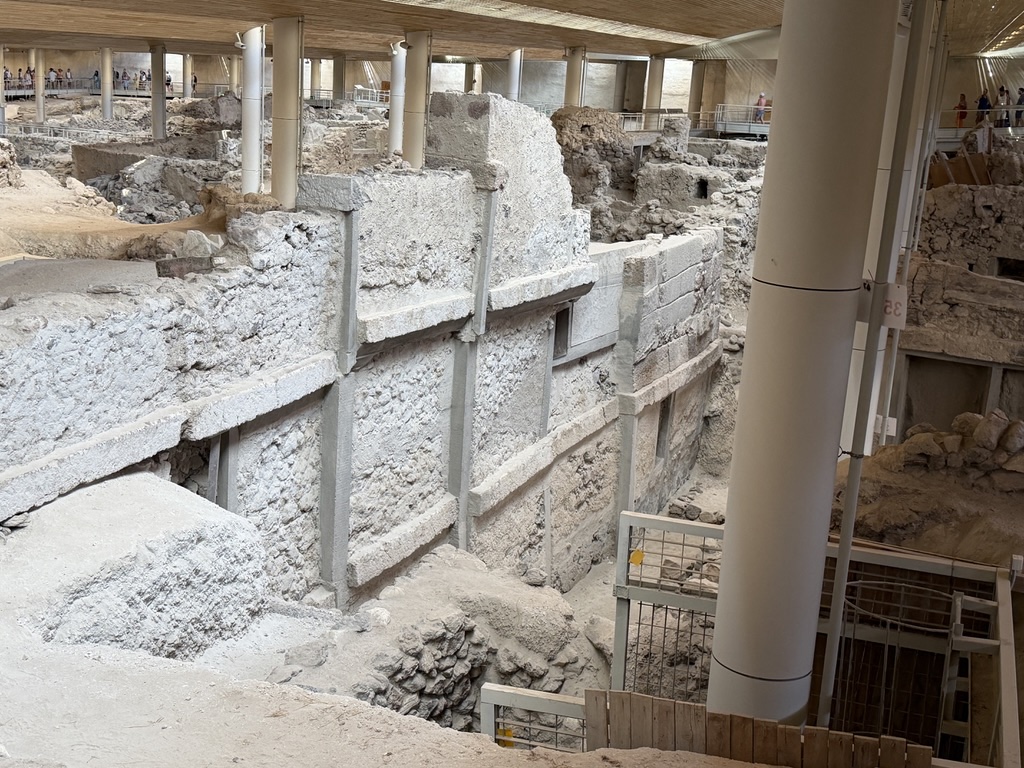
Evidence of a multi-story building – in 2000 BCE. External components have been added to brace the structure during excavation. 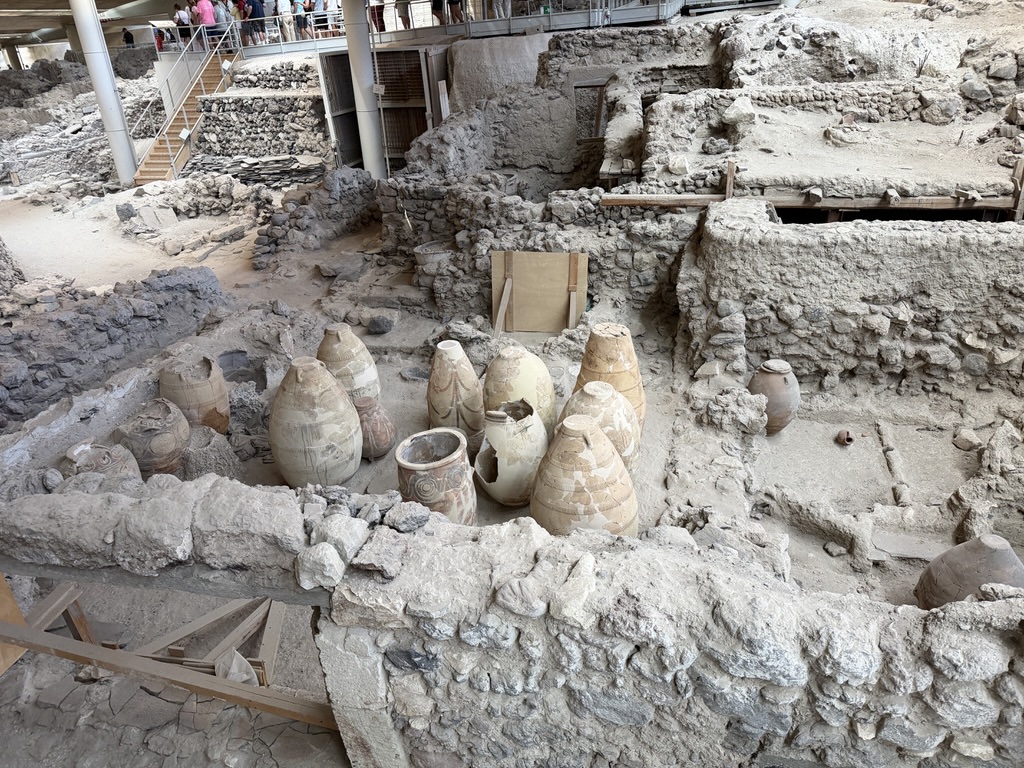
Earthenware jars 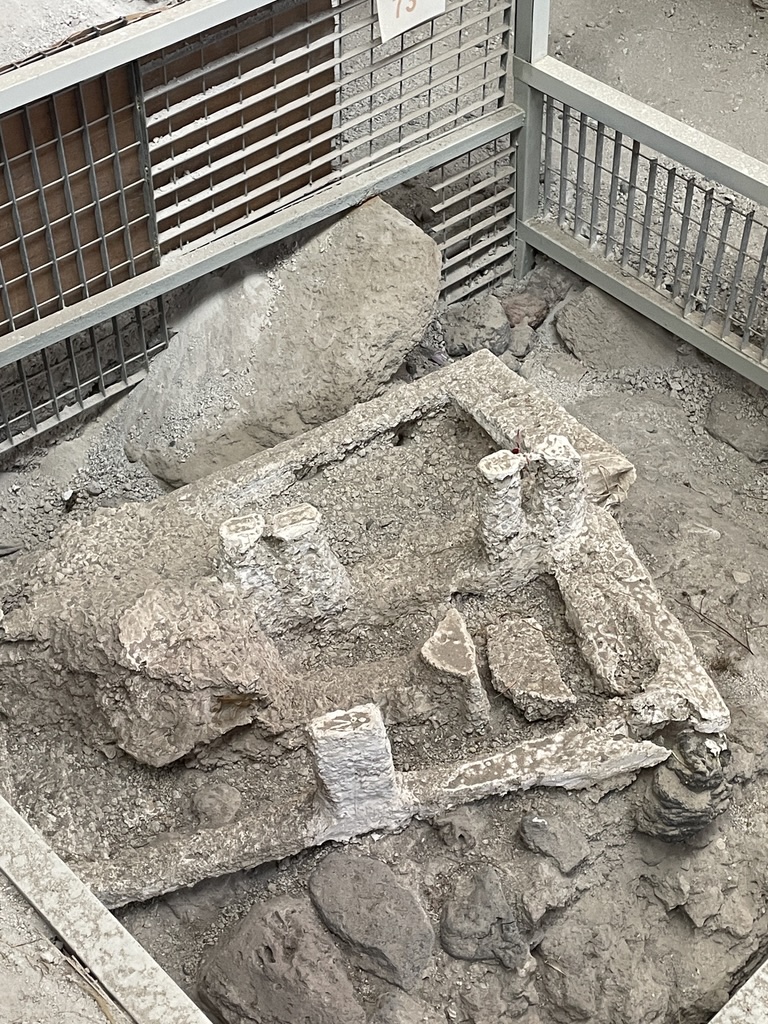
Casts of wooden bed frames (upside down and stacked) 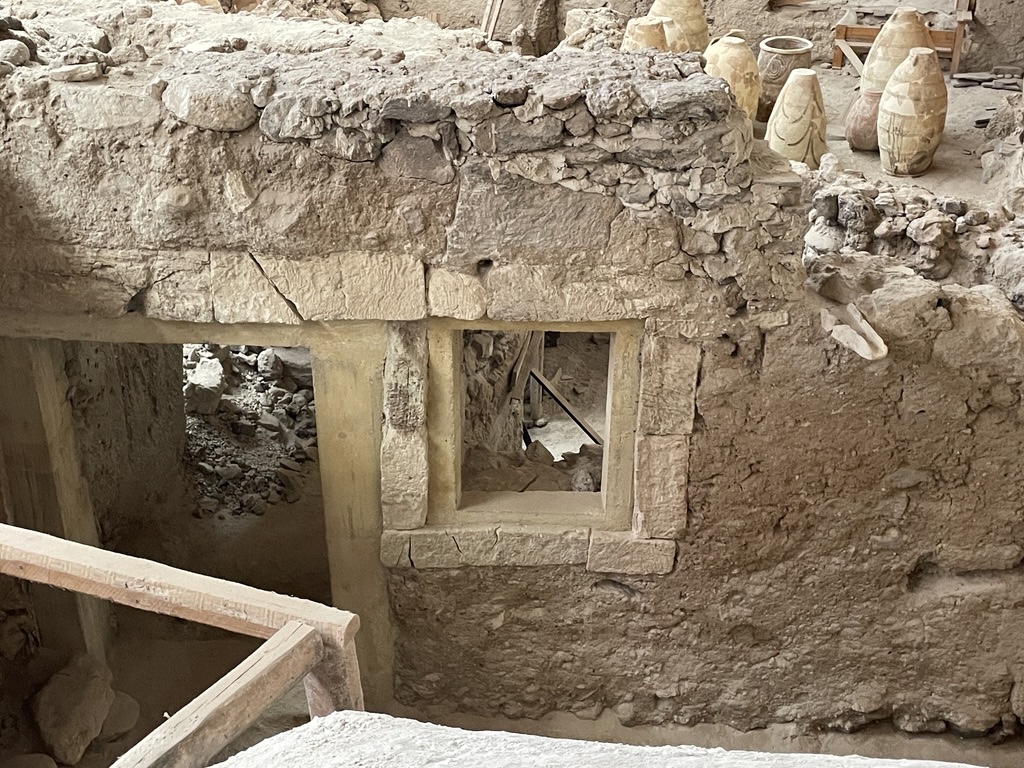
Note the water spout on the right side of the photo. 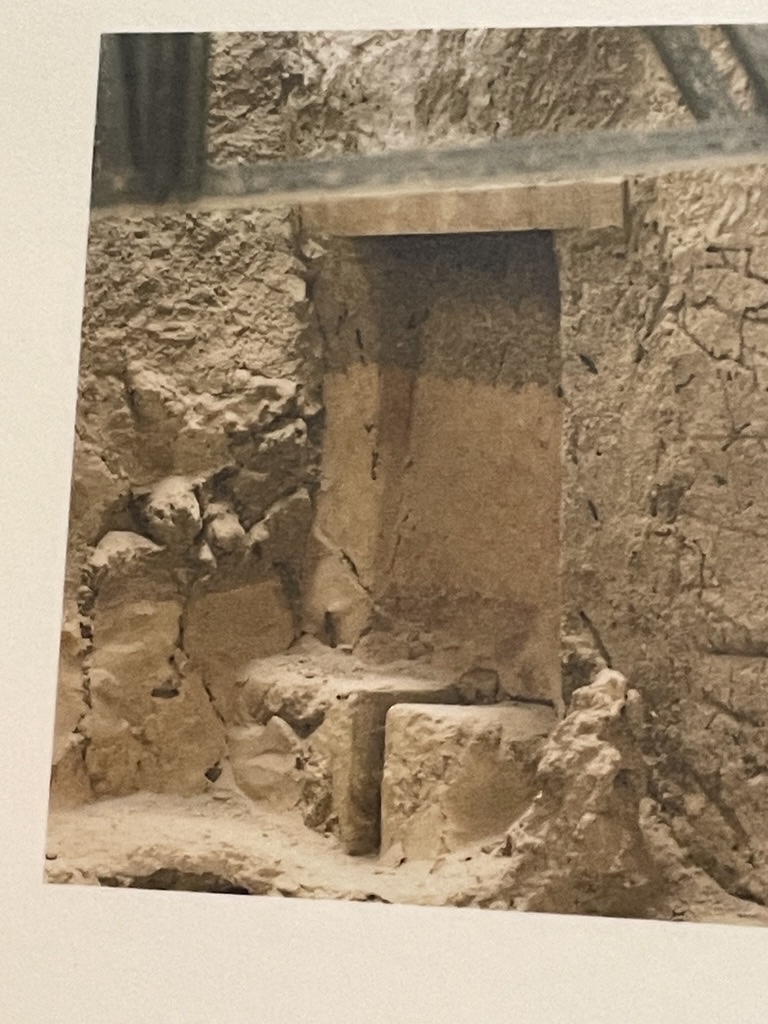
This toilet was on the second floor and was connected to a clay pipe – in 2000 BCE. 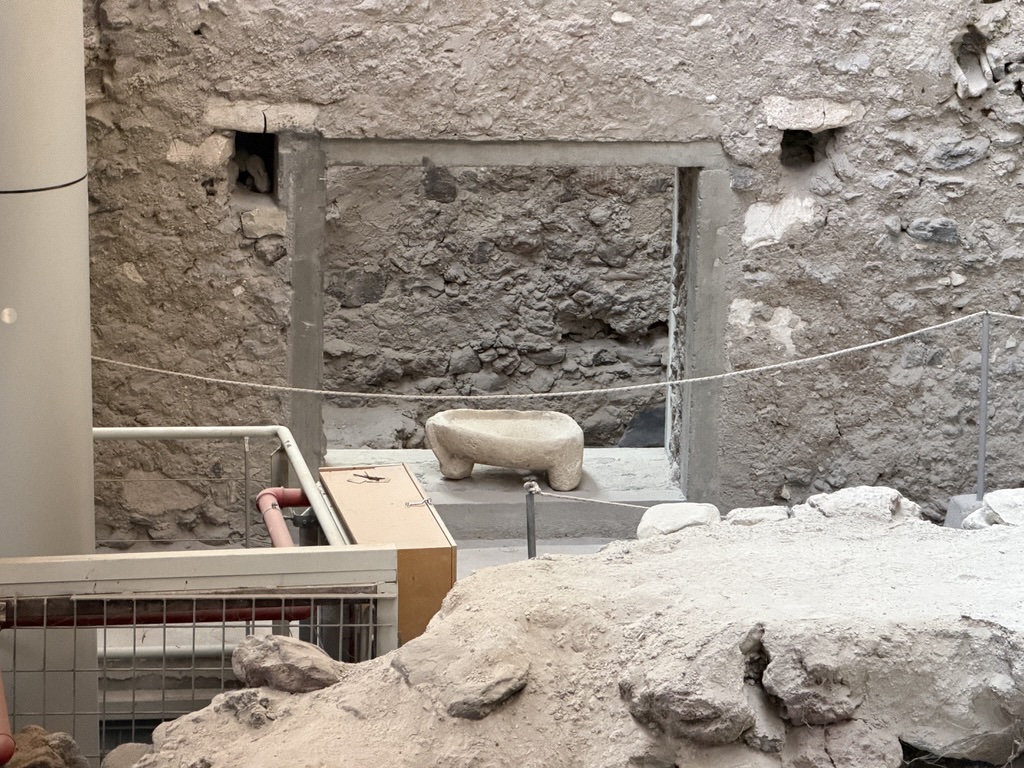
Mortar sitting in a window frame 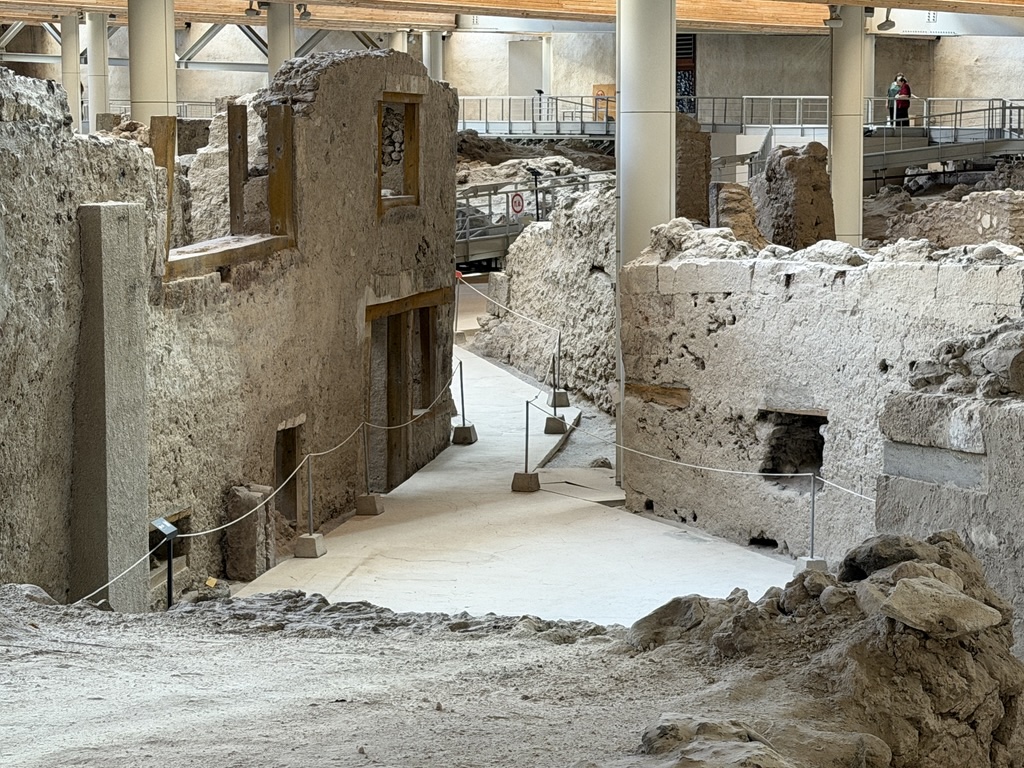
Space identified as ‘triangle square’ 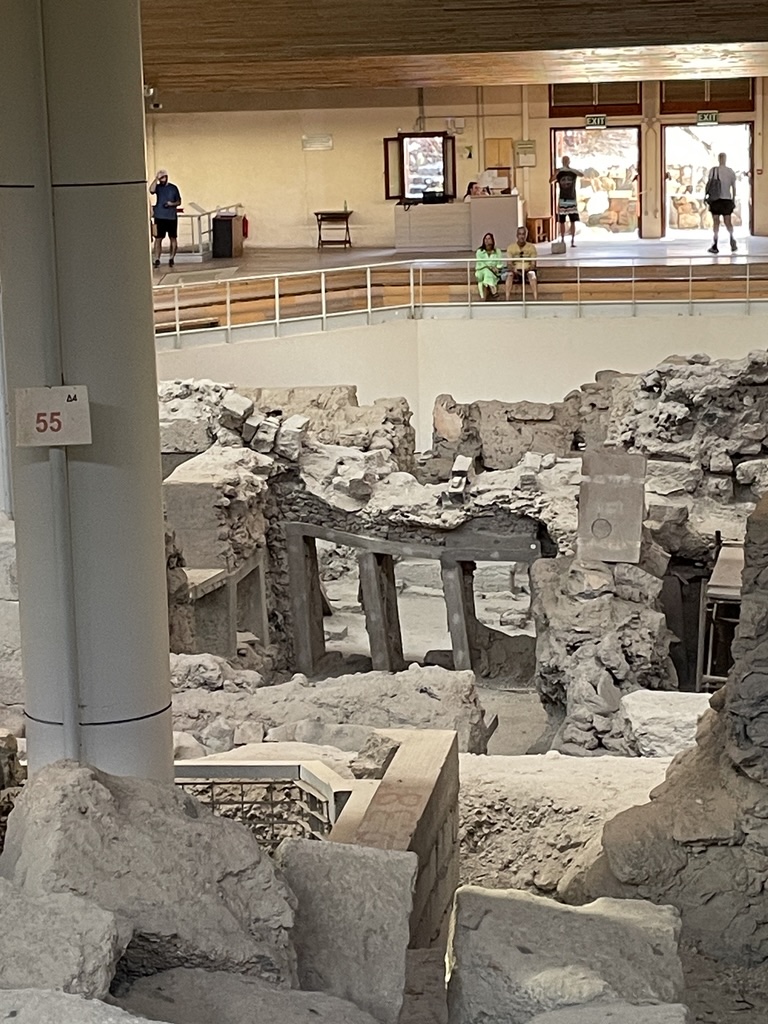
Multi-opening window in a public building 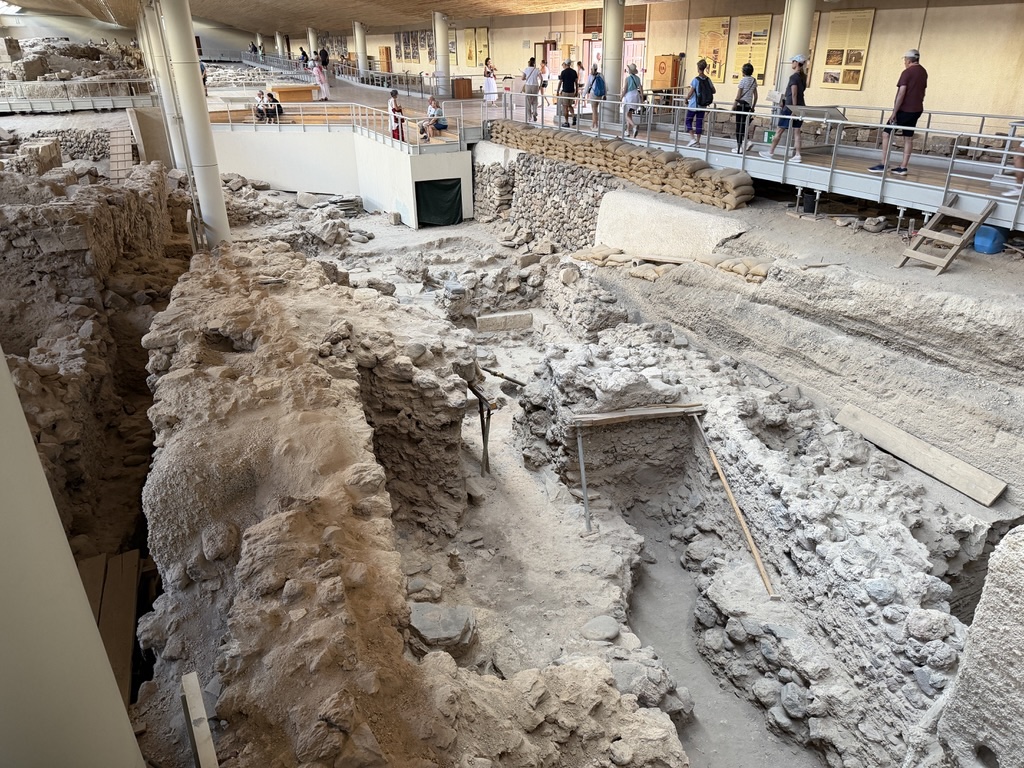
The corner where current excavation is proceeding
Artifacts from the site have been moved to a museum in Fira for preservation and study. We’ll see some of those later.
Back on the bus we drove to the far north of the island to the town of Oia.
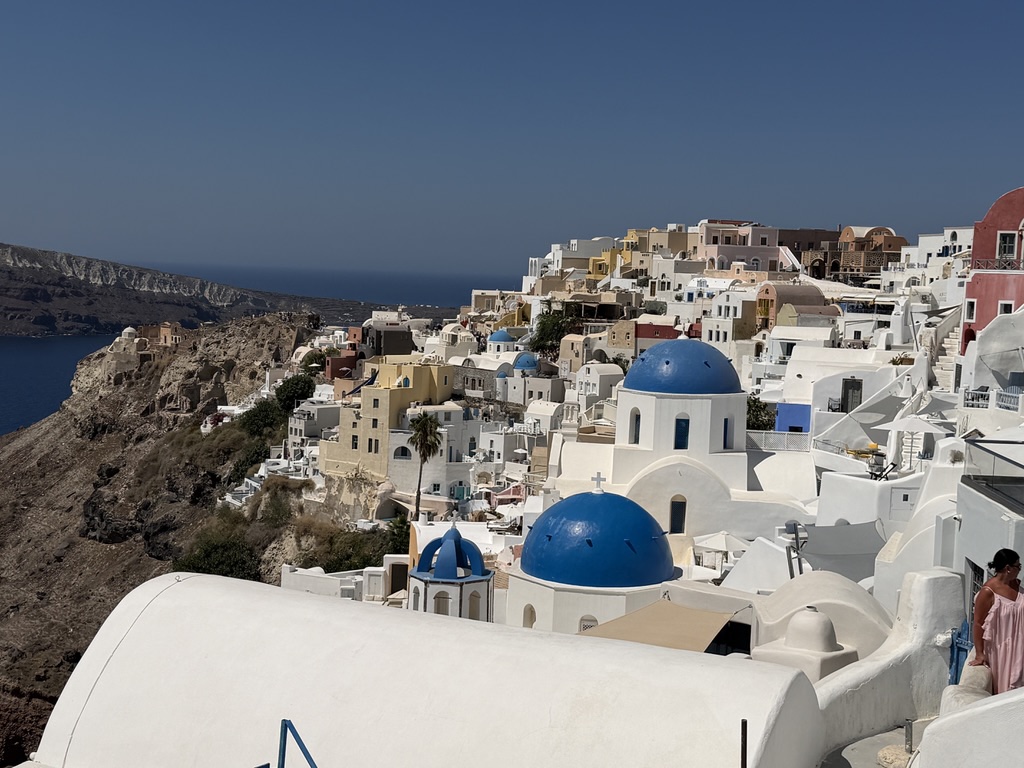
Oia is a photo stop for many cruise itineraries – mainly because there is a famous picture of blue church domes among white-washed hotels on a cliff-side:
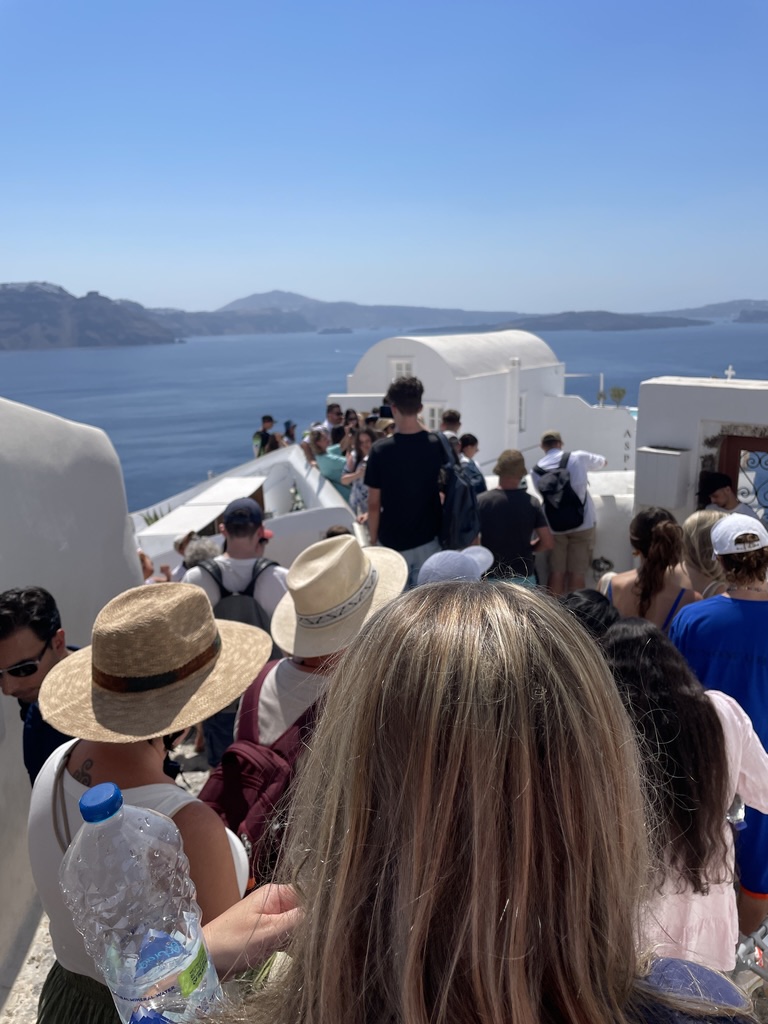
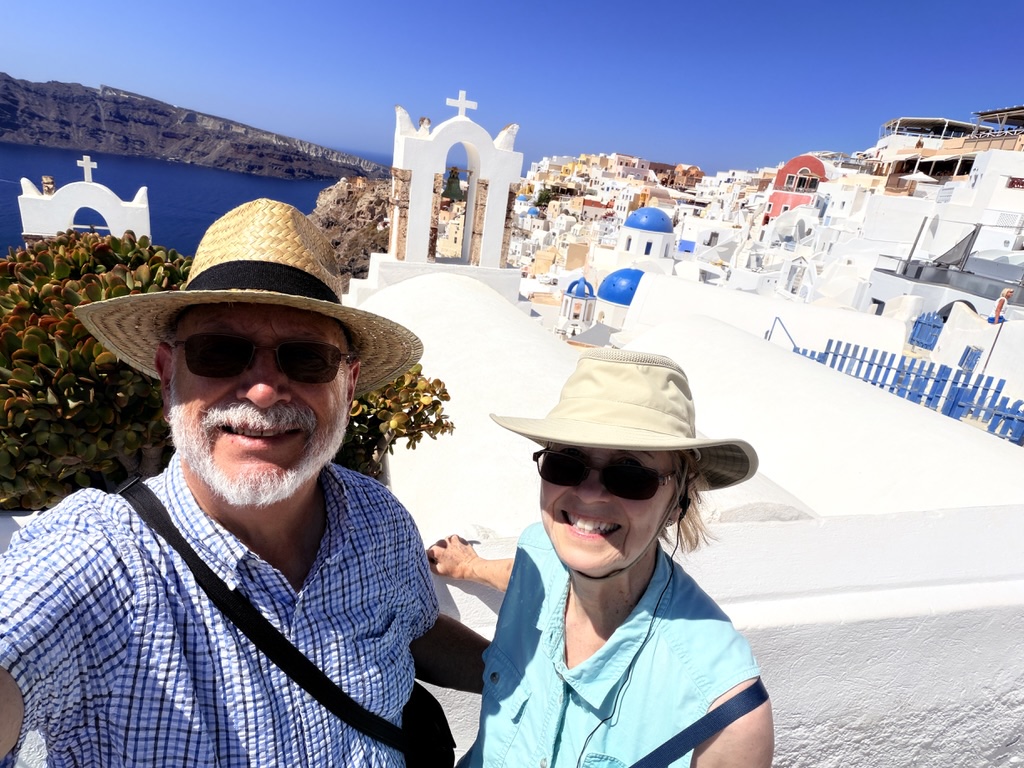
And if you turn around you are greeted with:
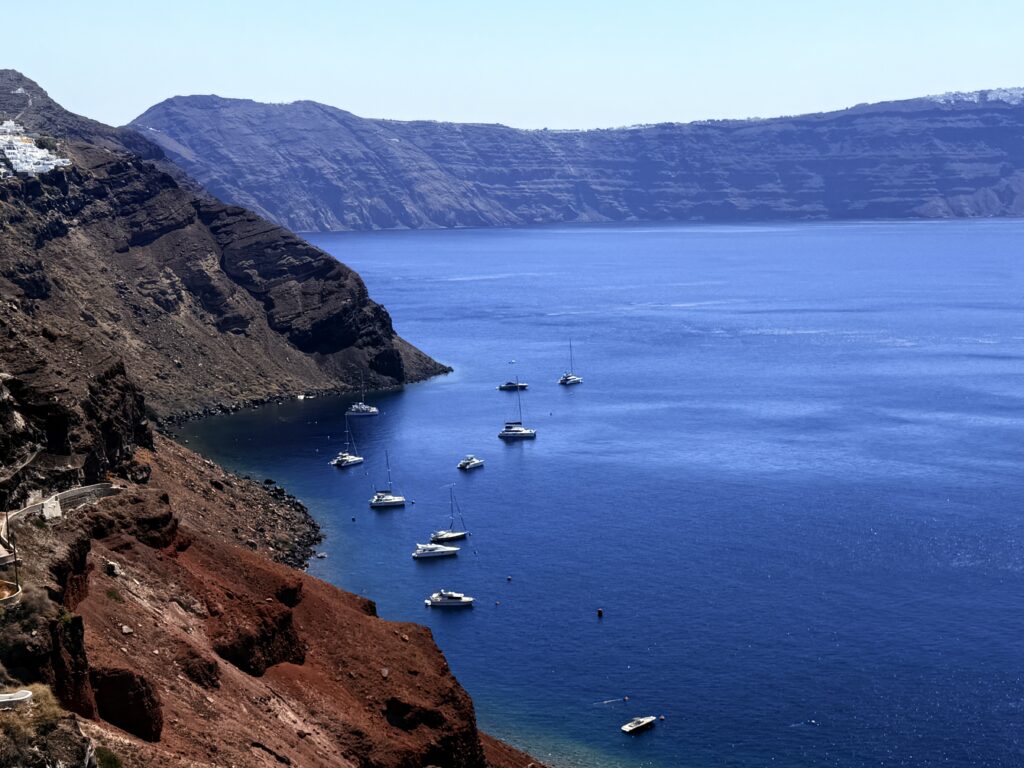
The photo getting took so little time that we felt like celebrating. And being a little peckish…
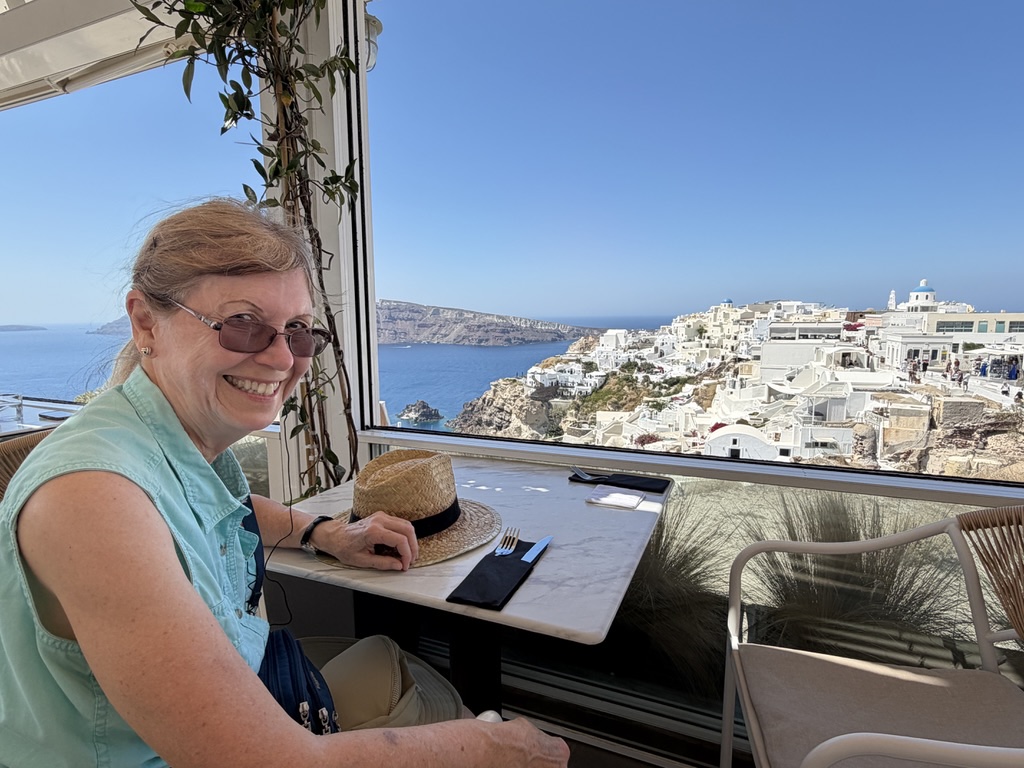
Replete, we returned to the bus for the final segment – a ride to the capital Fira.
Having been to Akrotiri we wanted to see some of the artifacts and the original frescoes at the Museum of Prehistoric Thira.
It is notable that unlike Pompeii, excavations thus far have uncovered no human remains and very little in the way of artifacts.
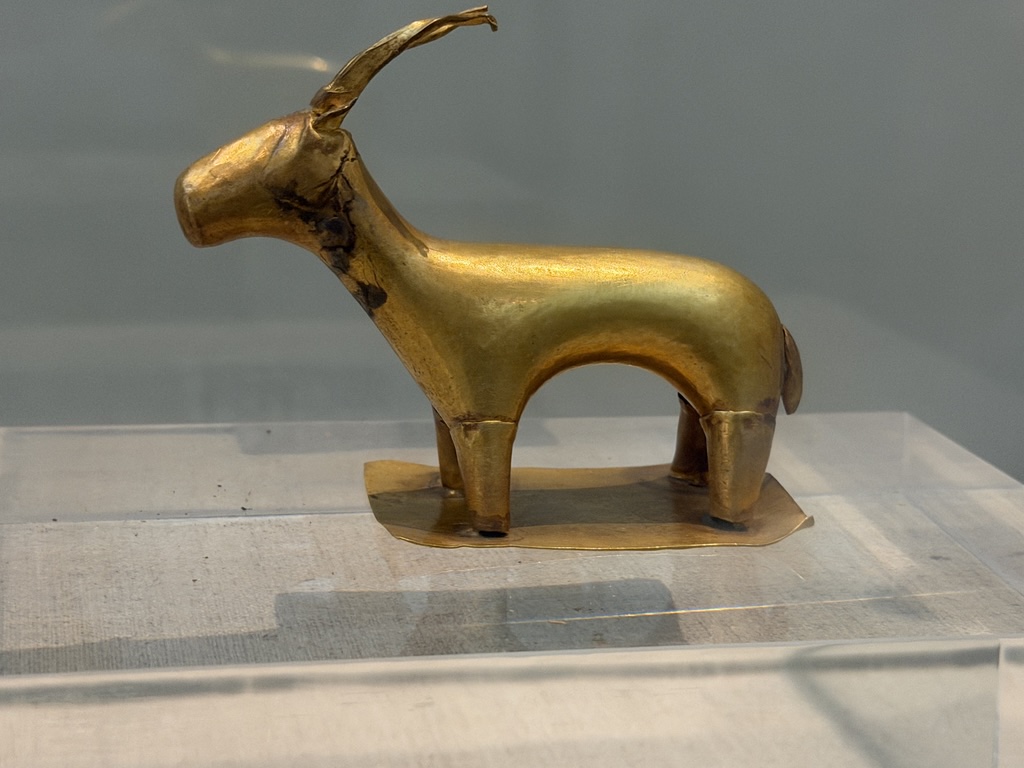
This Ibex is the only gold item found thus far.
The prevailing theory is that the occupants of Akrotiri were familiar with volcanoes and the earthquakes that proceeded them. It is likely that the occupants had enough warning to gather their precious goods, get to the harbor, and sail away (to safety or to their doom) before the volcano blew – the largest eruption in known history – spewing smoke and ash that covered the earth in a volcanic winter recorded in the tree rings of Sequoias in California, blowing the existing caldera apart, and laying down a layer of pumice several meters thick on the remaining islands:
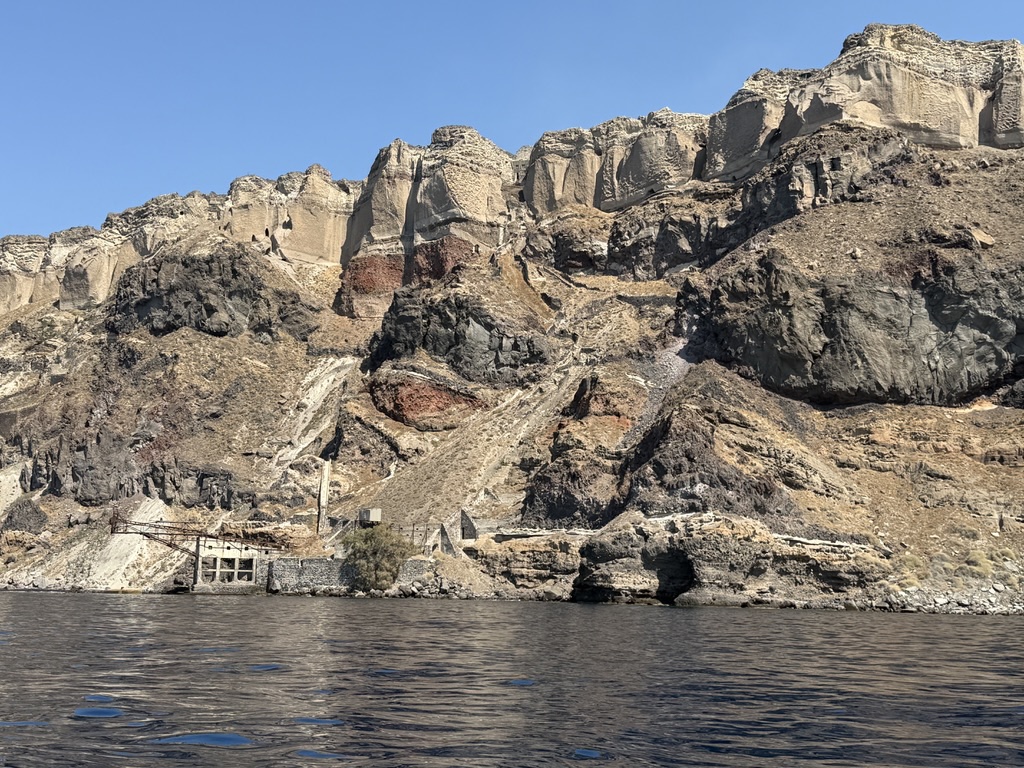
So we started our free time in Fira by visiting the Museum of Prehistoric Thira.
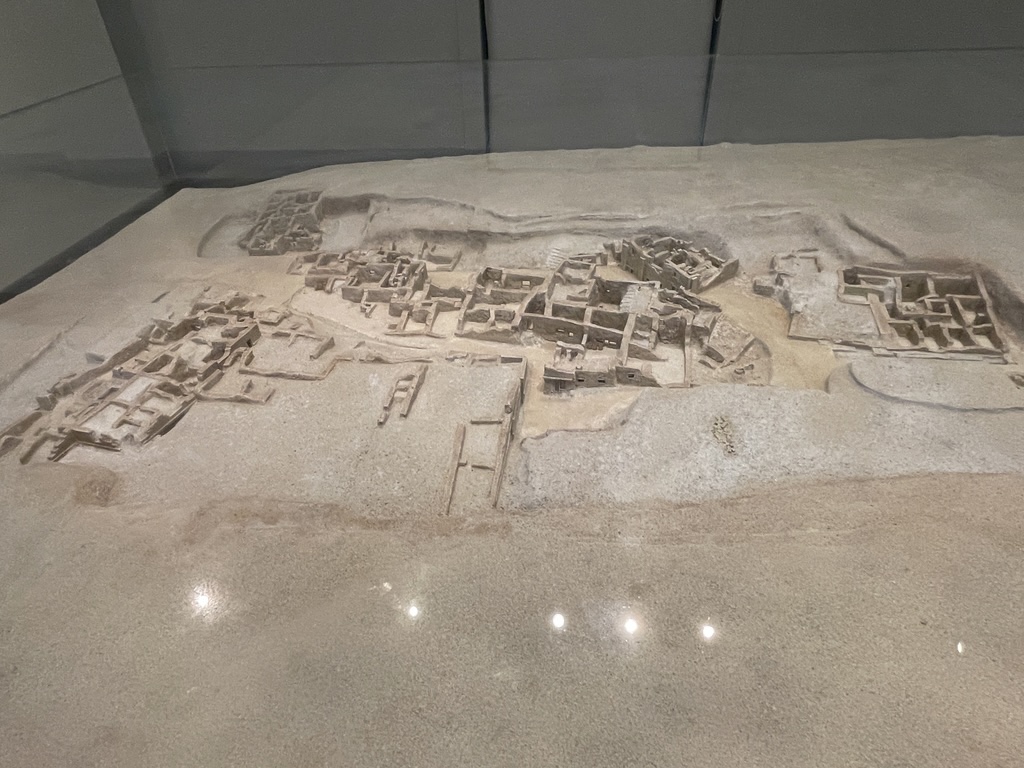
Here are a few of the items recovered from Akrotiri that we saw there.
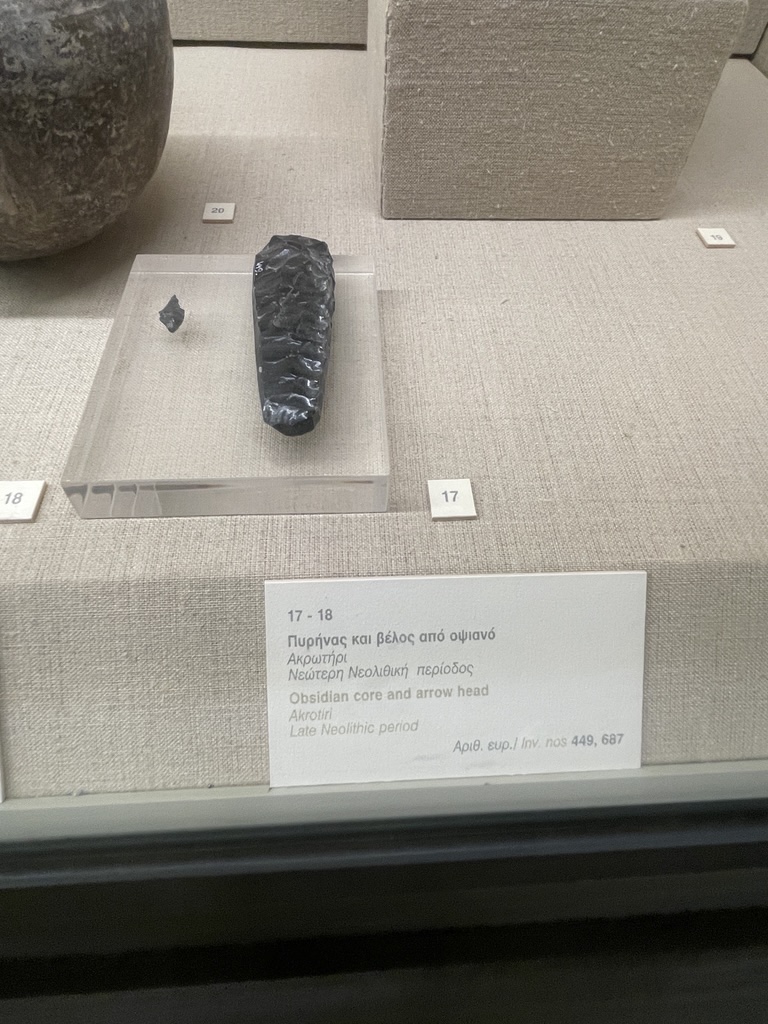
Obsidian arrow head and core (Late Neolithic) 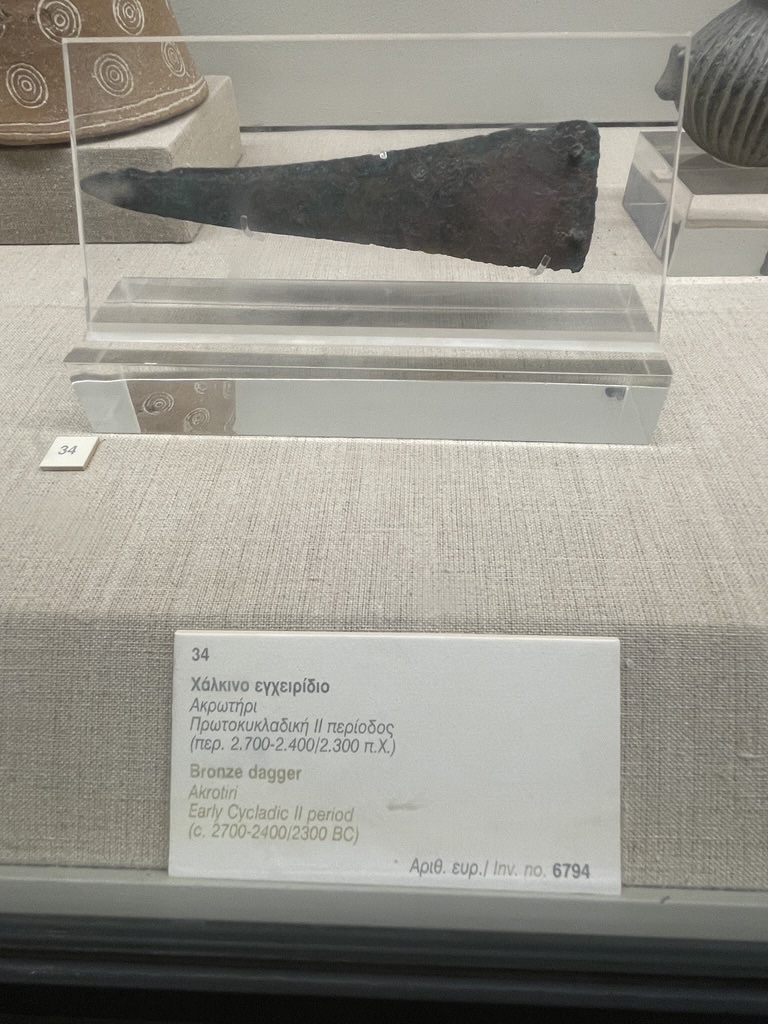
Bronze Dagger (C. 2700-2400 BCE) 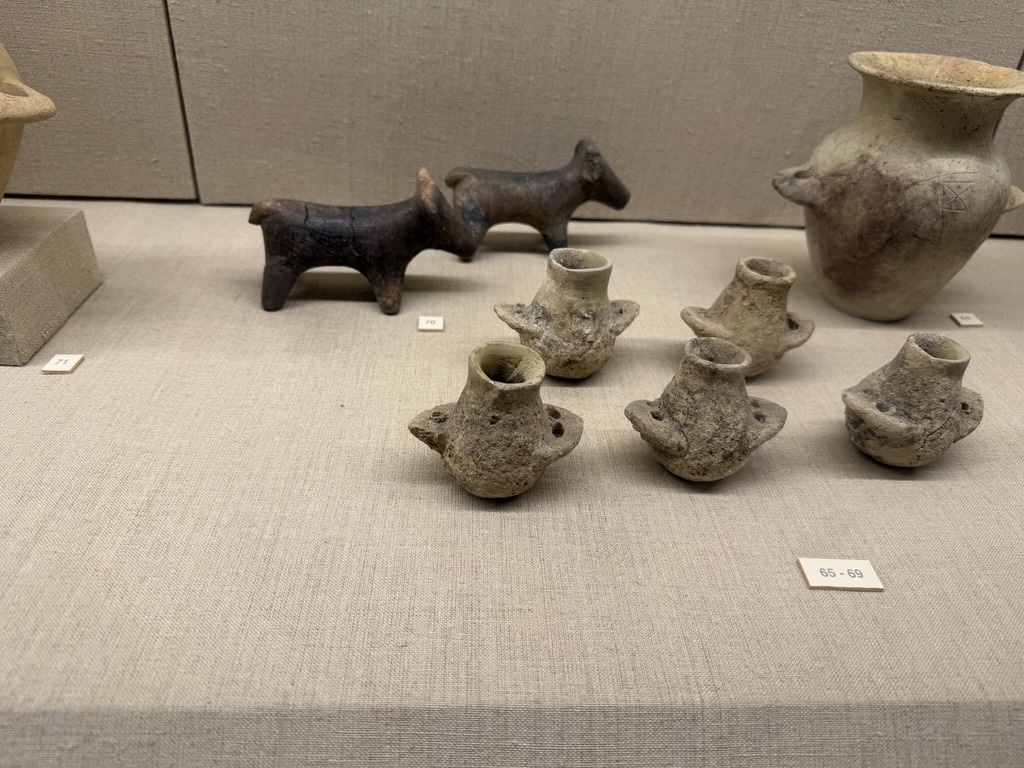
jars, animal figurines (2200-2000 BCE) 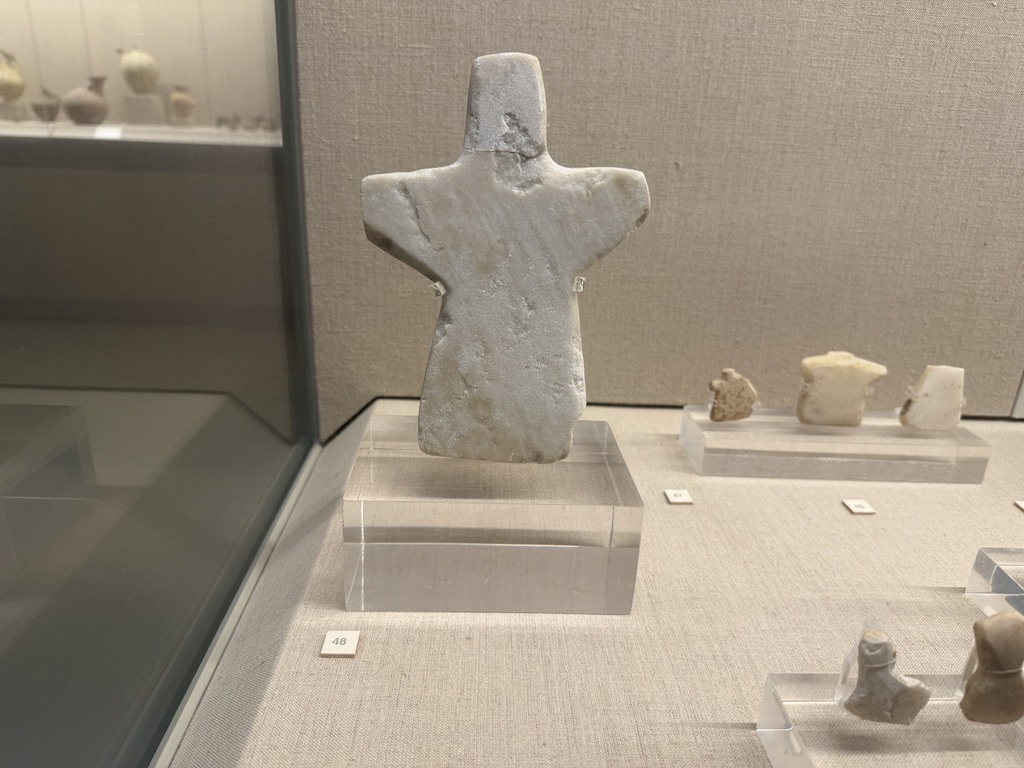
Phylakopi figure, Marble, (2200-2000 BCE) 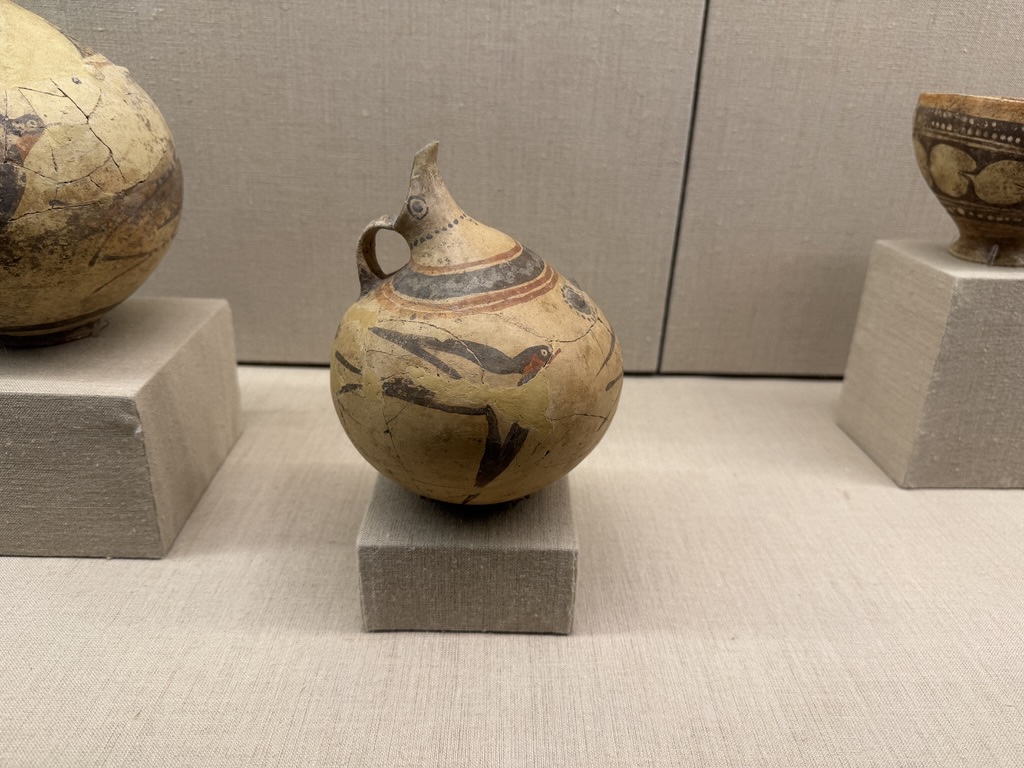
Nippled ewer (Late 18th c. BCE) 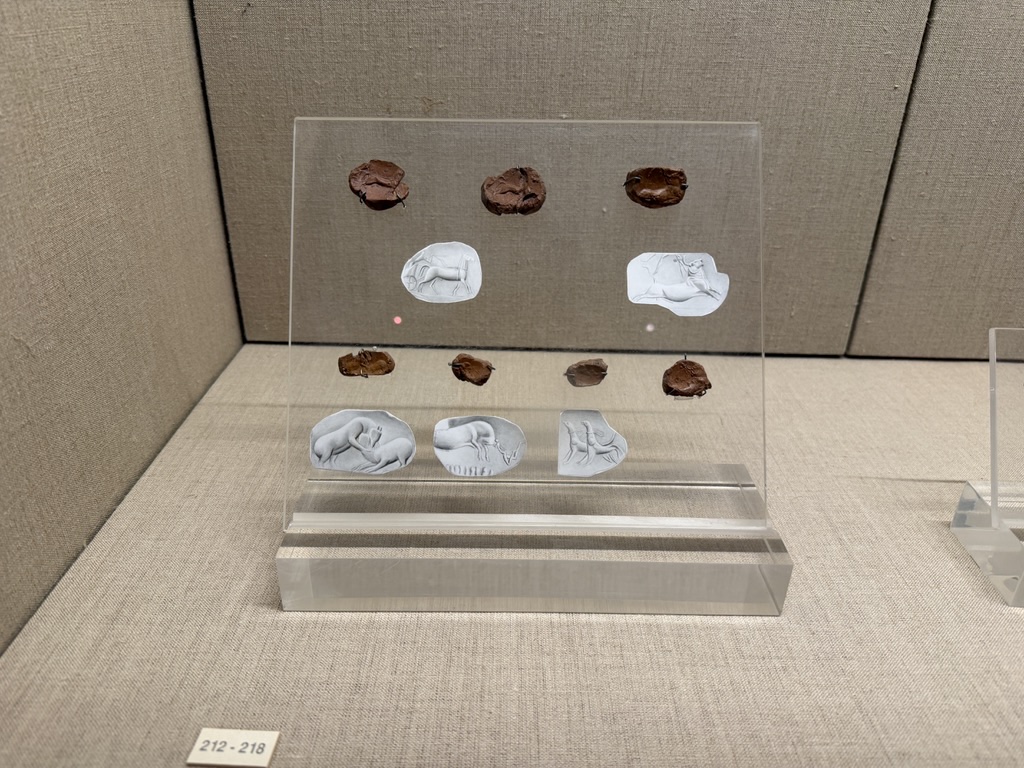
Clay seals (Late 17th c. BCE) 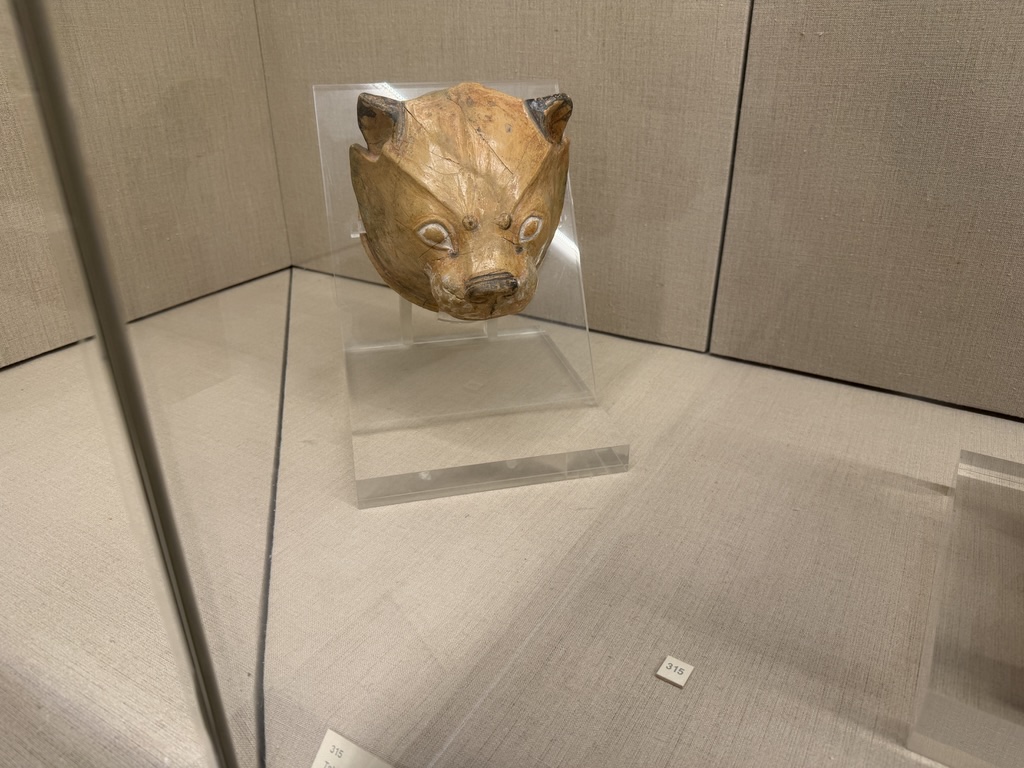
Lion Head rhyta (17th c. BCE) 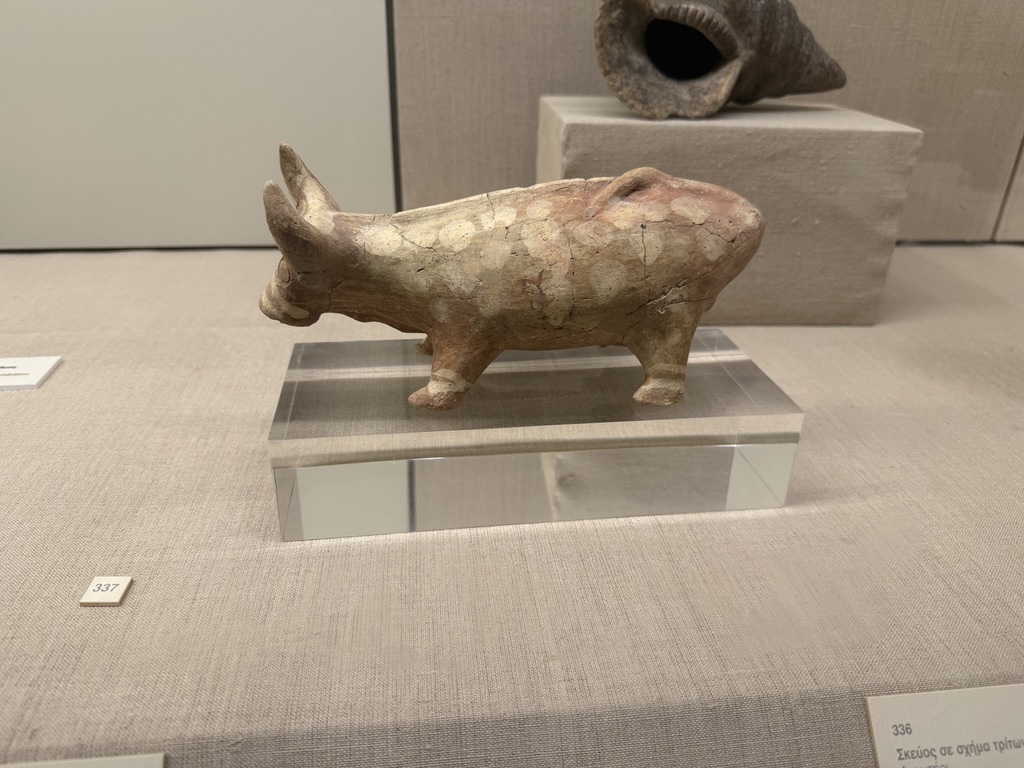
Bull Rhyta (17th c. BCE) 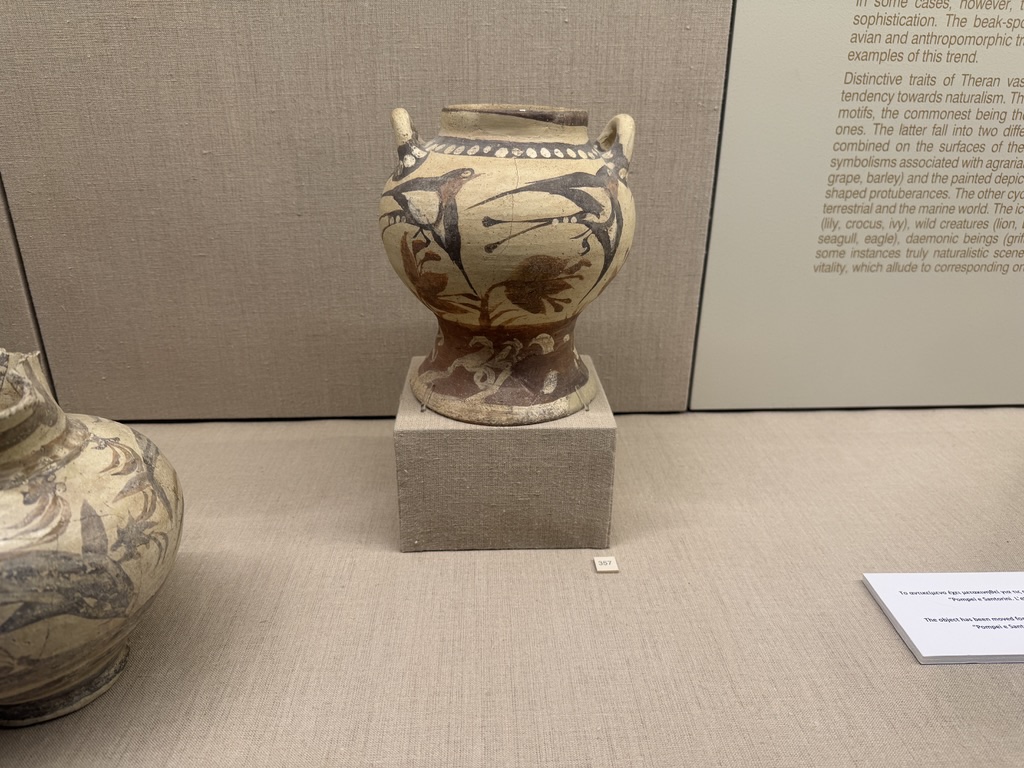
Strainer with Swallows (17th c. BCE) 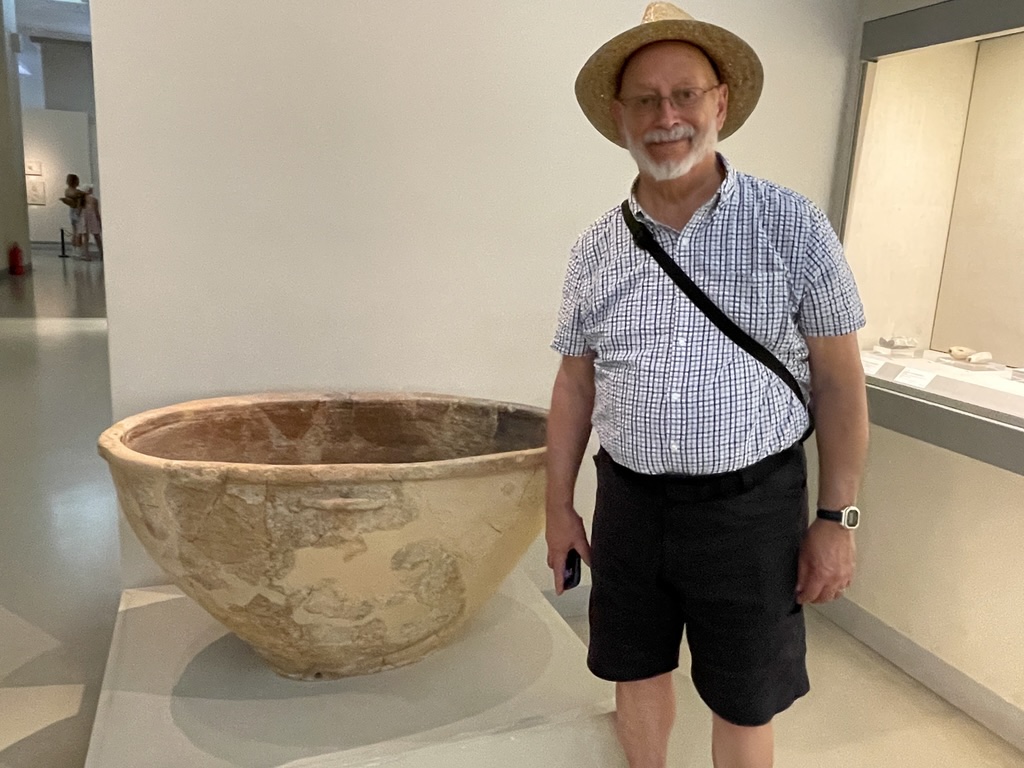
Bathtub.
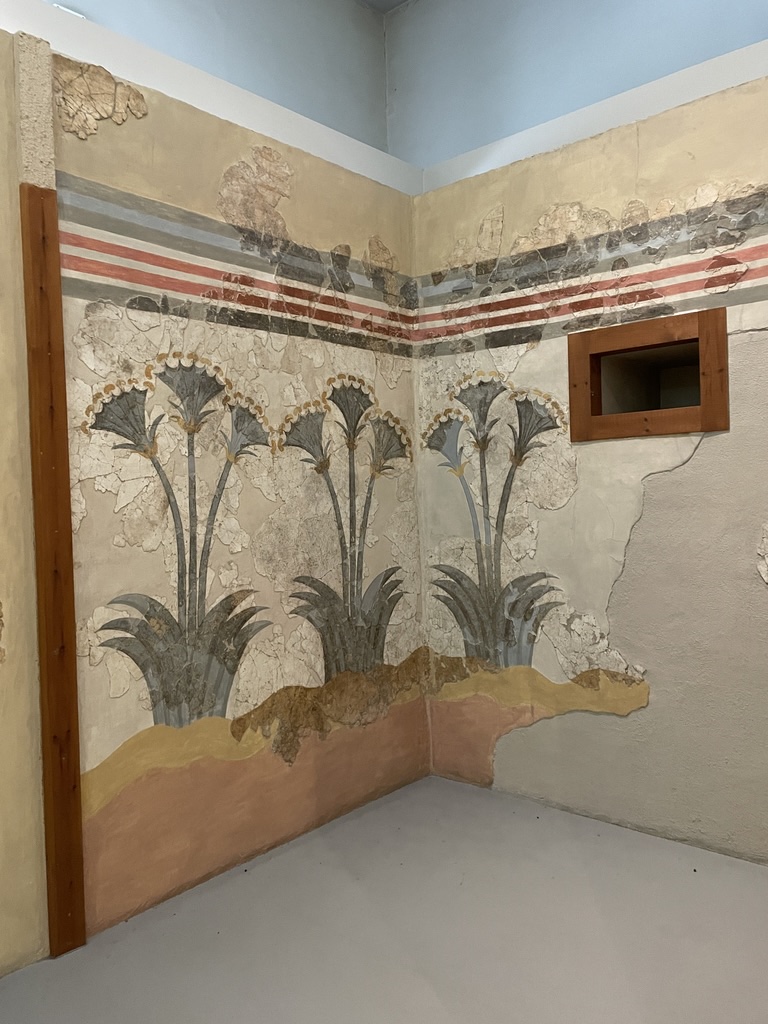
We wandered, and wondered among the frescoes
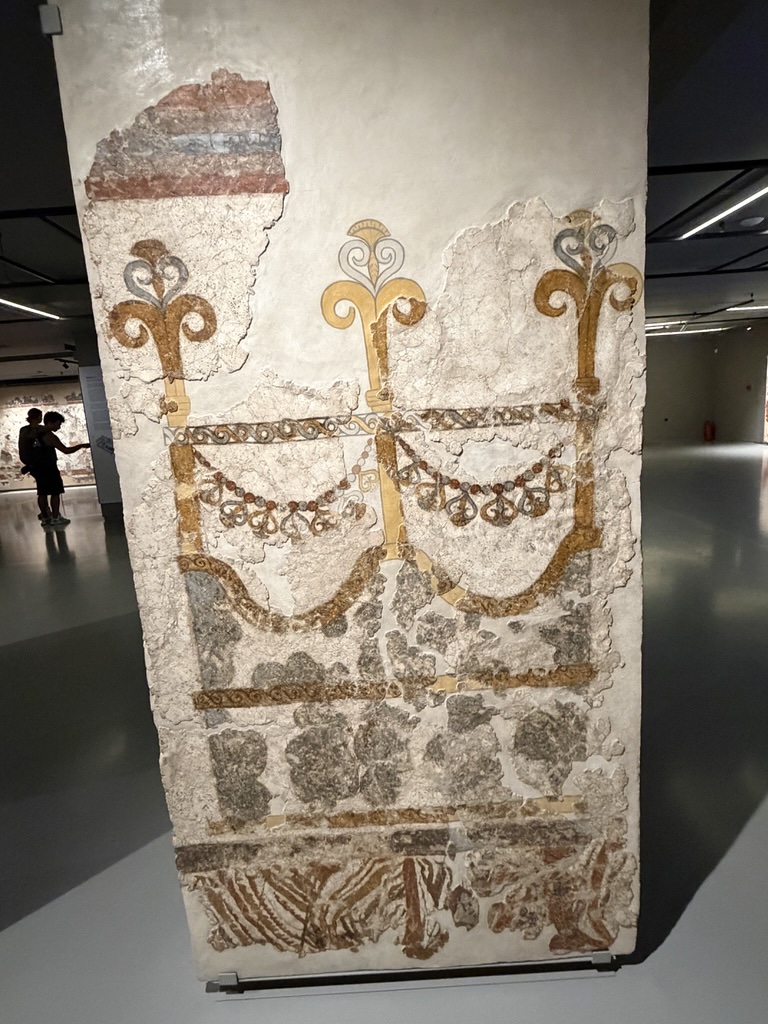
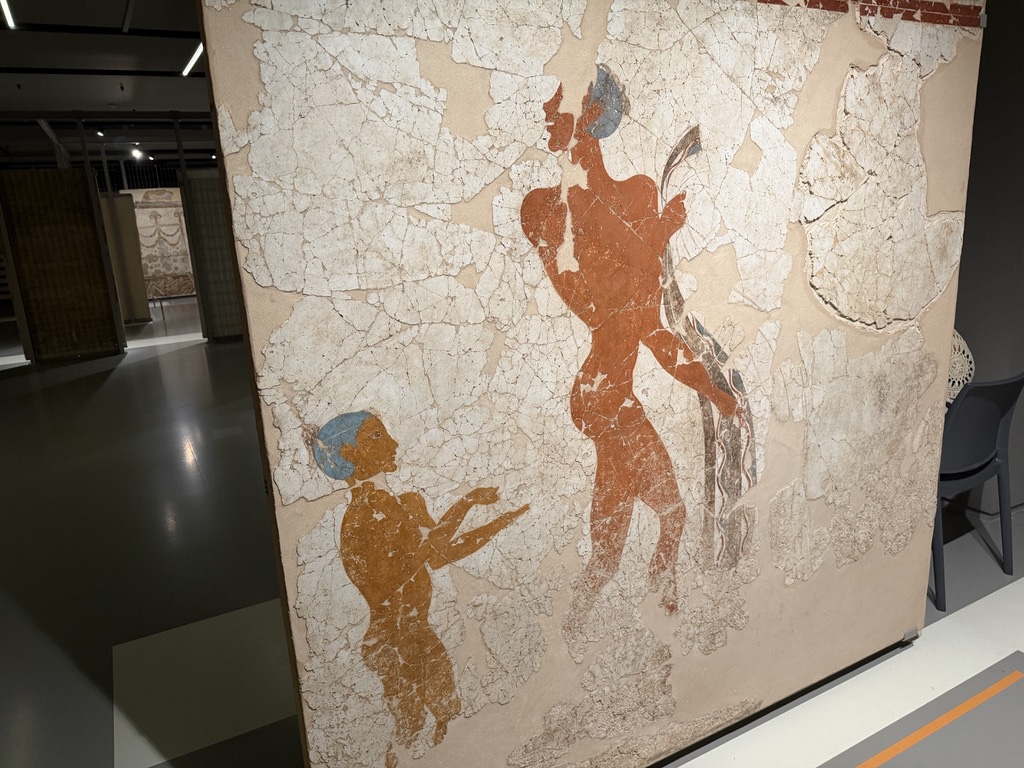
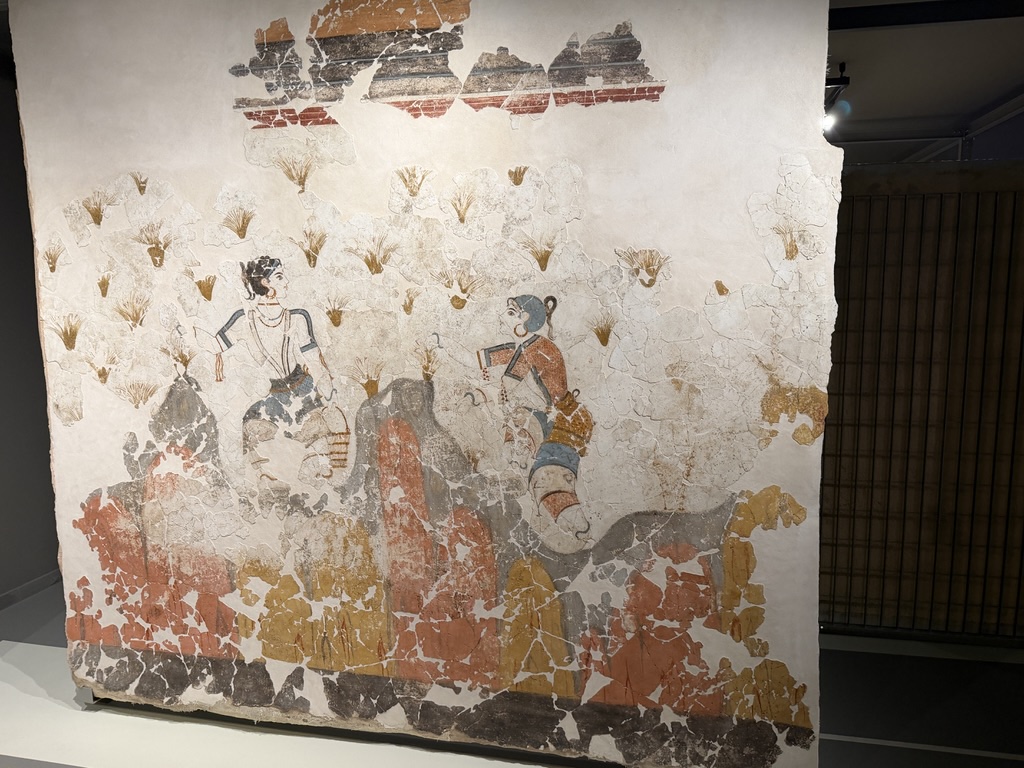
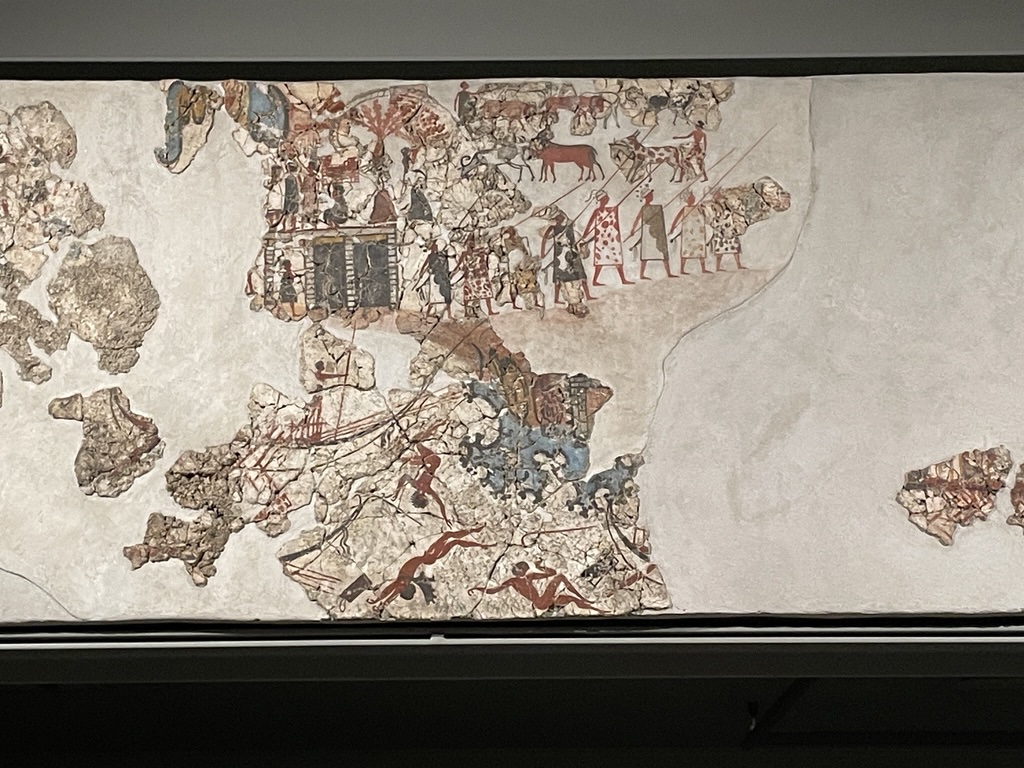
Finally we saw some amazing plaster castings of wooden objects buried in the pumice.
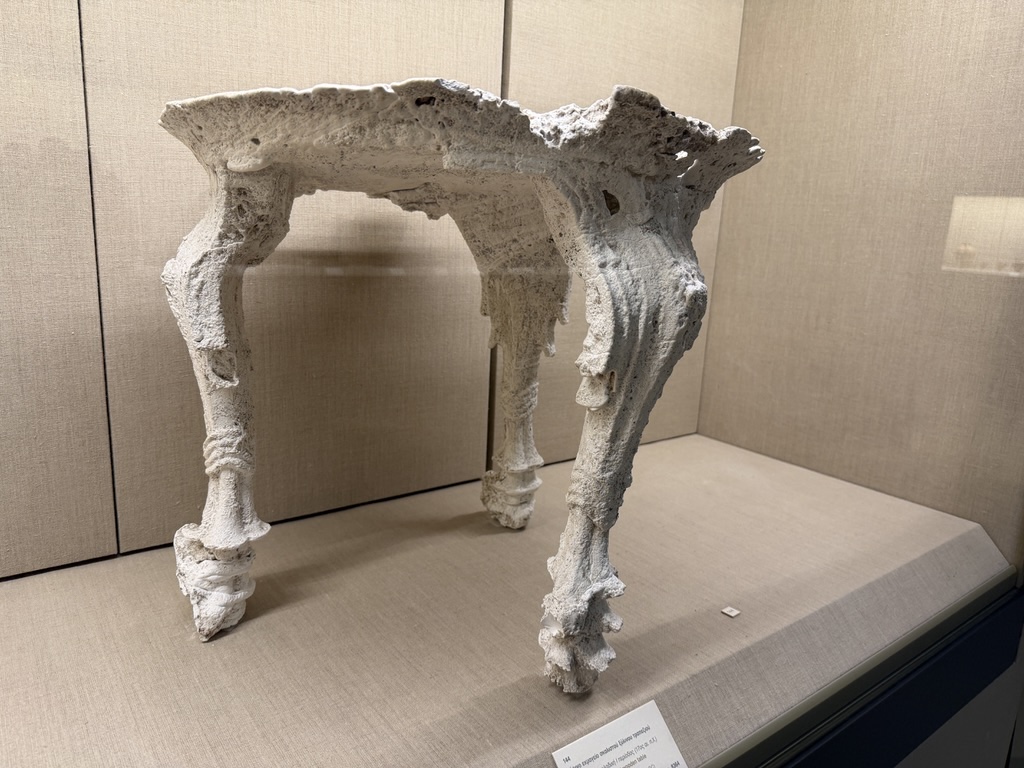
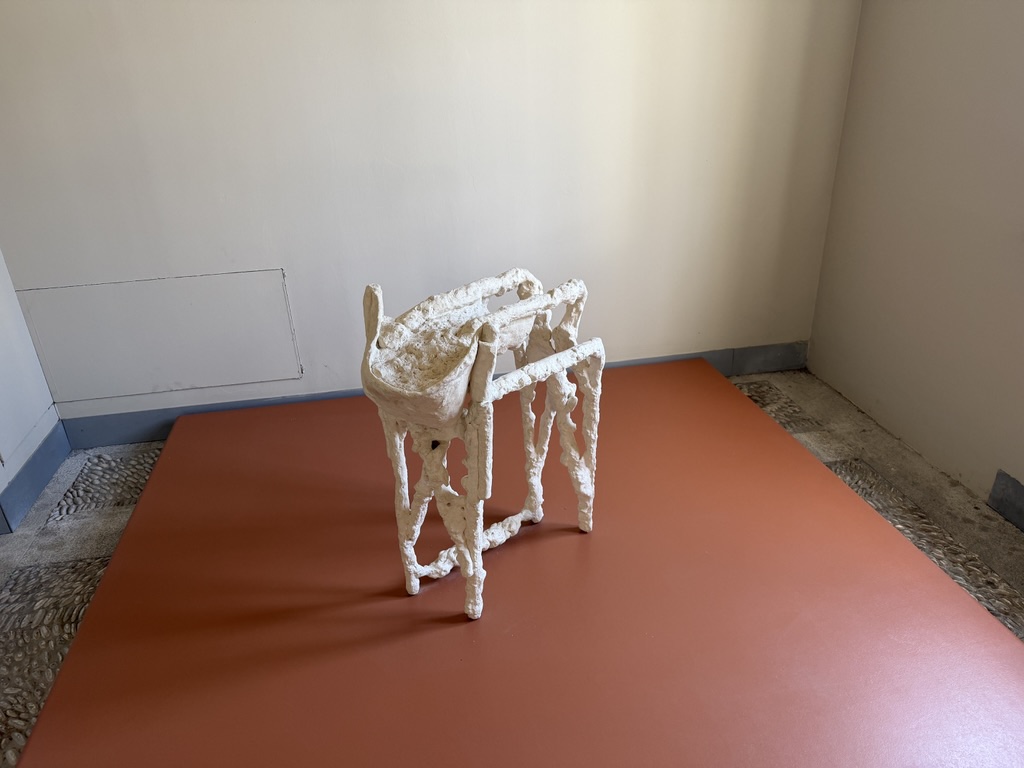
From multi (2-4) story buildings, to indoor plumbing, to folding chairs; these people had technology far beyond what we in the west have seen before the 19th century.
After the museum we walked the gauntlet of souvenir shops and jewelry stores to the cable car terminal.
We had tickets but still had to stand in the half-hour line to show them to the lady at the ticket booth.
Another fifteen minutes later we were riding down to the old port below.
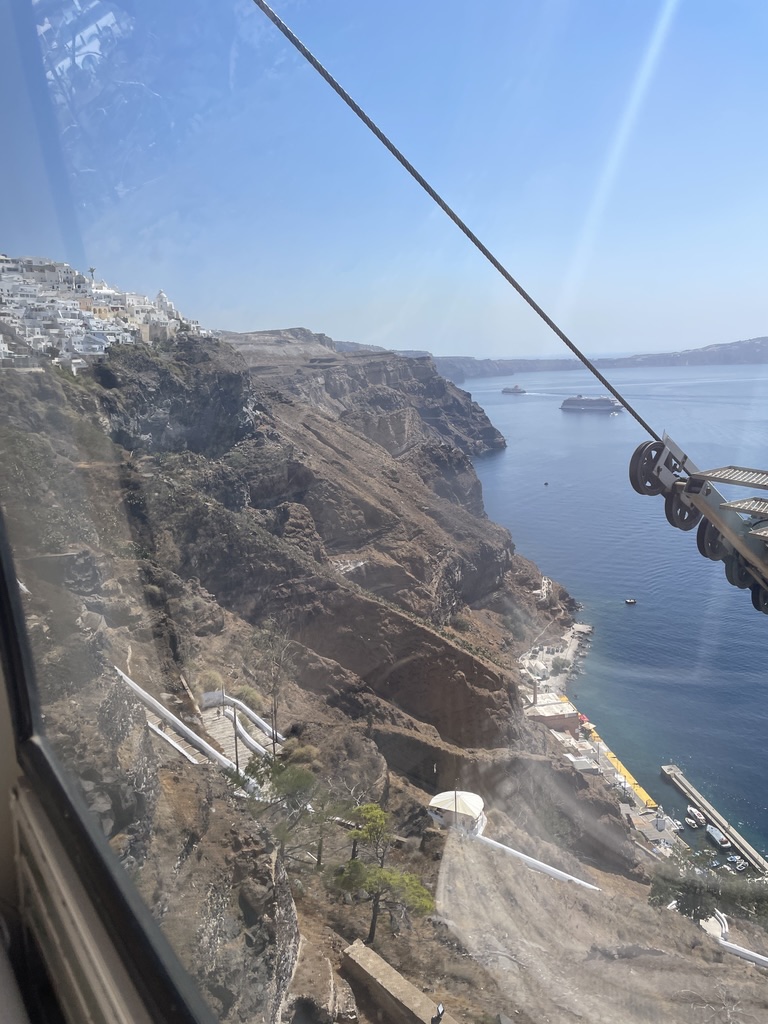
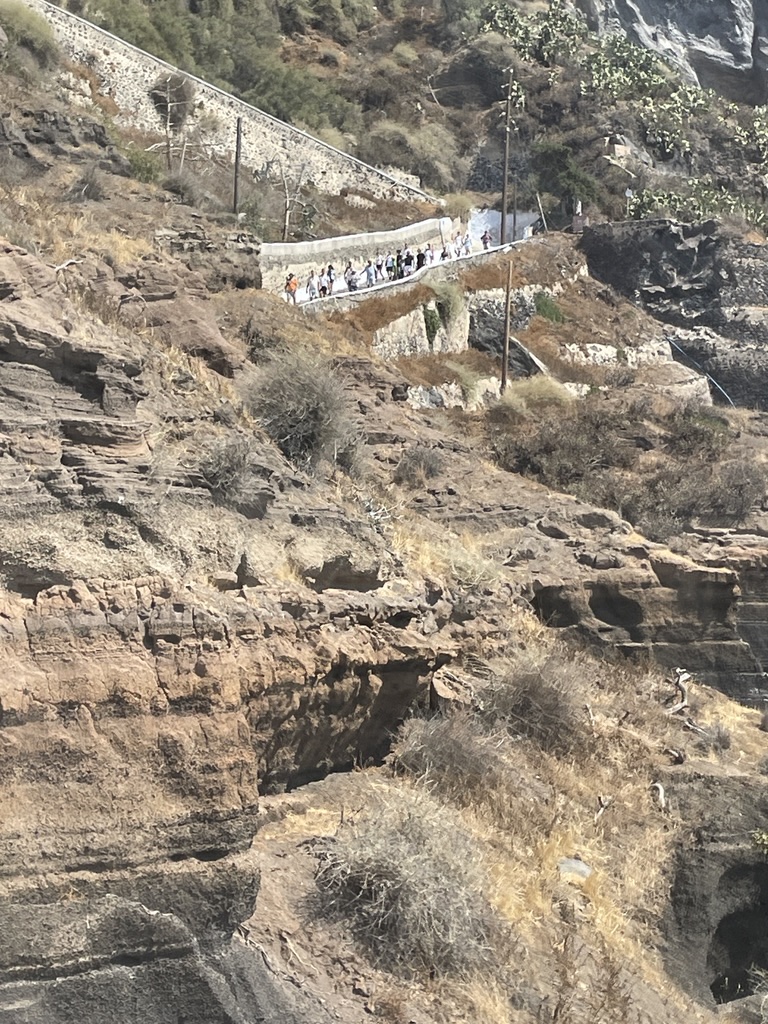
We made our way to the red Viking awning and were soon on board the tender and on our way back to the ship.
We had time for a quick shower before the port talk on tomorrow’s port – Katakolon (the port for Olympia).
We’ve been to Olympia so we don’t plan to leave the ship, but the talks include interesting information about the port so we wanted to see what they had to say.
We decided to switch our evening up and skip the 6:30 lecture (well watch it tomorrow) and have an early dinner so we could participate in the Team Trivia. We joined two couples from the Minneapolis area and had fun scoring 13 of 28 possible points.
After extended conversation with our new friends it was back to the stateroom for picture sorting, reading, and rest.
As I said, tomorrow is a “sea day in port” so we aren’t in too much of a hurry to get up and going.
Our main objective will be to stay cool. We’ll see how that works.
Till then,
R